US Patent Office rejects company's claim for bean commonly grown by Latin American farmers
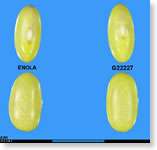
The United States Patent and Trademark Office (USPTO) today rejected all of the patent claims for a common yellow bean that has been a familiar staple in Latin American diets for more than a century.
The bean was erroneously granted patent protection in 1999, as US Patent Number 5,894,079, in a move that raised profound concerns about biopiracy and the potential abuse of intellectual property (IP) claims on plant materials that originate in the developing world and remain as important dietary staples, particularly among the poor.
A research center, the International Center for Tropical Agriculture (known by its Spanish acronym, CIAT), which is supported by the Consultative Group on International Agricultural Research (CGIAR), led the legal challenge to the patent through the USPTO’s reexamination process.
“We are happy that the patent office has reached a final decision in this case but remain concerned that the ex partes patent reexamination procedure meant that these patent claims remained in force for such a long time,” said Geoffrey Hawtin, Director General of CIAT, which has been fighting the patent since 2001. “For several years now, farmers in Mexico, the USA and elsewhere have unnecessarily endured legal threats and intimidation for simply planting, selling or exporting a bean that they have been growing for generations.”
At issue is a hearty and nutritious yellow bean—similar to the pinto bean—that is known to plant breeders as Phaseolus vulgaris but is commonly called azufrado or Mayocoba bean by Latin American farmers and consumers. In the 1990s, a Colorado man, Larry Proctor, bought some beans in a market in Mexico and after a few years of plantings, claimed he had developed what he called “a new field bean variety that produces distinctly colored yellow seed which remains relatively unchanged by season.” He dubbed it the “Enola bean,” filed a patent application and obtained a 20-year patent that covered any beans and hybrids derived from crosses with even one of his seeds.
Under USPTO rules, material published before a patent application that was not brought to the attention of the patent examiner can be used to reverse a granted claim. CIAT sought a reexamination of the Enola patent. The Food and Agriculture Organization (FAO) of the United Nations and ETC Group (formerly RAFI, the Rural Advancement Foundation International), a Canada-based nongovernmental organization dedicated to conservation and sustainable use of biodiversity, also denounced the Enola bean patent.
CIAT was able to dispute the inventor’s claims to a unique color by providing published evidence of 260 yellow beans among the almost 28,000 samples of Phaseolus in its crop “genebank.” At least six of the CIAT varieties were, to most observers, identical to the bean described in Proctor’s patent documents on the basis of color and genetic markers. CIAT also put forward publications to show that the claims in the patent application took credit for research already widely available in scientific literature and thus claims made regarding the breeding of the bean in his patent also failed to meet the patent office’s statutory requirements for “non-obviousness and novelty.”
In addition, CIAT pointed out that Proctor had not obtained a permit to export the beans from Mexico and that a version of the bean variety in question had been released to the public by the Mexican government in the 1970s.
Yet Proctor actively enforced his patent. At one point, the patent-holder’s US$0.6-claim on every pound of yellow beans sold in the United States caused a steep decline in exports of such beans from Mexico to the USA, according to Mexican government sources.
The patent office issued a preliminary decision in 2003 rejecting all the patent claims and gave a final rejection in December 2005. Proctor filed an appeal through the USPTO, and in accordance with USPTO rules, the patent remained in force while the appeal was being considered by the Board of Patent Appeals and Interferences (BPAI). Proctor can still appeal the USPTO decision in the US federal courts, all the way to the Supreme Court venue, a costly move; if he so chooses.
“We understand that individuals and companies have a right to patent what are clearly novel agriculture innovations,” said Hawtin. “But when food crops are involved, particularly crops that have been used for years, governments have a duty to ensure that they have been presented with a clearly distinct and novel discovery and that the plant material used in the research and development was lawfully obtained. Agricultural researchers have a responsibility to make sure that publications are easily available to patent examiners.”
CIAT officials said that, while they were concerned about the immediate economic impact of the Enola patent, more broadly, they worried that the patent would establish a precedent threatening public access to plant germplasm—the genetic material that comprises the inherited qualities of an organism—held in trust by CIAT and research centers worldwide.
The CIAT genebank is one of 11 maintained worldwide by the CGIAR, where crop materials such as seeds, stems and tubers are held in trust with the United Nations Food and Agriculture Organization (FAO). The genebanks house a total of about 600,000 plant varieties in publicly accessible collections, which are viewed as the pillar of global efforts to conserve agriculture biodiversity and maintain global food security. Plant breeders in both the public and private sectors are constantly seeking access to these resources to help them breed new types of crop varieties, particularly when existing varieties are threatened by pests or disease.
“Hopefully, this case can help guide future reviews of patent applications and future preventive actions on the part of the CGIAR Centers, so that farmers who have been growing a particular variety for over 100 years will not wake up one day to discover that their traditional crops have suddenly become someone else’s intellectual property,” said Victoria Henson-Apollonio, Manager of the CGIAR Central Advisory Service on Intellectual Property (CAS-IP), the CGIAR office charged with assisting the Centers on matters of IP.
CIAT’s patent challenge is part of the CGIAR’s ongoing effort to ensure that intellectual property claims regarding plant materials do not falsely seek to privatize materials already in widespread use. The challenge was endorsed by the FAO and the Genetic Resource Policy Committee of the CGIAR.
Source: CGIAR


