Chile's Chaiten volcano one of scores of active volcanoes in region
May 7th, 2008 Chile's Chaiten volcano one of scores of active volcanoes in region, says CU-Boulder professor

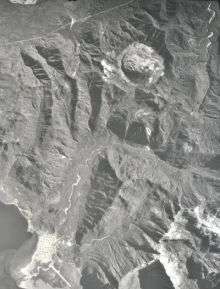
Aerial view Chaiten Volcano, southern Chile, prior to May 2008 eruption. Image courtesy Chilean Air Force

The Chaiten volcano now erupting in southern Chile is one of 200 to 300 volcanoes in the "Andean Arc" region of Chile, Peru, Ecuador and Columbia considered active by volcanologists, some of which lie in much more densely populated areas, said a University of Colorado at Boulder geologist who has studied Chaiten.

While the public perception is that volcanoes that have not erupted in historic times are dormant, volcanologists consider any volcanoes that erupted during the last 10,000 years during the Holocene Period -- including Chaiten -- to be potentially active, said CU-Boulder geological sciences department Professor Charles Stern.

Stern said the pyroclastic flow and ash-fall deposits he and Chilean colleagues analyzed in 2004 indicate Chaiten last erupted about 9,370 years ago. "We consider the lifespan of Andean volcanoes to be about 1 million years, which is supported by this new eruption," he said.

He said Chaiten, which started to erupt on Friday and which "ramped up significantly" today, could bury the nearby town of Chaiten much like the Roman city of Pompeii was buried by tephra, or volcanic material, following the eruption of Mount Vesuvius in 79 A.D.

"There are 25 million to 30 million people that live very close to at least one of these potentially active volcanoes in the Andean Arc, including the cities of Quito and Santiago," said Stern. "This is a good example of what could happen at any time in the region, and it is fortunate the Chaiten eruption is occurring in a pretty sparsely populated area."

Only a few dozen of the 200 to 300 active volcanoes in the Andean Arc are actively monitored, said Stern. More than 25,000 people were killed by the eruption of the Nevado del Ruiz volcano in Columbia in 1985, he said.

By Tuesday morning Chilean authorities had evacuated more than 4,000 people from the region, including the population in the town of Chaiten six miles from the volcano and the town of Futaleufo, roughly 70 miles to the east near the Argentine border. The five-day eruption of Chaiten has sent a thick column of ash and smoke into the stratosphere moving east across Patagonia to the Atlantic Ocean.

"The volcano went into a higher state of activity this morning," Stern. "What happens after today is anybody's guess."

In addition to covering towns and villages and polluting air and water, the ash fall will undoubtedly affect agricultural and ranching activities, Stern said. "Because there is relatively little precipitation in the region of Patagonia east of the volcano, it will take a long time to naturally wash the ash from the landscape."

Stern and Jose Naranjo of the National Service of Geology and Mining, who published a 2004 paper in the journal "Geology of Chile," used radiocarbon methods to date the last eruption of Chaiten and concluded the eruption generated layers of volcanic tephra on the surrounding landscape up to five feet thick. The same prehistoric eruption apparently created the two-mile-diameter crater where the current eruption is centered, the authors said.

Stern said the possibility of the Chaiten volcano affecting Earth's climate is probably fairly low. "In to order to significantly affect the climate, a volcano has to put out a lot of sulfur dioxide aerosols into the stratosphere for an extended period, which then reflects sunlight away from the Earth," he said. "Our data from Chaiten showed the last eruption was high in silica and low in sulfur."

Source: University of Colorado at Boulder


print this article email this article download pdf blog this article bookmark this article     Digg this Stumble it share on Facebook share on Reddit add to delicious save to Yahoo! bookmarks
3.9/5 after 26 votes

Rank Filter

Move the slider to adjust rank threshold, so that you can hide some of the comments.


Display comments: newest first

  • DeeSmith - May 07, 2008
    • Rank: not rated yet
    This is the second volcano in the southern reaches of the South American Andes to erupt in the last month; both had been dormant for a very long time.

May 7th, 2008 all stories
Space & Earth / Earth Sciences

Comments: 1
Rank: 3.9/5 after 26 votes

  • Stumble this up

  • Digg this

  • Share it:
  • share on Facebook
  • share on MySpace
  • share on Slashdot
  • rss-newsfeed
  • share on Google
  • share on Reddit
  • add to delicious
  • save to Yahoo! bookmarks
  • share on Windows Live
  • Add to Mixx!
Rating: 3.9/5 after 26 votes

  • Related Stories

  • Scientists Pierce Veil of Clouds to 'See' Lightning Inside a Volcanic Plume
    created Apr 08, 2009 | popularity not rated yet | comments 0
  • USGS to help Chile develop volcano early warning system
    created Jun 25, 2008 | popularity not rated yet | comments 0
  • Chilean volcano captured blasting ash
    created May 08, 2008 | popularity not rated yet | comments 0
  • Rotation is key to understanding volcanic plumes
    created Mar 25, 2009 | popularity not rated yet | comments 0

Tags


  • Physicists Demonstrate Quantum Memory with Matter Qubits
    Physicists Demonstrate Quantum Memory with Matter Qubits
    Physics / General Physics
    created 12 hours ago | popularity 4.8 / 5 (8) | comments 1
  • 'Holey' Nanosheets for Wastewater Dye Removal
    Nanotechnology / Nanomaterials
    created Jul 01, 2009 | popularity 5 / 5 (5) | comments 1
  • Jellyfish Robot Swims Like its Biological Counterpart
    Jellyfish Robot Swims Like its Biological Counterpart
    Electronics / Robotics
    created Jun 26, 2009 | popularity 4.4 / 5 (7) | comments 1
  • Could Maxwell's Demon Exist in Nanoscale Systems?
    Could Maxwell's Demon Exist in Nanoscale Systems?
    Physics / General Physics
    created Jun 24, 2009 | popularity 4.4 / 5 (18) | comments 29
  • Living Safely with Robots, Beyond Asimov's Laws
    Living Safely with Robots, Beyond Asimov's Laws
    Electronics / Robotics
    created Jun 22, 2009 | popularity 4.6 / 5 (50) | comments 39
  • Other News

    Global warming tactic cools climate but won’t help corals, say researchers

    Space & Earth / Earth Sciences

    created 9 hours ago | popularity 3 / 5 (2) | comments 3

    (PhysOrg.com) -- “Geoengineering” experiments proposed to reduce global warming by blocking sunlight with atmosphere-injected particles may cool the world but still leave carbon dioxide levels dangerously high, Stanford scientists ...


    Coolest spacecraft ever in orbit around L2

    Coolest spacecraft ever in orbit around L2

    Space & Earth / Space Exploration

    created 12 hours ago | popularity 4.5 / 5 (2) | comments 3

    (PhysOrg.com) -- Last night, the detectors of Planck's High Frequency Instrument reached their amazingly low operational temperature of -273°C, making them the coldest known objects in space. The spacecraft ...


    Senator may have won fight over private rocket manufacturing

    Space & Earth / Space Exploration

    created 12 hours ago | popularity 4.5 / 5 (2) | comments 2

    For months, a powerful Republican senator from Alabama has fought the Obama administration to block $150 million that the White House wanted to spend to help private companies build rockets capable of reaching the international ...


    The least sea ice in 800 years

    The least sea ice in 800 years

    Space & Earth / Earth Sciences

    created Jul 01, 2009 | popularity 4.4 / 5 (56) | comments 42

    New research, which reconstructs the extent of ice in the sea between Greenland and Svalbard from the 13th century to the present indicates that there has never been so little sea ice as there is now. The ...


    Gas around young galaxy

    Intense heat killed the Universe's would-be galaxies, researchers say

    Space & Earth / Astronomy

    created Jul 01, 2009 | popularity 3.2 / 5 (16) | comments 22

    (PhysOrg.com) -- Our Milky Way galaxy only survived because it was already immersed in a large clump of dark matter which trapped gases inside it, scientists led by Durham University's Institute for Computational ...