NCAR installs 76-teraflop supercomputer for critical research on climate change, severe weather
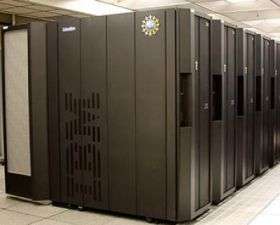
The National Center for Atmospheric Research (NCAR) has taken delivery of a new IBM supercomputer that will advance research into severe weather and the future of Earth's climate. The supercomputer, known as a Power 575 Hydro-Cluster, is the first in a highly energy-efficient class of machines to be shipped anywhere in the world.
Scientists at NCAR and across the country will use the new system to accelerate research into climate change, including future patterns of precipitation and drought around the world, changes to agriculture and growing seasons, and the complex influence of global warming on hurricanes. Researchers also will use it to improve weather forecasting models so society can better anticipate where and when dangerous storms may strike.
Named "bluefire," the new supercomputer has a peak speed of more than 76 teraflops (76 trillion floating-point operations per second). When fully operational, it is expected to rank among the 25 most powerful supercomputers in the world and will more than triple NCAR's sustained computing capacity.
"Bluefire is on the leading edge of high-performance computing technology," says Tom Bettge, director of operations and services for NCAR's Computational and Information Systems Laboratory. "Increasingly fast machines are vital to research into such areas as climate change and the formation of hurricanes and other severe storms. Scientists will be able to conduct breakthrough calculations, study vital problems at much higher resolution and complexity, and get results more quickly than before."
Researchers will rely on bluefire to generate the climate simulations necessary for the next report on global warming by the Intergovernmental Panel on Climate Change (IPCC), which conducts detailed assessments under the auspices of the United Nations. The IPCC was a recipient of the 2007 Nobel Peace Prize.
"NCAR has a well-deserved reputation for excellence in deploying supercomputing resources to address really difficult challenges," says Dave Turek, vice president of deep computing at IBM. "Bluefire will substantially expand the organization's ability to investigate climate change, severe weather events, and other important subjects."
Bluefire by the numbers
Bluefire is the second phase of a system called the Integrated Computing Environment for Scientific Simulation (ICESS) at NCAR. After undergoing acceptance testing, it will begin full-scale operations in August. Bluefire, which replaces three supercomputers with an aggregate peak speed of 20 teraflops, will provide supercomputing support for researchers at NCAR and other organizations through 2011.
An IBM Power 575 supercomputer, bluefire houses the new POWER6 microprocessor, which has a clock speed of 4.7 gigahertz. The system consists of 4,064 processors, 12 terabytes of memory, and 150 terabytes of FAStT DS4800 disk storage.
Bluefire relies on a unique, water-based cooling system that is 33 percent more energy efficient than traditional air-cooled systems. Heat is removed from the electronics by water-chilled copper plates mounted in direct contact with each POWER6 microprocessor chip. As a result of this water-cooled system and POWER6 efficiencies, bluefire is three times more energy
efficient per rack than its predecessor.
"We're especially pleased that bluefire provides dramatically increased performance with much greater energy efficiency," Bettge says.
Source: University Corporation for Atmospheric Research


