Identifying abnormal protein levels in diabetic retinopathy
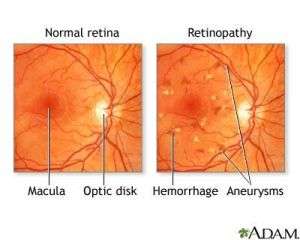
Researchers in Massachusetts are reporting an advance in bridging huge gaps in medical knowledge about the biochemical changes that occur inside the eyes of individuals with diabetic retinopathy (DR) — a leading cause of vision loss and blindness in adults. In a study scheduled for the June 6 issue of ACS’ monthly Journal of Proteome Research, they report discovery of 37 proteins that were increased or decreased in the eyes of patients with DR compared to patients without the disease.
Edward P. Feener and colleagues point out that DR is a complication of diabetes that affects the eyesight of millions of people. It involves damage to blood vessels in the retina, the light sensitive tissue in the back of the eye. Physicians know that vessels grow abnormally, swell, and leak in DR. However, they have little understanding of the biochemical changes underlying those damaging events.
The researchers studied eye fluid from individuals with and without DR who were undergoing eye surgery. They analyzed proteins in the vitreous, the gel-like material inside the eye between the retina and the lens. The study found 252 proteins in the fluid, including 37 proteins that showed changes that were associated with proliferative diabetic retinopathy, the most severe form of the disease.
The study could lead to new insights into disease mechanisms and new treatments, the article states.
Source: ACS


