Families Shed Light on Likely Causative Gene for Alzheimer's
May 14, 2008
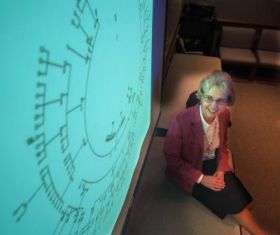
Dr. Shirley E. Poduslo, neuroscientist in the Medical College of Georgia Schools of Medicine and Graduate Studies. Credit: Phil Jones
The genetic profile of two large Georgia families with high rates of late-onset Alzheimer's disease points to a gene that may cause the disease, researchers say.
Genetic variations called single nucleotide polymorphisms, or SNPs, are common in DNA, but this pattern of SNPs shows up in nine out of 10 affected family members, says Dr. Shirley E. Poduslo, neuroscientist in the Medical College of Georgia Schools of Medicine and Graduate Studies and the Charlie Norwood Veterans Affairs Medical Center in Augusta.
The 10th family member had half the distinctive pattern. The SNPs also were found in the DNA of 36 percent of 200 other late-onset patients stored in the Alzheimers' DNA Bank.
"We were shocked; we had never seen anything like this before," Dr. Poduslo says of findings published online in the American Journal of Medical Genetics. "If we looked at unaffected spouses, their SNPs were all different. The variants consistently found in affected siblings are suggesting there is something in this gene. Now we have to go back and find what is in this gene that is making it so unique for Alzheimer's patients."
The variation was in the TRPC4AP gene, part of a large family of genes that is not well-studied but is believed to regulate calcium. Calcium is needed throughout the body but its dysregulation can result in inflammation, nerve cell death and possibly plaque formation as well, she says.
The finding provides new directions for research and possibly new treatment targets, Dr. Poduslo says. It also shows the important role large families affected by a disease can have in determining the cause of the disease.
The specific genetic mutation responsible still must be identified and will require sequencing the very large gene, or determining the order of the base pairs that form the rungs of the ladder-like DNA, Dr. Poduslo says. An SNP represents a change in either side of a rung. "The mutation could be a deletion of some of the nucleotides, could be an insertion, or something in the promoter gene that turns the gene off so it's never transcribed. It could be a wide variety of things, and that is what our next step is to identify the mutation." She'll work with The Scripps Research Institute in Jupiter, Fla., to expedite the required high-throughput analysis.
One of the families that provided the sentinel genetic information had 15 members, including five with Alzheimer's that started in their 60s and 70s; the second family had 14 members, six of whom had the disease. The disease incidence itself was notable and the incidence of the pattern of SNPs was equally so. "This to me is very, very striking. Genetics and lifestyle either could be the biggest risk factors," says Dr. Poduslo. "We looked at these families very, very carefully to see what in their background may make them different and we couldn’t come up with anything. They were farmers living fairly healthy lifestyles."
Families donate to the Alzheimer's DNA bank to help others at this point and don't get feedback from findings generated by their genetic material, Dr. Poduslo says. "Right now, we have no way of treating it, so it's not going to help them. When we come up with new drugs so we can treat this disease, then it becomes important to identify it early and get treatment."
Source: Medical College of Georgia
-
Engineers build first sub-10-nm carbon nanotube transistor
Feb 01, 2012 |
4.9 / 5 (33) |
30
-
Something old, something new: Evolution and the structural divergence of duplicate genes
Jan 31, 2012 |
4.6 / 5 (7) |
1
-
The hidden nanoworld of ice crystals: Revealing the dynamic behavior of quasi-liquid layers
Jan 30, 2012 |
5 / 5 (5) |
1
-
Stock market network reveals investor clustering
Jan 27, 2012 |
3.9 / 5 (23) |
8
-
Of microchemistry and molecules: Electronic microfluidic device synthesizes biocompatible probes
Jan 26, 2012 |
5 / 5 (2) |
0
-
Classical and Quantum Mechanics via Lie algebras
Apr 15, 2011
- More from Physics Forums - Independent Research
More news stories
Researchers make breakthrough in stem cell research
(Medical Xpress) -- University of Queensland scientists have developed a world-first method for producing adult stem cells that will substantially impact patients who have a range of serious diseases.
50 minutes ago |
5 / 5 (2) |
0
|
Georgia Tech develops software for the rapid analysis of foodborne pathogens
2011 brought two of the deadliest bacterial outbreaks the world has seen during the last 25 years. The two epidemics accounted for more than 4,200 cases of infectious disease and 80 deaths. Software developed at Georgia Tech ...
42 minutes ago |
not rated yet |
0
Can Viagra treat childhood lymphatic disorder?
(Medical Xpress) -- A surprising potential therapy for severe, hard-to-treat malformations of the lymphatic system is now being studied at the Stanford School of Medicine and Lucile Packard Childrens Hospital: researchers ...
17 minutes ago |
not rated yet |
0
|
Don't ignore kids' snores
(Medical Xpress) -- Your ears arent playing tricks on you that is the sound of snoring you hear from the bedroom of your preschooler. Snoring is common in children, but in some cases it can be a symptom of a ...
7 minutes ago |
not rated yet |
0
WHO calls for stepped-up fight against leprosy
The World Health Organization called Monday for greater efforts to fight leprosy, warning the disfiguring disease was defying efforts to wipe it out across many countries in the Asia-Pacific region.
13 minutes ago |
not rated yet |
0
New molecule has potential to help treat genetic diseases and HIV
(PhysOrg.com) -- Chemists at The University of Texas at Austin have created a molecule that's so good at tangling itself inside the double helix of a DNA sequence that it can stay there for up to 16 days before ...
With climate change, today's '100-year floods' may happen every three to 20 years: research
Last August, Hurricane Irene spun through the Caribbean and parts of the eastern United States, leaving widespread wreckage in its wake. The Category 3 storm whipped up water levels, generating storm surges ...
Researchers make better heat sensor based on butterfly wings
(PhysOrg.com) -- Scientists have long known that butterfly wings produce their iridescent colors by bouncing light around and between tiny ridges in structures made of chitin. More recently they’ve discovered ...
Social psychologist: Lust makes you smarter and evidence that seven deadly sins are good for you
(Medical Xpress) -- Good news for lovers on Valentine’s Day - the seven deadly sins, including Lust, are good for you. University of Melbourne social psychologist Dr Simon Laham uses modern research to make a compelling ...
The joy of cheques
An electronic cheque which eliminates the need for costly processing by banks but preserves the simplicity and ease of a traditional cheque book has been designed by a team of academics in the UK.
Research shows promise in converting camelina oil into jet fuel
(PhysOrg.com) -- Researchers at Montana State University-Northern have developed a process to convert camelina oil to jet fuel and other high-value chemicals. MSU has applied for a U.S. patent and research is ongoing.