Fuel cells: distant dream, but burning with promise
Some day, fuel cells may power your car and exhaust only water and perhaps carbon dioxide. More efficient and cleaner than an internal combustion engine, their emissions will be much lower. They may also run your home without the energy loss of power lines, or even power your laptop or cell phone. But not today or even tomorrow.
"It's unlikely that we will all be using fuel cell cars in 10 years," says Frank DiSalvo, the J.A. Newman Professor of Chemistry and Chemical Biology and co-director of the Cornell Fuel Cell Institute, a team of Cornell researchers from eight faculty research groups.
"The energy infrastructure in the world is so huge that even if you had ideal fuel cells today it would take decades to rebuild the infrastructure. Most people researching energy today expect to have an impact after 2030 or 2040. The role of present research is to put as many options on the table as possible, so that we can choose the best ones."
Instead of burning fuel to move pistons and turn wheels, fuel cells chemically decompose the fuel, turning its energy directly into electricity. To do that efficiently and economically, the Cornell team seeks to develop new materials for fuel cell catalysts and membranes.
"We may be the only university program in the country approaching it this way," says Héctor Abruña, the E.M. Chamot Professor of Chemistry and Chemical Biology and co-director of the Fuel Cell Institute.
The ideal cell is one fueled by extremely pure hydrogen with platinum as the catalyst. Hydrogen is difficult and expensive to produce and store, and platinum is just expensive. With hydrocarbon fuels and even everyday-quality hydrogen, impurities literally gum up the works. The catalyst that locks onto hydrogen atoms also locks onto impurities like carbon monoxide or sulfur and won't let go. The surface becomes "poisoned" and can no longer react with fuel.
To find an inexpensive catalyst for hydrocarbon fuels that rejects poisoning, the team is testing vast numbers of possible combinations of two, three or four different elements, much the way pharmaceutical companies test thousands of compounds for biological activity. A device with three or four nozzles equally spaced around a silicon wafer sputters atoms onto its surface. Near any one nozzle you get a predominance of just one element; at the center you get an even combination; and over the rest of the wafer you get every other possible proportion.
The wafer is tested in a special fuel cell in which the electrolyte fluoresces where catalytic activity happens, and Abruña's research group determines the exact chemical composition and molecular structure of the material at that spot. Promising candidates are sent off to industrial partners to test in practical devices.
"It's important to partner with industry because it adds credibility," Abruña says, "so that what we find is not just a curiosity in the lab. Most companies don't really believe what happens in a beaker in academic labs, they have to try it."
So far, the researchers have discovered a very good catalyst for formic acid -- best known as the sting in an ant bite, but cheap to produce and with many industrial uses. Formic acid fuel cells might be used in laptops and cell phones -- lighter and less expensive than batteries and usable far away from the power grid.
There are some moderately good catalysts for methanol but, so far, nothing good for ethanol, the most likely biofuel to be available in the near future. The catch is an extra carbon-carbon bond that's hard to break. Strip off the hydrogen from ethanol without breaking that bond and you get what Abruña calls "very expensive vinegar." The solution may be a two-catalyst process.
Another approach is to make good catalysts more efficient. DiSalvo and Ulrich Wiesner, professor of materials science and engineering, have developed a method of forming metal oxides around a self-assembling plastic so that when the plastic is removed, it leaves a honeycomb of nanoscale pores, offering a vastly larger surface area where fuel and catalyst can interact.
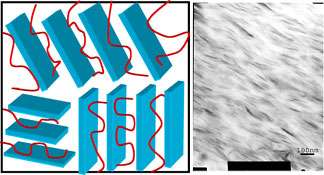
Yet another strategy is to develop membranes that are more stable over a wide range of temperatures and don't leak fuel. Cornell materials chemist Emmanuel Giannelis, the Walter R. Read Professor of Engineering, adds nanoparticles to a polymer membrane, making the membrane stronger -- which means it can be thinner -- and rearranging the pores to make it less permeable to fuel. "We haven't solved the temperature problem, but we haven't made it worse," Giannelis says about the new membranes.
Geoffrey Coates, the Betty R. Miller Professor and associate chair of chemistry and chemical biology, focuses on membranes for alkaline fuel cells, where instead of protons moving from anode to cathode, negative hydroxyl ions move from cathode to anode. "Some catalysts work better in base than in acid," Abruña explains. "It may be easier to find better membranes than better catalysts."
And if new catalysts and membranes don't work out, yet another approach is to change the fuels, using "reformer" technology to extract and purify hydrogen from liquid hydrocarbons to feed into classic fuel cells, or to make biomaterials into new, unconventional fuels for which it might be easier to find good catalysts.
Source: Cornell University


