Old antibiotic may find new life as a stroke treatment
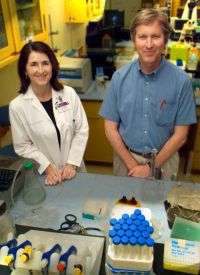
An old intravenous antibiotic may have new life as a stroke treatment, researchers say. Minocycline appears to reduce stroke damage in multiple ways – inhibiting white blood cells and enzymes that, at least acutely, can destroy brain tissue and blood vessels, respectively, says Dr. David Hess, chair of the Department of Neurology in the Medical College of Georgia School of Medicine. The broad-spectrum antibiotic also seems to reduce cell suicide in the minutes and hours following a stroke, enabling more cells to recover.
He and other researchers leading a clinical trial that will study the drug in 60 stroke patients in Georgia, Kentucky and Oregon say they believe the antibiotic will be a safe, effective adjunct therapy for tPA, the only FDA-approved drug therapy for strokes.
“It’s a safe drug that is easy to give and tolerate, that gets into the brain well, and may reduce bleeding, the primary side effect of tPA,” says Dr. Hess, principal investigator on the $1.8 million National Institute of Neurological Disorders and Stroke-funded clinical trial. “We think it will make strokes smaller and patient outcomes better.”
Their animal studies have shown the drug, given within six hours of a stroke, then every 12 hours for up to three days - the peak time of inflammation - reduces stroke damage by up to 40 percent.
“We know it’s safe in humans and we know the concentrations we need to see improvement in the brains of rats can be achieved safely in humans,” says Dr. Susan C. Fagan, professor of pharmacy at the University of Georgia, assistant dean for the MCG program of the UGA College of Pharmacy and study co-investigator. “That’s an important consideration.”
The drug’s safety and optimal stroke dose are the primary focus of the phase-one clinical trial in stroke patients who arrive at MCG, University of Kentucky or Oregon Health & Science University within six hours of symptom onset and with measurable neurological symptoms. Every study patient will get one of four doses, starting with 200 milligrams, the most common dose already used, and increasing incrementally up to 700 milligrams. They’ll get half their first dose at subsequent 12-hour intervals for a three-day period then be followed for 90 days.
“We are going to be drawing samples from patients to make sure we achieve the concentrations that we want in the blood, plus we want to define the half-life in stroke patients to see if it’s different than in the younger patients who take it for other reasons,’ says Dr. Fagan. Newer intravenous antibiotics have replaced minocycline in the United States, but an oral version is used to treat conditions such as acne and rheumatoid arthritis. “If the half-life is longer, we can give it less frequently. We are really fine-tuning the dose,” she says. They’ll do this by looking in the blood for biomarkers, indicators of inflammation, to see if inflammatory factors go up after three days. “It may give us a clue we should treat patients longer,” says Dr. Fagan, a co-investigator on the studies leading to minocycline’s use in rheumatoid arthritis.
One way minocycline fights inflammation is by inhibiting microglial cells, white blood cells activated by a stroke, says Dr. Hess. “When they get activated, they get angry and produce materials that damage the brain. The inflammatory cascade is bad and good. Early on it’s bad, later on it may actually do some good things,” he says. Typically these microglial cells are sentinel immune cells for the brain, helping eliminate infections and secreting factors that support neurons. However, acutely in a stroke, brain tissue can become their target. “They are basically cleaning house at first, then later, they are supportive, releasing growth factors and promoting the growth of new blood vessels,” adds Dr. Fagan.
Minocycline also blocks matrix metallo-proteinases, also released during stroke, which destroy the basement membrane of blood vessels. The presence of these enzymes also is a mixed bag. “If you want angiogenesis – you want to make new blood vessels – you need MMPs around to get rid of the old ones, like tearing down an old building to build a new one,” says Dr. Hess. However, in patients lucky enough to get the clot buster tPA, the enzyme increases the major risk factor: bleeding. Dr. Hess notes that while this initial clinical trial is in ischemic strokes, he thinks minocycline also may be useful in hemorrhagic strokes, which account for about 12 percent of strokes, where clearly blocking MMPs would come in handy.
Minocycline also works by blocking apoptosis, or cell suicide, an observation originally made by MCG Cell Biologist Zheng Dong. “It does this by increasing a protein called bcl-2, which helps cells survive,” says Dr. Hess.
The antibiotic’s potential usefulness in protecting brain cells began surfacing in scientific literature within the last few years. “It was so interesting to us because we knew that a lot of the limitations of other drugs that had been tried in rodents but didn’t work in stroke patients were that they didn’t cross into the brain,” Dr. Fagan says. “We knew that minocycline did based on previous experiments and the fact that many people who take it for acne or rheumatoid arthritis get dizzy. So we were encouraged by this.
“We wanted something we could give at least three hours after stroke or later. In our studies in animal models, we found at delayed time intervals it was profoundly neuroprotective,” says Dr. Fagan. “We studied it at multiple time points at multiple doses and, in fact, some of the most important work we did was finding out how the rodent dose really could be translated to humans,” she says, referencing work published in Experimental Neurology in 2004.
For the clinical trial, Wyeth Pharmaceuticals will make the sterile powder used for injection available from Japan, where it’s still in use.
Source: Medical College of Georgia


