Plant flavonoid found to reduce inflammatory response in the brain
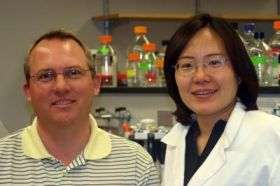
Researchers at the University of Illinois report this week that a plant compound found in abundance in celery and green peppers can disrupt a key component of the inflammatory response in the brain. The findings have implications for research on aging and diseases such as Alzheimer’s and multiple sclerosis.
The study appears this week in Proceedings of the National Academy of Sciences.
Inflammation can be a blessing or a blight. It is a critical part of the body’s immune response that in normal circumstances reduces injury and promotes healing. When it goes awry, however, the inflammatory response can lead to serious physical and mental problems.
Inflammation plays a key role in many neurodegenerative diseases and also is implicated in the cognitive and behavioral impairments seen in aging.
The new study looked at luteolin (LOO-tee-OH-lin), a plant flavonoid known to impede the inflammatory response in several types of cells outside the central nervous system. The purpose of the study was to determine if luteolin could also reduce inflammation in the brain, said animal sciences professor and principal investigator Rodney Johnson.
“One of the questions we were interested in is whether something like luteolin, or other bioactive food components, can be used to mitigate age-associated inflammation and therefore improve cognitive function and avoid some of the cognitive deficits that occur in aging,” Johnson said.
The researchers first studied the effect of luteolin on microglia. These brain cells are a key component of the immune defense. When infection occurs anywhere in the body, microglia respond by producing inflammatory cytokines, chemical messengers that act in the brain to orchestrate a whole-body response that helps fight the invading microorganism.
This response is associated with many of the most obvious symptoms of illness: sleepiness, loss of appetite, fever and lethargy, and sometimes a temporary diminishment of learning and memory. Neuroinflammation can also lead some neurons to self-destruct, with potentially disastrous consequences if it goes too far.
Graduate research assistant Saebyeol Jang studied the inflammatory response in microglial cells. She spurred inflammation by exposing the cells to lipopolysaccharide (LPS), a component of the cell wall of many common bacteria.
Those cells that were also exposed to luteolin showed a significantly diminished inflammatory response. Jang showed that luteolin was shutting down production of a key cytokine in the inflammatory pathway, interleukin-6 (IL-6). The effects of luteolin exposure were dramatic, resulting in as much as a 90 percent drop in IL-6 production in the LPS-treated cells.
“This was just about as potent an inhibition as anything we had seen previously,” Johnson said.
But how was luteolin inhibiting production of IL-6?
Jang began by looking at a class of proteins involved in intracellular signaling, called transcription factors, which bind to specific “promoter” regions on DNA and increase their transcription into RNA and translation into proteins.
Using electromobility shift assays, which measure the binding of transcription factors to DNA promoters, Jang eventually determined that luteolin inhibited IL-6 production by preventing activator protein-1 (AP-1) from binding the IL-6 promoter.
AP-1 is in turn activated by JNK, an upstream protein kinase. Jang found that luteolin inhibited JNK phosphorylation in microglial cell culture. The failure of the JNK to activate the AP-1 transcription factor prevented it from binding to the promoter region on the IL-6 gene and transcription came to a halt.
To see if luteolin might have a similar effect in vivo, the researchers gave mice luteolin-laced drinking water for 21 days before injecting the mice with LPS.
Those mice that were fed luteolin had significantly lower levels of IL-6 in their blood plasma four hours after injection with the LPS. Luteolin also decreased LPS-induced transcription of IL-6 in the hippocampus, a brain region that is critical to spatial learning and memory.
The findings indicate a possible role for luteolin or other bioactive compounds in treating neuroinflammation, Johnson said.
“It might be possible to use flavonoids to inhibit JNK and mitigate inflammatory reactions in the brain,” he said. “Inflammatory cytokines such as interleukin-6 are very well known to inhibit certain types of learning and memory that are under the control of the hippocampus, and the hippocampus is also very vulnerable to the insults of aging,” he said. “If you had the potential to decrease the production of inflammatory cytokines in the brain you could potentially limit the cognitive deficits that result.”
Source: University of Illinois at Urbana-Champaign


