Plague of kangaroos threatens one of Australia's last remaining original native grasslands
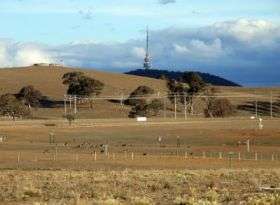
Australian Department of Defence is currently culling hundreds of kangaroos on the outskirts of the capital Canberra that have produced heated discussions and hit international headlines. Australia's iconic animal has multiplied so much over recent years that Canberra now has three times as many kangaroos as inhabitants. The situation is particularly critical at two enclosed military sites on the outskirts of the city, which form an ideal refuge for the eastern grey kangaroo (Macropus giganteus).
The grasslands there are now completely overgrazed - with dramatic consequences for other species. These areas are some of the few natural grasslands in Australia, making them one of the remaining reserves for endangered animal species, like the golden sun moth (Synemon plana) and the grassland earless dragon (Tympanocryptis pinguicolla), one of the world's rarest lizards.
Around 400 of nearly 600 kangaroos at a 200-hectare military site will be killed during the next days with lethal injections after the government ruled out a resettlement programme as too expensive. Resettlement would only relocate the problem.
For several years now, researchers from the Institute for Applied Ecology at the University of Canberra and from the Helmholtz Centre for Environmental Research (UFZ) in Leipzig have been investigating the consequences of natural temperate grassland fragmentation and alteration on species diversity in this region.
The eastern grey kangaroo (Macropus giganteus) has always been part of the cityscape of Canberra, also known as the "bush capital" of Australia. But even Leipzig-based scientist Dr Marion Hahn and Anett Richter of the Helmholtz Centre for Environmental Research (UFZ) are surprised by the high numbers of them. In her doctoral thesis, Anett Richter is investigating how selected invertebrate species such as ground beetles are affected by landscape fragmentation and habitat alteration in natural grasslands in the Australian Capital Territory (ACT). Yet during her fieldwork she discovered that there were far fewer of them than expected. What she found instead were dry grasslands, grazed bare and scarred by the worst drought to hit Australia in a century. Particularly, she was surprised to find large quantities of kangaroo dung, especially in the enclosed military areas: "The results of the fragmentation studies are not yet available. But we assume that there is a relationship on individual sites between the extremely high density of kangaroos and species diversity among the invertebrates - especially in times of severe drought."
But humans are to blame too. The once vast grasslands used to be the territory of the Aborigines, who used this sensitive ecosystem sustainably through hunting and fire management. Natural predators like the dingo controlled the kangaroo populations. When Australia was settled 200 years ago, first the grasslands were lost and then the development of cities like Canberra led to a complete change in the landscape structure. Today, as a result of urbanisation and the intensification of agriculture, large parts of Australia have a highly fragmented landscape, with a high risk of losing their biological diversity. However, humans have considerably improved water provision for kangaroos by installing cattle troughs and other water bodies. Normally, the weaker kangaroos fall victim to drought in dry periods. Today, however, they can fall back on artificial watering holes and so maintain their populations, which then cause further damage to the vegetation. Unlike other animal species, kangaroos have adapted well to the presence of humans. In many regions of Australia kangaroos are hunted and the meat exported.
The Australian capital is a classic example of how drastically humans have changed the fifth continent since Europeans settled there over 200 years ago. Where Canberra sprawls today there were once natural grasslands that used to dominate the landscape of south-eastern Australia. Five percent of the former large native grasslands have survived in the capital territory, and only one percent in South-eastern Australia. This dramatic loss has resulted in the listing of natural temperate grasslands as one of Australia's most threatened ecosystem. The remaining grasslands in the Canberra region are now threatened by urban developments, drought or by too many kangaroos. Just a few years ago the capital's inhabitants were delighted to hear of the rediscovery of a fellow inhabitant believed to be extinct. The grassland earless dragon (Tympanocrytis pinguicolla) is one of the rarest reptile species in the world. Only a few populations on the outskirts of Canberra have survived. These tiny lizards, which weigh just five grams, are so good at camouflaging themselves that for a long time they were thought to be extinct. That was until 1991 when biologist Dr Will Osborne of Institute for Applied Ecology at the University of Canberra happened to push aside a stone with his foot: "What was suddenly revealed underneath was one of the most exciting moments of my life. To this day I don't know how I managed to lift my young son down from my shoulders so quickly to leap after the lizard and to catch it."
The earless dragons had been considered lost for thirty years. "It's difficult to make plans to conserve a species when so little is known about them," says its rediscoverer Osborne. Over recent years his colleagues, together with researchers from the Helmholtz Centre for Environmental Research (UFZ) in Leipzig have therefore been studying the reptile's habits in order to gain a better understanding of the grassland ecosystem. Like fairytale dragons, the grassland earless lives in burrows, similar to a cave that are provided by spiders. Those spiders' holes offer the perfect hiding place - the lizards can even survive bush fires in them. However, they are not very mobile and risk falling victim to the changes in the landscape. In genetic studies, Dr Marion Hahn investigates whether the grassland earless dragon populations interact with one another: "If not, there is a risk in the longer term that inbreeding could lead to the extinction of these tiny populations". However, first of all they need to survive the coming years. For this they need sufficient food supply in the form of insects, which depend on diverse grass and forb species and adequate vegetation structure.
The new postdoctoral study being conducted by Dr. Christina Castellano and supported by the Canberra National Airport aims directly to investigate the impacts of kangaroo and livestock grazing on the survival of earless dragons. Current actions of culling the overabundant kangaroo populations will provide researchers from both institutes the opportunity to study the impacts of grazing on the grassland fauna. To overcome the difficulties of fenced military areas and large numbers of kangaroos, a number of research projects in Canberra have been looking for efficient birth control methods for kangaroos. Recently, researchers have found regulatory mechanisms though it may be too late for many endangered and often overlooked species. This is why there appears to be no alternative at present to reducing the population of kangaroos through culling in order to protect the sensitive flora and fauna on the outskirts of the Australian capital.
Source: Helmholtz Association of German Research Centres


