Climate change does double-whammy to animals in seasonal environments
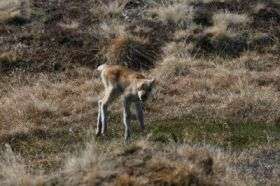
Plant-eating animals in highly seasonal environments, such as the Arctic, are struggling to locate nutritious food as a result of climate change, according to research that will be published in the 21 May 2008 online edition of the journal Proceedings of the Royal Society B.
Led by Penn State Associate Professor of Biology Eric Post, the research, which focused on caribou, suggests that not only are these animals arriving at their breeding grounds too late in the season to enjoy the peak availability of food--the focus of previous research by Post--but they also are suffering from a reduced ability to locate the few high-quality plants that remain before these plants, too, become unavailable.
"This combination of time and space constraints is a double-whammy for species in highly seasonal environments," said Post. "Moving through space--across the landscape--is a strategy used by these animals to deal with shifts in the time their forage plants are available, but now climate change is really putting this strategy to the test," said Post. "Think of it like this," he added. "You've been out on the town with friends, and on the way home you want to stop off for a bite to eat, but the restaurant you've always gone to has closed early. So you try for one around the corner that's always open a little longer. But when you get to that one, it too is closed. For herbivores, the fact that there are several 'restaurants'--their food patches--dispersed across the landscape isn't useful if they all begin closing at the same time in addition to closing earlier in the season."
The team--which also included Christian Pederson, a graduate student in the Penn State Department of Biology, Christopher Wilmers, an assistant professor at the University of California at Santa Cruz, and Mads Forchhammer, a professor at the University of Aarhus in Denmark--focused their research on caribou in West Greenland as an example of an herbivore species in a seasonal environment.
Closely related to wild reindeer, caribou are dependent on plants for all their energy and nutrients. In the spring, they switch from eating lichens buried beneath the snow to munching the new growth of willows, sedges, and flowering tundra herbs. As the birth season approaches, they are cued by increasing daylight to migrate into areas where this newly-emergent food is plentiful.
Global warming, however, is beginning to undermine this routine. According to previous research conducted by Post and Forchhammer, the plants--which initiate growth in response to temperature, not in response to daylight hours--reach their peak nutritional value dramatically earlier in response to rising temperatures. When the animals arrive at their calving grounds now, pregnant females find that the plants on which they depend already have reached their peak productivity and have begun to decline in nutritional value.
This "trophic mismatch"--a predicted consequence of climate change in which the availability of food shifts in response to warming temperatures--is leading to fewer births and to more deaths among caribou calves. Now, according to the Post team's most recent findings, it is clear that life-cycle timing of plants at the calving grounds isn't the only thing with which caribou must contend.
Life-cycle timing of plants in all possible foraging patches also is advancing as a result of increased temperatures related to global warming--even those patches that, in the past, might have been available later in the season. "Variation in the landscape provides an insurance policy for animals, like caribou, that count on being able to climb to the top of the next hill or go across the next valley to find plants that are still newly emergent and highly nutritious. Climate change is reducing the value of that insurance policy," said Post.
Source: Penn State


