A new way to look at lung cancer and tobacco carcinogens
May 28, 2008 PAHs and Lung Cancer

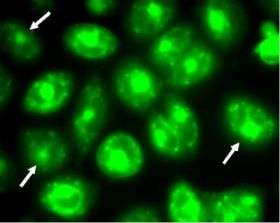
Chemical intermediate causes formation of reactive oxygen species in second indirect pathway connecting polycyclic aromatic hydrocarbons to lung cancer. Credit: Trevor Penning, PhD, University of Pennsylvania School of Medicine

Two types of cancer-causing agents in cigarettes—a nicotine-derived chemical and polycyclic aromatic hydrocarbons (PAHs) are the main culprits in lung cancer. Exposure to tobacco smoke – both mainstream and second-hand – is a leading cause of cancer death in the United States.

Previous studies have shown how PAHs damage DNA, with the emphasis on how PAHs bind directly to DNA itself, leading to the mutations in critical genes that cause disease. Now, researchers at the University of Pennsylvania’s School of Medicine’s Center of Excellence in Environmental Toxicology (CEET) have shown that PAHs, via oxidative stress, can also led to mutations in critical genes important in lung cancer. The findings were published online last week in the Proceedings of the National Academy of Sciences.

“This is the first demonstration of this link,” says co-author Ian Blair, PhD, Professor and Vice Chair of the Department of Pharmacology . “This is a second, but indirect, way in which PAHs can cause cancer. We also know that PAHs can also cause cancer directly.”

Several genetic studies have also shown that the enzymes responsible for generating the oxidative stress from PAHs are overexpressed in lung cancer tumor tissue and esophageal cancers, explains Trevor Penning, PhD, CEET’s director and the study’s senior author. “Our study also shows that those same enzymes, called AKRs, are responsible for the oxidative stress from PAHs in the human lung cells we used in our experiments.”

Oxidative stress is the accumulation of destructive molecules called free radicals that can lead to cell death. Free radicals damage cell membranes, proteins, or genetic material by “oxidizing” them, the same way oxygen causes iron to rust.

The AKR enzymes transform PAHs to produce oxygen free radicals. These oxygen radicals bind to DNA, and if this damage is not repaired it leads to mutations that are carried through to the next generation of cells.

Penning also mentions another genetic ramification due to this association. A recent microarray study of all 30,000 human genes asked what genes were most over-expressed in non-small cell lung carcinoma. Of the eight genes that were most abundantly overexpressed, two were AKR enzymes.

“Because this study relates AKR overexpression to oxidative damage of DNA with lung cancer, it makes you wonder if the 10 percent of smokers that are most prone to lung cancer, have either dysregulated AKR expression or genetic differences in their AKRs that predispose them to disease,” says Penning. Since oxidative stress is also linked to tumor promotion, it is possible that his link may also explain other stages of the disease process.

“These findings go beyond the first step of DNA damage and may provide a reason why disease progresses,” says Penning.

Source: University of Pennsylvania


print this article email this article download pdf blog this article bookmark this article     Stumble it Digg this share on Facebook retweet share on Reddit add to delicious
Rate this story - 4.1 /5 (10 votes)

Rank Filter

Move the slider to adjust rank threshold, so that you can hide some of the comments.


Display comments: newest first

  • nano999 - May 28, 2008
    • Rank: 3 / 5 (3)
    So when are cigarettes, like other cancer causing products, going to be banned? Almost 500,000 people die a year in the US from smoking and yet we're more worried about terrorism. Corporate Amerika is the biggest WMD of all time.
  • 1bigschwantz - May 28, 2008
    • Rank: 3 / 5 (2)
    It'll be banned when the government stops getting tax money from it! In other words-never.
  • MikeMarianiMD,FAAP - May 28, 2008
    • Rank: 3 / 5 (3)
    Since cessation of tobacco smoking prevents tobacco related cancers, as well as the #1 cause of death in America (heart disease), nuanced findings about the mechanism by which this toxin kills are of trivial significance.
  • jgra - May 29, 2008
    • Rank: 1 / 5 (2)
    This is a hilarious issue that the US Government has only taken open in the courts, in a manner to defend the tobacco industry, by paying off the individuals effected, yet they disregard everyone currently smoking and future smokers... Also why are we not investing in more ideas that prevent cancer causing smoking, less toxic cigarettes, I mean it can happen but as Americans do we really want it.
  • lengould100 - Jun 11, 2008
    • Rank: 4 / 5 (1)
    You smoking nazi's bug me. Did anyone actually read the article? "10 percent of smokers that are most prone to lung cancer, have either dysregulated AKR expression or genetic differences in their AKRs that predispose them to disease" -- In other words, 90% of smokers are no more likely to contract lung cancer than the average population.

    Recalls the temperance movement of the 1910-1920 period, and the fruitful experiences (huge increases in organized crime, etc. etc.) It's well proven how "successful" such religions are.

May 28, 2008 all stories

Comments: 5

4.1 /5 (10 votes)
  • Stumble this up

  • Digg this

  • share this

  • hide
  • Related Stories


  • hide
  • Relevant PhysicsForums posts

  • How to prevent another stroke?
    created Nov 11, 2009
  • Swine flu vaccination
    created Nov 10, 2009
  • Improving the brain through chemistry
    created Nov 07, 2009
  • Sleep / REM Sleep and homeostasis
    created Nov 07, 2009
  • More from Physics Forums - Medical Sciences

Other News

Largest gene study of childhood IBD identifies 5 new genes

Medicine & Health / Genetics

created 13 hours ago | popularity 4.5 / 5 (2) | comments 0

In the largest, most comprehensive genetic analysis of childhood-onset inflammatory bowel disease (IBD), an international research team has identified five new gene regions, including one involved in a biological pathway ...


Researchers find potential treatment for Huntington's disease (w/ Video)

Medicine & Health / Research

created 13 hours ago | popularity not rated yet | comments 0

Investigators at Burnham Institute for Medical Research, the University of British Columbia's Centre for Molecular Medicine and Therapeutics and the University of California, San Diego have found that normal synaptic activity ...


Heart and bone damage from low vitamin D tied to declines in sex hormones

Medicine & Health / Research

created 12 hours ago | popularity 2 / 5 (1) | comments 1

Researchers at Johns Hopkins are reporting what is believed to be the first conclusive evidence in men that the long-term ill effects of vitamin D deficiency are amplified by lower levels of the key sex hormone estrogen, ...


Young athletes need dual screening tests for heart defects, study suggests

Medicine & Health / Health

created 13 hours ago | popularity not rated yet | comments 0

To best detect early signs of life-threatening heart defects in young athletes, screening programs should include both popular diagnostic tests, not just one of them, according to new research from heart experts at Johns ...


Postmortem genetic tests after sudden death may provide less expensive way to identify risk

Medicine & Health / Research

created 13 hours ago | popularity not rated yet | comments 0

Targeted postmortem testing to identify genetic mutations associated with sudden unexplained death (SUD) is an effective and less expensive way to determine risk to relatives than comprehensive cardiac testing of first degree ...