Keeping beer fresher
June 2, 2008 Keeping beer fresher

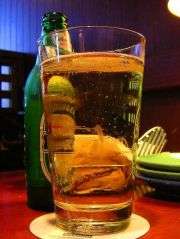
Researchers have identified alpha-carbonyls as important compounds that reduce beer's flavor. Credit: Courtesy of public-domain-photos.com

Scientists in Venezuela are reporting an advance in the centuries-old effort to preserve the fresh taste that beer drinkers value more than any other characteristic of that popular beverage. Their study, which identifies key substances involved in giving beer an aged or "oxidized" flavor, is scheduled for the May 28 issue of ACS’ Journal of Agricultural and Food Chemistry.

In the new study, Adriana Bravo and colleagues point out that past efforts to keep beer fresh have focused on protecting beer from contact with the air throughout the brewing process. That focus, however, has resulted in only a relatively small improvement in flavor stability.

The research identified a group of poorly understood substances called alpha-carbonyls as important culprits in the decline in fresh flavor that occurs as beer ages. It also showed that levels of some of these substances could be reduced by adding ingredients that block their formation, thus making beer taste fresher longer.

Article: http://dx.doi.org/10.1021/jf703696p

Source: ACS


print this article email this article download pdf blog this article bookmark this article     Stumble it Digg this share on Facebook retweet share on Reddit add to delicious
Rate this story - 3.5 /5 (4 votes)


June 2, 2008 all stories

Comments: 0

3.5 /5 (4 votes)
  • Stumble this up

  • Digg this

  • share this

  • hide
  • Related Stories

  • Beer Here
    created Nov 25, 2009 | popularity not rated yet | comments 0
  • Advance toward an 'electronic tongue' with a taste for sweets
    created Aug 17, 2009 | popularity not rated yet | comments 0
  • Amish newspaper succeeds the old-fashioned way
    created Aug 17, 2009 | popularity not rated yet | comments 0
  • Researchers find possible environmental causes for Alzheimer's, diabetes
    created Jul 06, 2009 | popularity not rated yet | comments 0
  • Quagga mussels are clogging Hoover Dam, colonizing lakes and rivers
    created Mar 02, 2009 | popularity not rated yet | comments 0


Other News

Sandia CR5

Machine Converts CO2 into Gasoline, Diesel, and Jet Fuel

Chemistry / Biochemistry

created Nov 23, 2009 | popularity 4.6 / 5 (31) | comments 20

(PhysOrg.com) -- Researchers at Sandia National Laboratories have built a machine that uses the sun's energy to convert carbon dioxide waste from power plants into transportation fuels such as gasoline, diesel, ...


New hydrogen-storage method discovered

New hydrogen-storage method discovered

Chemistry / Materials Science

created Nov 22, 2009 | popularity 4.3 / 5 (42) | comments 15

Scientists at the Carnegie Institution have found for the first time that high pressure can be used to make a unique hydrogen-storage material. The discovery paves the way for an entirely new way to approach ...


New chemical reaction offers opportunities for drug development

Chemistry / Biochemistry

created Nov 26, 2009 | popularity not rated yet | comments 2

Researchers led by Conway Fellow, Professor Pat Guiry have solved a chemistry problem that has stumped researchers worldwide for more than a decade. The results have earned the group the cover story of the leading scientific ...


Research sheds light on workings of anti-cancer drug

Chemistry / Analytical Chemistry

created Nov 26, 2009 | popularity not rated yet | comments 0

(PhysOrg.com) -- The copper sequestering drug tetrathiomolybdate (TM) has been shown in studies to be effective in the treatment of Wilson disease, a disease caused by an overload of copper, and certain metastatic cancers. ...


Chemists get custom-designed microscopic particles to self-assemble in liquid crystal

Chemists get custom-designed microscopic particles to self-assemble in liquid crystal

Chemistry / Materials Science

created Nov 25, 2009 | popularity 5 / 5 (5) | comments 0

(PhysOrg.com) -- The scientists anticipate their "LithoParticles" will have significant applications in photonics, optical communications and other areas.