For barn swallows, feathers make the man, says study
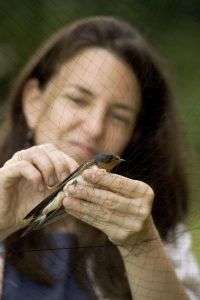
A new study led by the University of Colorado at Boulder has shown the testosterone of male North American barn swallows skyrocketed early in the breeding season when their breast colors were artificially enhanced by researchers, indicating the clothes -- or in this case, the feathers -- make the man.
The swallows, whose breast feathers were darkened to a deep red known to be most attractive to females, likely had more testosterone racing through their bodies because of amorous interactions with the opposite sex and more run-ins with jealous males, said CU-Boulder Assistant Professor Rebecca Safran, lead study author. The jump in testosterone was unexpected because it was observed at the time in the breeding cycle when levels of sex steroids like testosterone are typically declining, she said.
"A simple change in appearance had striking physiological consequences for these barn swallow males, which was a big surprise," said Safran. "The experimental manipulation didn't just improve their looks in the eyes of the females, it actually changed their body chemistry. The relationship between a male's physiology and the traits that win him mates is a lot more flexible than we had imagined."
A paper on the subject is being published in the June 3 issue of Current Biology. Co-authors on the study include James Adelman and Michaela Hau of Princeton University and Kevin McGraw of Arizona State University. The two-year study was funded primarily by the National Science Foundation.
The new study is the first to show significant feedback between physical appearance and physiology in birds, and has implications for better understanding the ecology and evolution of physical signals such as feather color, she said.
"Since the currency of evolution is successfully raised offspring, the message from our work is that darker males, at least in North American populations of barn swallows, are favored over duller ones," she said. "The fact that darker males have naturally higher testosterone levels might be a clue as to why they are more successful."
Safran's studies have shown male barn swallow populations from North America, Europe and the Middle East look physically different from each other, providing clues about the influences of female mate choice on the evolution of new species. In European barn swallows, for example, long tail feathers, rather than dark red breasts, are the primary predictor of reproductive success, she said.
"Our comparative studies of barn swallows in the Middle East, Europe and North America give us a snapshot of evolution in action, including the formation of new species," said Safran. "Female barn swallows seem to be running the show by generating the physical differences we see in the male barn swallows around the world, from the color of their breast feathers to the appearance of their tail feathers."
North American male barn swallows use their breast colors to convey status, health and the ability to successfully raise young, she said. A 2005 study by Safran and her colleagues published in Science showed male barn swallows that were "made over" with darker breast colors bred earlier in the season and fathered more young, and the females that chose them cheated less often with other male suitors. "The results provide strong evidence that color is an important indicator of male quality," she said.
Sexual signals by males in the animal world, from the stately antlers of elk to the gaudy tail feathers of peacocks, have evolved to convey "honest, accurate information," she said. Evolutionary biologists believe the top males in a population can afford the physiological costs of expressing the most exaggerated forms of sexual signals, like a conspicuous dark feather color that is either biochemically costly to produce or makes those individuals more susceptible to predators, she said.
"A male barn swallow can't look in a mirror and assess his social status," said Safran. "But if he flies into a group of other swallows, the birds will quickly assess it for him and give him a sense of where he fits in. Since status is relative to the company one keeps, a male could be a "stud in one group and a regular guy in another," she said.
She likened the biochemical feedback mechanism to a man who has just walked out of a clothing store in a new suit. "When he says he feels like a million bucks, there probably is some biochemical feedback going on," she said. "The result is something we all might experience when given the chance to upgrade our status, like winning a prestigious award or being invited to an exclusive event."
"The traditional view is that internal processes of birds determine their external features -- in other words, physiology forms the feathers," said study co-author Kevin McGraw of ASU's School of Life Sciences. "But our results indicate that a perceived change in the color of an animal can affect directly its internal physiological state. A barn swallow's hormonal profile is influenced by its outward appearance."
In the new Current Biology study, the researchers captured 63 male barn swallows from six colonies in New Jersey at the start of the breeding season as the birds arrived at the breeding site and started forming pairs. The breasts of roughly half the birds were colored with a nontoxic marker to match the darkest, most attractive feathers of males within the population.
The marked birds were released back into the wild, re-captured a week later and administered blood tests to measure androgen levels, including testosterone. In addition to showing increased levels of androgens, the marked birds also lost weight, perhaps because they were more active than their "duller" neighbors, or simply couldn't measure up to the expectations of other barn swallows because of their "counterfeit" sexual signals, she said.
Mitochondrial DNA analyses of barn swallows indicate the European barn swallows and North American barn swallows likely diverged from a common ancestor that inhabited the African continent several million years ago. Safran's studies should help researchers better understand the rapid evolution of traits involved in mate selection.
Source: University of Colorado at Boulder


