How to construct a 'firefly' worm
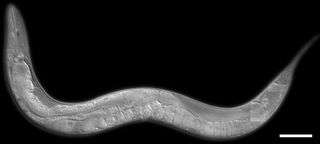
Research describing a new modified luminescent worm that allows, for the first time, to measure, in real time, the metabolism of an entire living organism has just been published in the journal BMC Physiology.
The key behind this capacity relies in the fact that the luminescence is produced using the animal’s available energy, which reflects its metabolism that, as such, can be extrapolated from measuring the emitted light.
The new altered Caenorhabditis elegans - which is widely used to study human genes - by detecting metabolic changes in the exact moment these occur, will help to understand the cause behind these changes and contribute to understand C. elegans (and human) genes, as well as the mechanisms behind disease and health. In fact, Alzheimer’s, Parkinson’s disease and different types of stress – such as starvation and oxygen deprivation - are just some of the phenomena characterised by visible metabolic changes that can now be further investigated using this new animal model.
Caenorhabditis elegans is a animal model used to study human genes and their function due to the fact that part of its genome has been conserved throughout evolution, and is shared by humans. But although much research has been done on the worm’s genes, much still needs to be learned specially among the genes behind physiology, which - contrary to those linked to vital functions or body shape - can be difficult to identify, since abnormalities in them not always result in visible alterations.
Adenosine triphosphate (or ATP) is a high-energy molecule used as source of energy by the body cells, where its levels are directly linked to the organism’s metabolism. This means that alterations in the body ATP can help to reveal metabolic problems and, in fact, ATP changes are associated with a series of problems including neurodegenerative diseases and stress.
It was this link between ATP, metabolism and disease that led Cristina Lagido, Jonathan Pettitt, Aileen Flett and L. Anne Glover from the Institute of Medical Sciences at the University of Aberdeen, UK to hypothesise that ATP levels could be used as a physiological parameter in C.elegans to complement the genetic data and help to further understand its (as well as the human) genome.
With this aim in mind the researchers went to create a modified luminescent C.elegans expressing the protein firefly luciferase that, as the name indicates, comes from fireflies where it produces light by using ATP to transform a pigment called luciferin.
The idea was, that, when luciferin (that does not exist in the animal) was supplied in excess, the animal’s luminescence would be directly related to the amount of ATP existent in the worm. And, since C. elegans is transparent, the luminescence could then be measured allowing the researchers to calculated ATP levels and, consequently, follow the animal’s metabolism in real time.
But first, to confirm that the worm’s luminescence was indeed related to its ATP levels, the animals were put in conditions known to affect this molecule quantity – whether by exposing them to the toxic compound sodium azide (which is a known agent of stress) or by directly inhibiting their ATP production – and their luminescence was measured. In both cases, luminescence was significantly reduced as expected and with azide, increased levels of this compound resulted in reduced luminescent further supporting the link ATP-luminescence.
Furthermore, because the effects of non-lethal doses of sodium azide – like the ones used in these experiments - are known to be reversible, after the measurements with azide the animals were washed and their luminescence measured again to be found that the emitted light was back to normal levels. Final support to the link ATP levels-luminescence came from the fact that ATP variations found in the azide experiments, agreed with measurements done by others studying similar conditions, but using different methods.
These results confirmed that Lagido, Glover and colleagues’ modified C. elegans was, in fact, a reliable model to follow the worm’s metabolism in real time. This was the first time that it was shown that luminescence could be used to assess ATP levels in a living multicellular organism.
What is most interesting about Lagido, Glover and colleagues’ modified C.elegans is how, despite its apparently simplicity, this new worm is a potentially incredible research tool to understand better the many genetic pathways involved in C. elegans physiology, including those participating in metabolism, ageing, disease and stress response. Cristina Lagido – a Portuguese researcher – and colleagues’ work has created a unique tool to link physiology and genetics in an organism which – most importantly- shares many of its genes with us humans.
Source: BMC


