Earthworm detectives provide genetic clues for dealing with soil pollution
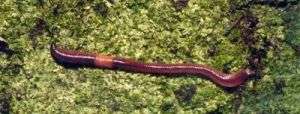
The humble earthworm, famously acknowledged by Charles Darwin when he wrote "It may be doubted whether there are many other animals... which have played so important a part in the history of the world", provides a new sensitive and detailed picture of what is going on in our contaminated soil ecosystems.
New research published in two BioMed Central journals shows that copper contamination has a detrimental effect by interfering with the energy metabolism of the exposed invertebrates and that different pollutants have unique molecular effects, with implications for both monitoring and remediation of toxins.
The earthworm Lumbricus rubellus has long been known as an 'ecosystem engineer' for the role it plays in water, nutrient and carbon cycling in a range of tropical and temperate soils, and is widely used as a model organism for soil testing.
However, standard lab assays do not reveal the molecular mechanisms by which L. rubellus adapts to exposure to soil contaminants. Although the L. rubellus genome has not yet been sequenced, a comprehensive expressed sequence tag dataset is now available (www.earthworm.org) that enables the development of tools that bring the earthworm into the genomics arena.
Two teams, funded by the UK Natural Environment Research Council and led by Peter Kille of Cardiff University, have jointly published their research on the use of a systems toxicology approach to understanding the impact of four soil contaminants on L. rubellus in the open access journals, BMC Biology and BMC Genomics. Using a new 8,000-element microarray, they describe the transcriptome profile of L. rubellus exposed to copper, cadmium, the polyaromatic hydrocarbon fluoroanthene, and the agrochemical atrazine. In both studies this approach revealed subtle changes induced by the toxic chemicals in earthworm gene expression patterns. The second study, which specifically focused on copper exposure, extended the approach by identifying the consequences of the genetic changes in terms of altered metabolism (impact to their metabolomic profile) in conjunction with large-scale physical changes in worm health.
The molecular approach to monitor ecosystem effects of toxins described in these two papers allows us to understand not only the uniqueness of earthworms, given that many of the genes they express do not yet have equivalents in 'model' organisms, but is also an important step towards the better understanding of how the earthworm has evolved adaptive mechanisms to deal with soil pollution.
This multidisciplinary research shows that a systems approach to ecotoxicology, combining technologies usually used in isolation, can be a powerful tool for understanding the response of an ecologically important organism to contaminants, and opens up the possibility of new and more effective soil monitoring and bioremediation strategies.
Dr Kille concluded "The ubiquitous nature of the earthworm makes it an accepted part of our everyday world. People don't ask themselves how worms survive in soil where the pH naturally ranges from acidic pet bogs at pH 4 to chalk downs at pH 8 or where intensively farming requires significant use of agrochemicals/pesticides or within highly contaminated ex-industrial sites. Our research illustrates how exploiting genomics and metabolomics reveals the mechanics that allow this organism to be omnipresent in our terrestrial environment."
Source: BioMed Central


