NASA targets GLAST launch for June 7
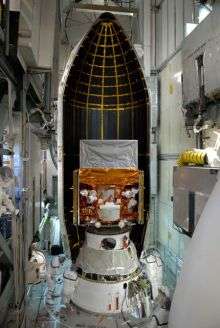
NASA has set June 7 as the new target launch date for the Gamma-ray Large Area Space Telescope, or GLAST, from Cape Canaveral Air Force Station in Florida. The launch window extends from 11:45 a.m. to 1:40 p.m. EDT and remains unchanged through Aug. 7.
NASA had targeted June 5 for the GLAST launch aboard a Delta II rocket. Additional time was necessary for the Delta II launch team to assure that open engineering issues, which have been under review, are satisfactorily resolved.
NASA's Gamma-Ray Large Area Space Telescope (GLAST) is a powerful space observatory that will open a wide window on the universe. Gamma rays are the highest-energy form of light, and the gamma-ray sky is spectacularly different from the one we perceive with our own eyes. With a huge leap in all key capabilities, GLAST data will enable scientists to answer persistent questions across a broad range of topics, including supermassive black-hole systems, pulsars, the origin of cosmic rays, and searches for signals of new physics.
The mission is an astrophysics and particle physics partnership, developed by NASA in collaboration with the U.S. Department of Energy, along with important contributions from academic institutions and partners in France, Germany, Italy, Japan, Sweden, and the U.S.
Source: NASA


