New drug to stop tuberculosis epidemic
Researchers at the University of Manchester are developing a new drug against tuberculosis (TB), one of the oldest human infectious diseases, which is now threatening to reach epidemic proportions once more.
TB poses a serious threat to all nations with its incidence and mortality continuing to grow worldwide, triggered by new viral infections like HIV. It has coexisted with the human population since the Iron Age and currently infects one third of the population.
About 90% of infected people carry a latent infection for a lifetime span; the remainder develop the active disease triggered by age, poor health and poverty, as well as by co-infections. Despite the decline of the disease thanks to the introduction of vaccines in the last century, the emergence of new viral infections like HIV/AIDS has resulted in resurgence of TB. Today, more people die of TB than of any other curable infectious disease. TB has turned into a health threat of serious proportions with a major social and economic impact all around the world.
In addition the disease's long history and the problematic use of previous treatments have resulted in the multi-drug resistant strains.
Dr Lydia Tabernero and her team, together with Dr Jen Cavet at the Faculty of Life Sciences, have been awarded £700,000 Medical Research Council (MRC) funding to develop a drug against the disease that will be simpler to use, quicker in its action and, being new, able to combat even drug resistant strains. This research will be developed in collaboration with Professor Franzblau and Dr Abad-Zapatero at the University of Illinois in Chicago.
Dr Tabernero explains: “Antibiotic resistance is the most serious obstacle in the cure and eradication of TB. This is, in part, due to lack of compliance from patients during the complex and long treatment. Multi-drug resistant TB now affects more than 50 million people, with an increasing percentage of cases evolving into extensively drug resistant TB that is extremely hard to treat.
“Existing treatments are more than 40 years old. Clearly, to tackle drug resistance and prevent future epidemics, we need new approaches and novel anti-TB drugs. Several promising compounds are now under development with a few in clinical trials, while alternative potential targets are also being characterised.
“New approaches and therapeutical treatments are urgently needed to tackle the increasing spread of the infection, by reducing drug resistance, time of treatment and to be compatible with anti-retroviral therapies. We propose to fulfil these unmet therapeutical needs by targeting a unique virulence factor (MptpB) from the causing agent of TB, M. tuberculosis.”
Dr Tabernero added: “We are very pleased to have received this funding as it will allow us to develop a drug that will combat a dangerous but somewhat overlooked disease.
“A main bottleneck in the development of inhibitory compounds is that generally resources and expertise are concentrated in the private sector. Companies are highly reluctant to allocate serious investments in ‘poor people's diseases’ that would compromise their return benefits.
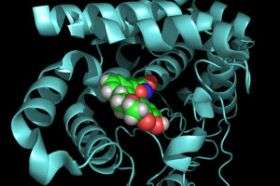
“We have characterised the activity profile of a protein known to be a virulence factor for TB causing bacteria and propose to develop a new drug against this target to treat TB. We have already identified compounds, which are potent inhibitors of this protein. To take our ambitions further, we must now develop some of the leads we have identified and be able to test them. This will only be possible in a non-profit academic environment at this stage.”
Dr Tabernero hopes to develop the new drug within three to four years and to start clinical trials in the near future.
Source: University of Manchester


