Woolly-Mammoth Gene Study Changes Extinction Theory
A large genetic study of the extinct woolly mammoth has revealed that the species was not one large homogenous group, as scientists previously had assumed, and that it did not have much genetic diversity.
"The population was split into two groups, then one of the groups died out 45,000 years ago, long before the first humans began to appear in the region," said Stephan C. Schuster, associate professor of biochemistry and molecular biology at Penn State University and a leader of the research team. "This discovery is particularly interesting because it rules out human hunting as a contributing factor, leaving climate change and disease as the most probable causes of extinction." The discovery will be published later this week in the early online edition of the Proceedings of the National Academy of Sciences (PNAS).
The research marks the first time scientists have dissected the structure of an entire population of extinct mammal by using the complete mitochondrial genome -- all the DNA that makes up all the genes found in the mitochondria structures within cells. Data from this study will enable testing of the new hypothesis presented by the team, that there were two groups of woolly mammoth -- a concept that previously had not been recognized from studies of the fossil record.
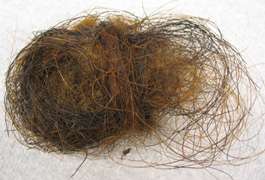
The scientists analyzed the genes in hair obtained from individual woolly mammoths -- an extinct species of elephant adapted to living in the cold environment of the northern hemisphere. The bodies of these mammoths were found throughout a wide swathe of northern Siberia. Their dates of death span roughly 47,000 years, ranging from about 13,000 years ago to about 60,000 years ago.
Schuster and Webb Miller, professor of biology and computer science and engineering at Penn State, led the international research team, which includes Thomas Gilbert at the University of Copenhagen in Denmark and other scientists in Australia, Belgium, France, Italy, Russia, Spain, Sweden, the United Kingdom, and the United States. The team includes experts in the fields of genome evolution, ancient DNA, and mammoth paleontology, as well as curators from various natural-history museums.
Another important finding for understanding the extinction processes is that the individuals in each of the two woolly-mammoth groups were related very closely to one another. "This low genetic divergence is surprising because the woolly mammoth had an extraordinarily wide range: from Western Europe, to the Bering Strait in Siberia, to Northern America," Miller said. "The low genetic divergence of mammoth, which we discovered, may have degraded the biological fitness of these animals in a time of changing environments and other challenges."
Our study suggests a genetic divergence of the two woolly-mammoth groups more than 1-million years ago, which is one quarter the genetic distance that separates Indian and African elephants and woolly mammoths," Miller said. The research indicates that the diversity of the two woolly-mammoth populations was as low centuries ago as it is now in the very small populations of Asian elephants living in southern India. "The low genetic divergence of the elephants in southern Indian has been suggested as contributing to the problems of maintaining this group as a thriving population," Schuster said. Intriguingly, the mitochondrial genomes revealed by the researchers are several times more complete than those known for the modern Indian and African Elephants combined.
Whereas studies before this research had analyzed only short segments of the DNA of extinct species, this new study generated and compared 18 complete genomes of the extinct woolly mammoth using mitochondrial DNA, an important material for studying ancient genes. This achievement is based on an earlier discovery of the team led by Miller, Schuster, and co-author Thomas Gilbert, which was published last year and that revealed ancient DNA survives much better in hair than in any other tissue investigated so far. This discovery makes hair, when it is available, a more powerful and efficient source of DNA for studying the genome sequences of extinct animals. Moreover, mammoth hair is found in copious quantities in cold environments and it is not regarded as fossil material of enormous value like bone or muscle, which also carries anatomical information.
"We also discovered that the DNA in hair shafts is remarkably enriched for mitochondrial DNA, the special type of DNA frequently used to measure the genetic diversity of a population," Miller said. The team's earlier study also showed that hair is superior for use in molecular-genetic analysis because it is much easier than bone to decontaminate. Not only is hair easily cleaned of external contamination such as bacteria and fungi, its structure also protects it from degradation, preventing internal penetration by microorganisms in the environment.
An important aspect of the new study is that the hair samples it used had been stored in various museums for many years before being analyzed by the researchers, yet the scientists were able to obtain lots of useful DNA from them. "One of our samples originates from the famous Adams mammoth, which was found in 1799 and has been stored at room temperatures for the last 200 years," Schuster said. This research technique opens the door for future projects to target interesting specimens that were collected a long time ago and are no longer available from modern species, the scientists said. Even the molecular analysis of entire collections seems now possible, an effort that the team calls "Museomics."
"We plan to continue using our techniques to untangle the secrets of populations that lived long ago and to learn what it might have taken for them to survive," Schuster said. "Many of us also have a personal interest in learning as much as we can about how any species of large mammal can go extinct."
Source: Penn State


