Study of guanacos launched in Chile
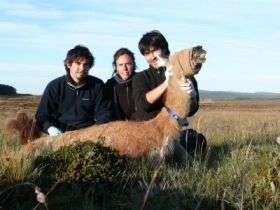
The Wildlife Conservation Society has launched a study in Chile's Karukinka reserve on Tierra del Fuego to help protect the guanaco – a wild cousin of the llama that once roamed in vast herds from the Andean Plateau to the steppes of Patagonia.
Today, the guanaco population has dwindled to perhaps half a million animals that live in highly fragmented populations due to habitat loss and competition from livestock. Tierra del Fuego, especially Karukinka, holds the largest wild population of Chilean guanacos. The WCS study of these poorly understood members of the camel family will provide critical data to help restore one of the most endangered natural phenomena in Latin America – the overland migration of guanacos – a critical element to understanding biodiversity of the area.
Donated to WCS by Goldman Sachs in 2004, Karukinka consists of 740,000 acres of wilderness, including the world's southernmost old-growth forest as well as extensive peat bogs, unique river systems, and grasslands. Goldman Sachs has provided key funding for this guanaco study.
"This study is pivotal in understanding the ecological importance of the guanaco and ultimately conserving them as a species," said Dr. Steven E. Sanderson, President and CEO of the Wildlife Conservation Society. "Historically, guanacos played a similar ecological role in Latin America as did bison in North America, with vast herds wandering over large landscapes. We commend Goldman Sachs for their support to help protect an iconic species that is so important to Tierra del Fuego's natural heritage."
A team of WCS researchers have successfully equipped eight guanacos from seven family groups with radio collars to better understand their current movements. The researchers are particularly interested in how guanacos adapt to seasonal changes in the landscape and how they are affected by livestock grazing and other human factors outside of the reserve. The WCS research will provide an understanding of key factors that affect guanaco distribution, abundance, and social composition, as well as show migratory patterns.
Throughout the world, overland migrations of ungulates like guanaco are endangered due to a variety of issues ranging from habitat fragmentation to over-hunting. The Wildlife Conservation Society is working to protect wildlife migrations in several key regions around the world.
Source: Wildlife Conservation Society


