June 12, 2008 feature
Carbon Nanotubes as a Single-Photon Source
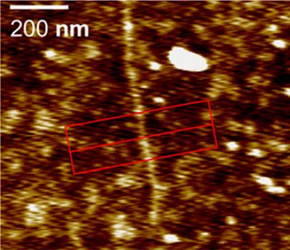
Carbon nanotubes, as true multi-purpose materials, have potential applications in everything from electrical circuits and drug delivery to golf clubs and space elevators. Recently, physicists have investigated single-walled carbon nanotubes (CNTs) for one more use: as a single-photon source, where they could help make quantum communication networks extremely secure and efficient.
For the first time, a team of researchers from the Institute of Quantum Electronics in Zurich, Switzerland, has observed photon antibunching (the characteristic signature of non-classical light) in CNT photoluminescence. The study, which is published in a recent issue of Physical Review Letters, provides the first demonstration of non-classical optical emission from a CNT.
Over the past few years, researchers have identified several different systems that can act as single-photon sources. All these systems have a common feature: they confine the motion of charged particles to a very small space in all three dimensions. Physicists describe such systems with restricted particle motion as “quasi-zero-dimensional.”
The corresponding phase-space of localized particles is made into discrete areas due to the laws of quantum mechanics. The Pauli Exclusion Principle prevents two particles from occupying identical quantum states, so that only one particle at a time can undergo a transition between two distinct states. The principle inhibits simultaneous two-photon generation, and ensures that the system generates only a single photon.
Physical systems such as atoms, ions, molecules, and quantum dots are quasi-zero-dimensional and operate as single-photon sources. In the new study, the researchers show that the same principle applies to CNTs – despite the fact that nanotubes are spatially extended in one dimension.
“The fact that carbon nanotubes are nearly-perfect single photon emitters is surprising,” lead author Alexander Högele told PhysOrg.com. “Single photon emission is characteristic of systems with quantum confinement in all spatial dimensions. Carbon nanotubes, however, are axially extended and represent a one-dimensional model system.”
The single-walled CNTs that the team studied had diameters of just 0.8 nanometers, along with an average length of about 500 nanometers. The researchers used a laser to excite individual CNTs at temperatures as low as 4.2 K, and caused them to emit light with a wavelength of around 880 nanometers.
At first, the researchers observed that individual CNTs emitted photons at a delay of a few nanoseconds, consistent with the repetition rate in the laser pulse train. The researchers then investigated statistic correlations between such consecutively emitted photons. Significantly, they did not detect any photon correlation at zero time delay (t=0), indicating strong photon antibunching.
“A photon correlation experiment measures the probability of arrival of two photons with a given time delay,” Högele explained. “When two photons travel together, an ideal photon correlation setup would detect with a probability of one the arrival of one photon upon the arrival of another. When one of the two traveling photons is delayed, then the photons will arrive consecutively at the detector and the probability of simultaneous photon detection is zero.
“The meaning of the vanishing peak at zero time delay is that photons ‘avoid’ each other, and that it is impossible to find a pulse that contains two or more photons. It has been shown previously that such photon statistics cannot be explained using classical Maxwell's equations; a quantum description of light is necessary to understand the photon antibunching phenomenon.”
The researchers found that two different mechanisms ensure the antibunching: Augur processes and low temperatures that suppress the motion of charged particles along the nanotube axis. Together, these two mechanisms lead to a two-photon emission probability as low as 3% at low temperatures.
“We were quite puzzled by our first measurement that showed strong antibunching in the photo-emission of single carbon nanotubes,” said Högele. “In consecutive experiments, we identified two key mechanisms that ensure single-photon generation: first, non-linear Auger processes [which cause one out of two pairs of electrons and electron holes to annihilate non-radiatively] play an important role. Second, electron-hole pairs in carbon nanotubes appear to be strongly localized at low-temperatures by trapping centers. The result is a carbon nanotube quantum dot with an anharmonic spectrum.”
The researchers hope that these observations could lead to the development of new single-photon sources for applications such as long-distance quantum communication and quantum cryptography.
“The potential advantage of using CNTs as single-photon sources is the fact that their emission wavelength can be tuned into the optical communication wavelength window,” said Högele. “The emission wavelength of single-walled carbon nanotubes depends on the tube diameter and is tunable by growth in the range between around 1 and 2 microns.”
More information: Högele, Alexander; Galland, Christophe; Winger, Martin; and Imamoğlu, Atac. “Photon Antibunching in the Photoluminescence Spectra of a Single Carbon Nanotube.” Physical Review Letters 100, 217401 (2008).
Copyright 2008 PhysOrg.com.
All rights reserved. This material may not be published, broadcast, rewritten or redistributed in whole or part without the express written permission of PhysOrg.com.


