Study Finds Benefits to Earlier Colon Cancer Screenings
Patients would benefit by having colon cancer screenings earlier than currently recommended, according to a study by researchers at Columbia University’s Mailman School of Public Health.
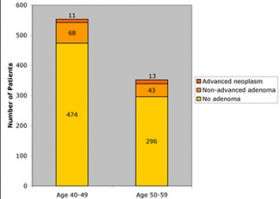
The study found that the prevalence of precancerous masses in the colon is the same for average-risk patients who are 40 to 49 years of age as it is for those who are 50 to 59 years of age, according to a study published in the current issue of Gastroenterology, the journal of the American Gastroenterological Association (AGA) Institute.
After comparing colonoscopy results by age group, the team of scientists found that in the 40 to 49 age group, 14 percent had one or more adenomas, or precancerous growths. Among the 50 to 59 age group, 16 percent had one or more adenoma.
Currently, standard protocol recommends screening patients age 50 and over for colon cancer based on the increasing incidence of colon cancer at that age. Because observational studies have shown that it takes a decade for adenomas to develop and progress to cancer, the increase in colon cancer prevalence in the over-50 age group, in fact, may be the result of undetected adenomas that were present in the individuals in their 40s.
Data were analyzed by a team of researchers led by Alfred I. Neugut, professor of epidemiology at Columbia’s Mailman School of Public Health, professor of medicine at Columbia University College of Physicians and Surgeons and head of cancer prevention and control for the Herbert Irving Comprehensive Cancer Center at Columbia University Medical Center and New York-Presbyterian Hospital. The team was also led by Andrew Rundle, assistant professor of epidemiology at the Mailman School of Public Health.
"Our results support the theory that adenomas, which later may lead to cancer, form at an age earlier than we screen for today," said Dr. Neugut. "With this information in hand, it is logical to think that if we were to recommend screening for colon cancer at age 40, we may be able to decrease its prevalence even further and save more people from having to battle the disease."
The researchers reviewed 553 screening colonoscopies for patients ages 40 to 49 and 352 screening colonoscopies for patients ages 50 to 59. Individuals who could be deemed "high-risk" because of a family history of colon cancer, a personal history of inflammatory bowel disease, or any malignancy other than skin cancer were excluded from the sample.
"Detecting adenomas when patients are in their 40s could mean that we are able to drastically lower the prevalence of colorectal cancer,” noted Dr. Rundle. “Additional studies need to be done to look specifically at this possibility and the cost-benefit of beginning screening at an earlier age."
Source: Columbia University


