When it comes to female red squirrels, it seems any male will do
June 20, 2008 Squirrels

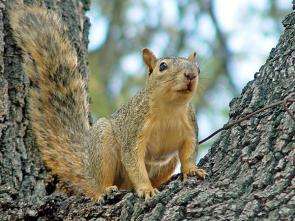
Researchers have found that female red squirrels showed high levels of multimale mating and would even mate with males that had similar genetic relatedness, basically mating with their relatives.

Researchers from the University of Alberta, in Edmonton, Alberta, Canada and the University of Sheffield in Sheffield, England, United Kingdom studied a population of red squirrels over a period of three years near Kluane National Park in southwest Yukon.

While males mating with multiple females is quite common in the animal kingdom, females that multi-mate is much harder to explain.

Through their observations, it was noted that when female red squirrels chose a mate to copulate with, genetic relatedness did not play a factor.

"In males, the benefits of multi-female mating are well established, but in females the benefits of having many offspring is limited, making the reasoning for multimale mating more puzzling," said Jeffrey Lane, who conducted the study while obtaining his PhD at the University of Alberta.

The researchers also found that the relatedness of parents had no effect on the neonatal mass and growth rate of their offspring. As well, whether or not an offspring survived to one year of age wasn't affected by having related parents either.

"Detailed investigations into the social and genetic context of multimale mating in red squirrels and other mammalian species should help to provide insight into the evolution and maintenance of this behavior," said Lane.

Source: University of Alberta


print this article email this article download pdf blog this article bookmark this article     Stumble it Digg this share on Facebook retweet share on Reddit add to delicious
Rate this story - 4.1 /5 (8 votes)

Rank Filter

Move the slider to adjust rank threshold, so that you can hide some of the comments.


Display comments: newest first

  • Mercury_01 - Jun 20, 2008
    • Rank: not rated yet
    I know what species to be born into next time around...
  • zevkirsh - Jun 20, 2008
    • Rank: 4 / 5 (1)
    red heads....we all knew it.
  • ontheinternets - Jun 20, 2008
    • Rank: 1 / 5 (1)
    Perhaps mate selection is the least of your worries when you're getting by on buried nuts and living in a tree.
  • ranfea - Jun 20, 2008
    • Rank: 1 / 5 (1)
    I thought this was a physics news site.

June 20, 2008 all stories

Comments: 4

4.1 /5 (8 votes)
  • Stumble this up

  • Digg this

  • share this

  • hide
  • Related Stories


Other News

Variable Temperatures Leave Insects wtih a Frosty Reception

Biology / Plants & Animals

created 7 hours ago | popularity not rated yet | comments 0

(PhysOrg.com) -- For the first time, scientists at The University of Western Ontario have shown that insects exposed to repeated periods of cold will trade reproduction for immediate survival.


When camouflage is a plant's best protection

Rare woodland plant uses 'cryptic coloration' to hide from predators

Biology / Plants & Animals

created 10 hours ago | popularity 4.3 / 5 (3) | comments 0

It is well known that some animal species use camouflage to hide from predators. Individuals that are able to blend in to their surroundings and avoid being eaten are able to survive longer, reproduce, and ...


Cells defend themselves from viruses, bacteria with armor of protein errors

Biology / Cell & Microbiology

created 11 hours ago | popularity 5 / 5 (7) | comments 0

When cells are confronted with an invading virus or bacteria or exposed to an irritating chemical, they protect themselves by going off their DNA recipe and inserting the wrong amino acid into new proteins to defend them ...


'Safety valve' protects photosynthesis from too much light

Biology / Cell & Microbiology

created 11 hours ago | popularity 5 / 5 (2) | comments 0

Photosynthetic organisms need to cope with a wide range of light intensities, which can change over timescales of seconds to minutes. Too much light can damage the photosynthetic machinery and cause cell death. Scientists ...


Researchers discover biological basis of 'bacterial immune system'

Biology / Cell & Microbiology

created 12 hours ago | popularity 4.7 / 5 (3) | comments 0

Bacteria don't have easy lives. In addition to mammalian immune systems that besiege the bugs, they have natural enemies called bacteriophages, viruses that kill half the bacteria on Earth every two days.