DNA study unlocks mystery to diverse traits in dogs
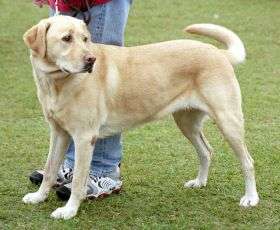
June 22nd, 2008 retriever

Discovery offers potential benefits for dogs and their owners
What makes a pointer point, a sheep dog herd, and a retriever retrieve? Why do Yorkshire terriers live longer than Great Danes? And how can a tiny Chihuahua possibly be related to a Great Dane?

Dogs vary in size, shape, color, coat length and behavior more than any other animal and until now, this variance has largely been unexplained. Now, scientists have developed a method to identify the genetic basis for this diversity that may have far-reaching benefits for dogs and their owners.

In the cover story of tomorrow's edition of the science journal Genetics, research reveals locations in a dog's DNA that contain genes that scientists believe contribute to differences in body and skull shape, weight, fur color and length – and possibly even behavior, trainability and longevity.

"This exciting breakthrough, made possible by working with leaders in canine genetics, is helping us piece together the canine genome puzzle which will ultimately translate into potential benefit for dogs and their owners," said study co-author Paul G. Jones, PhD, a Mars Veterinary™ genetics researcher at the Waltham® Centre for Pet Nutrition – part of Mars® Incorporated, a world leader in pet care that has been studying canine genetic science for the past eight years. "By applying this research approach, we may be able to decipher how genes contribute to physical or behavioral traits that affect many breeds."

Dogs originally derived from the wolf more than 15,000 years ago – a blink of the eye in evolutionary terms. Selective breeding produced dogs with physical and behavioral traits that were well suited to the needs or desires of their human owners, such as herding or hunting ability, coat color and body and skull shape and size. This resulted in the massive variance seen among the more than 350 distinct breeds that make up today's dog population. Until now, the genetic drivers of this diversity have intrigued scientists who have been trying to explain how and why the difference in physical and behavioral traits in dogs changed so rapidly from its wolf origins.

An international team of researchers, which included scientists at the National Human Genome Research Institute, the University of Utah, Sundowners Kennels in Gilroy, California and Mars' Waltham Center for Pet Nutrition in the United Kingdom, studied simple genetic markers known as Single Nucleotide Polymorphisms, or SNPs, to find places in the dog genome that correlate with breed traits. Because many traits are "stereotyped" – or fixed within breeds – researchers can zero in on these "hot spots" to see what specific genes are in the area that might contribute to differences in traits.

The research used 13,000 dog DNA samples provided by Mars Veterinary, which holds one of the most comprehensive canine DNA banks in the world. This collection has been built up with the help of pet owners who have consented to their pets providing cheek swabs and blood samples for the database. Mars' DNA bank allowed the study to cover most of the American Kennel Club recognized breeds that span a wide variety of physical and behavioral traits and differences in longevity.

"With further refinement and additional data, this method could be used to tailor products that may benefit the health of pets," Jones said. "Pet owners and veterinarians may be able to develop better care regimes based on this knowledge. In addition, genetic information about behavioral traits, such as trainability and temperament, could also help veterinarians identify the most lifestyle-appropriate pet for an owner."

This research may also have implications for human health, as dogs suffer from many of the same diseases that we do.


Source: Weber Shandwick Worldwide


print this article email this article download pdf blog this article bookmark this article     Digg this Stumble it share on Facebook share on Reddit add to delicious save to Yahoo! bookmarks
4.1/5 after 25 votes

Rank Filter

Move the slider to adjust rank threshold, so that you can hide some of the comments.


Display comments: newest first

  • KB6 - Jun 22, 2008
    • Rank: 3 / 5 (1)
    "With further refinement and additional data, this method could be used to tailor products that may benefit the health of pets,"
    ---
    And it could potentially be used to tailor dogs to the specifications of their potential owners.
  • HenisDov - Jun 22, 2008
    • Rank: 3 / 5 (2)
    This is technology, not science.

    The scientific situation:

    It Is Culture That Modifies Genetics
    NOT Genetics That Modifies Culture

    Genes, Earth's primal organisms even when interdependent members of their genome communal cooperative, evolve in response to their survival requirements, which are THEIR CULTURE.

    Darwinism starts with pre-Archaea genes, driven by culture.

    From http://blog.360.y...Q--?cq=1]http://blog.360.y...Q--?cq=1[/url]&p=409

    - Genes are organisms, interdependent members of genes communes, genomes, all continuously undergoing evolution directed towards survival as long as possible, for maintaining Earth's biosphere as long as possible. This is the reason and purpose of their, and our, existence.

    - Culture is a ubiquitous biological entity and is the major effector of genetic evolution, of capabilities and attributes selected for survival.

    - The major course of natural selection is NOT via random mutations followed by survival, but via interdependent, interactive and interenhencing selection of biased replication routes by genes at their alternative-splicing-steps junctions, effected by the cultural feedback of the second stratum multicells organism or monocells community to their prime stratum genes-genome organisms.


    Dov Henis

    http://blog.360.y...Q--?cq=1]http://blog.360.y...Q--?cq=1[/url]&p=372

    Puzzled why even Darwinians do not comprehend that Darwinism starts all the way back with Life's day one, with the pre-archaea not-yet-genomed-celled genes...


June 22nd, 2008 all stories
Medicine & Health / Genetics

Comments: 2
Rank: 4.1/5 after 25 votes

  • Stumble this up

  • Digg this

  • Share it:
  • share on Facebook
  • share on MySpace
  • share on Slashdot
  • rss-newsfeed
  • share on Google
  • share on Reddit
  • add to delicious
  • save to Yahoo! bookmarks
  • share on Windows Live
  • Add to Mixx!
Rating: 4.1/5 after 25 votes

  • Related Stories

  • Ancient Genetic Material Keeps Pups Pint-Sized
    created Apr 05, 2007 | popularity not rated yet | comments 0
  • Erotic images elicit strong response from brain
    created Jun 09, 2006 | popularity not rated yet | comments 0
  • Dogs, maybe not, but old genes can learn new tricks
    created May 11, 2009 | popularity not rated yet | comments 0
  • Evidence of evolutionary selection found in 544 genes
    created Sep 16, 2008 | popularity not rated yet | comments 0
  • Extent of inbreeding in pedigree dogs revealed in new study
    created Aug 15, 2008 | popularity not rated yet | comments 0

Tags


  • Physicists Demonstrate Quantum Memory with Matter Qubits
    Physicists Demonstrate Quantum Memory with Matter Qubits
    Physics / General Physics
    created 19 hours ago | popularity 4.5 / 5 (11) | comments 1
  • 'Holey' Nanosheets for Wastewater Dye Removal
    Nanotechnology / Nanomaterials
    created Jul 01, 2009 | popularity 5 / 5 (5) | comments 1
  • Jellyfish Robot Swims Like its Biological Counterpart
    Jellyfish Robot Swims Like its Biological Counterpart
    Electronics / Robotics
    created Jun 26, 2009 | popularity 4.4 / 5 (7) | comments 1
  • Could Maxwell's Demon Exist in Nanoscale Systems?
    Could Maxwell's Demon Exist in Nanoscale Systems?
    Physics / General Physics
    created Jun 24, 2009 | popularity 4.4 / 5 (18) | comments 29
  • Living Safely with Robots, Beyond Asimov's Laws
    Living Safely with Robots, Beyond Asimov's Laws
    Electronics / Robotics
    created Jun 22, 2009 | popularity 4.6 / 5 (50) | comments 39
  • Other News

    Rare sheep could be key to better diagnostic tests in developing world, study

    Rare sheep could be key to better diagnostic tests in developing world, study

    Medicine & Health / Research

    created 1hour ago | popularity not rated yet | comments 0

    The newest revolution in microbiology testing walks on four legs and says "baa."


    Lower risk of dementia for married or cohabiting people

    Medicine & Health / Diseases

    created 16 hours ago | popularity 4.5 / 5 (2) | comments 1

    (PhysOrg.com) -- People who live alone have twice the risk of developing dementia and Alzheimer's disease in later life compared with married or cohabiting people, according to a research study led by Miia Kivipelto from ...


    The Vision Revolution: Eyes Are the Source of Human 'Superpowers'

    The Vision Revolution: Eyes Are the Source of Human 'Superpowers'

    Medicine & Health / Neuroscience

    created 16 hours ago | popularity 3 / 5 (7) | comments 3

    For Mark Changizi, it’s all in the eyes.


    Nicotine Dependence Remains Prevalent Despite Recent Declines in Cigarette Use

    Medicine & Health / Health

    created 16 hours ago | popularity not rated yet | comments 3

    (PhysOrg.com) -- Despite recent declines in cigarette use in the U.S., nicotine dependence has remained steady among adults and has actually increased among some groups. The finding by researchers at Columbia University Mailman ...


    Infertile couples encouraged to look at lifestyle

    Medicine & Health / Health

    created 17 hours ago | popularity not rated yet | comments 0

    (PhysOrg.com) -- A University of Adelaide study has recommended that infertile couples seek advice about their lifestyle before embarking on IVF treatment or other assisted reproductive technology.