Election forecasters preparing for historic election
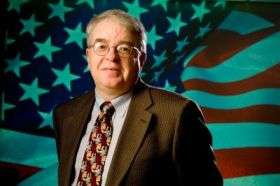
Anticipating what is likely to be one of the most interesting elections in modern history, University at Buffalo professor of political science James E. Campbell and Michael S. Lewis-Beck, professor of political science at the University of Iowa, have assembled the insights of prominent election forecasters in a special issue of the International Journal of Forecasting published this month.
Each of the articles demonstrates the challenges of election forecasting, according to Campbell, chair of UB's Department of Political Science, who since 1992 has produced a trial-heat-and-economy forecast of the U.S. presidential election. His forecast uses the second-quarter growth rate in the gross domestic product and results of the trial-heat (preference) poll released by Gallup near Labor Day to predict what percentage of the popular vote will be received by the major party candidates.
The articles range from descriptions of diverse election forecasting models, such as those that use political futures markets and historical analysis, to articles that evaluate the success of election forecasting in past elections.
Two of the articles address a topic particularly pertinent to the 2008 presidential election: whether open seat and incumbent elections should be treated differently by election forecasters.
"One of the biggest misunderstandings about election forecasting is the idea that accurate forecasts must assume that the campaign does not matter," Campbell explains. "This is not true.
"First, one of the reasons that forecasts can be accurate is that they are based on measures of the conditions that influence campaigns. So campaign effects are, to a significant degree, predictable.
"Second, forecasters know that their forecasts are not perfect. Forecasts are based on imperfect measures and may not capture all of the factors affecting a campaign. Some portion of campaign effects is always unpredictable."
Though some campaign effects are unpredictable "the extent of these effects is usually limited," Campbell points out.
In the historic contest between presumptive presidential nominees Barack Obama and John McCain one thing is certain: "Forecasting this election will be more difficult than usual," Campbell says.
"First, there isn't an incumbent. Approval ratings and the economy are likely to provide weaker clues to an election's outcome when the incumbent is not running. Second, Democrats had a very divided nomination contest and it is unclear how lasting the divisions will be.
"Third, many Republicans are not very enthusiastic about McCain and it is unclear how strong Republican turnout will be for him."
Of the six different forecast models described in the journal articles, only two have a forecast at this point. The other four will have forecasts between late July and Labor Day. The journal articles can be downloaded at www.sciencedirect.com/science/journal/01692070 .
Source: University at Buffalo


