Engineers create 3-D model to help biologists combat blue tongue virus
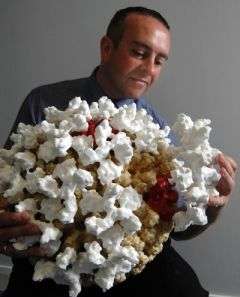
June 23, 2008 Dr. Greg Gibbons, University of Warwick, with the Model

Dr Greg Gibbons, University of Warwick with the model. Credit: University of Warwick

A large 3D model of the Blue Tongue virus has been created by WMG engineering researchers at the University of Warwick that will help biologists devise new ways to combat the virus and protect millions of livestock from infection.

The WMG University of Warwick researchers based their model on data provided by the Institute of Animal Health at Pirbright, and from Oxford University. The Warwick team used rapid prototyping technology, normally used to create highly accurate 3D copies of components for a range of manufacturing processes, to create an accurate 3D model virus that is 5,200,000 times the size of the real thing.

Dr Greg Gibbons, who leads the University of Warwick's WMG's rapid prototyping team, is working with Professor Peter Mertens, head of the Arbovirus Research Group at the Institute of Animal Health at Pirbright, and Robert Esnouf of Oxford.

Dr Gibbons said: "Research collaboration between engineers and biologists is rare although we have worked with Oxford and the IAH before. The physical model we've created is based on the same technology we use to quickly and cheaply create models of, for example, car parts; used by manufacturers to develop designs and test products before going into full-scale production."

The insect-borne virus is most commonly seen in the late summer and autumn and can devastate herds of sheep and cattle.

Professor Mertens said: "Blue Tongue represents the worst threat to agriculture this country has seen for 20 years. In its first year in Belgium it wiped out 100 sheep, but in its second year it wiped out 30,000. In Britain we have 34 million sheep – we could be looking at losing up to 20 per cent of that population."

"I don't know of any other way to create a scientifically accurate model of a virus. By using the computer models we've generated we can feed that information into the machines at WMG and create an absolutely perfect model of the real virus."

"The model will help us to understand how the molecules and proteins interact with one another and this could help us to develop new anti-viral drugs. Having a physical model that you can pick up and peer at will make a huge difference."


Source: University of Warwick


print this article email this article download pdf blog this article bookmark this article     Stumble it Digg this share on Facebook retweet share on Reddit add to delicious
Rate this story - 3.7 /5 (3 votes)


June 23, 2008 all stories

Comments: 0

3.7 /5 (3 votes)
  • Stumble this up

  • Digg this

  • share this

  • hide
  • Related Stories

  • Building real security with virtual worlds
    created Nov 26, 2009 | popularity not rated yet | comments 0
  • Web sites aim to survive with hyperlocal focus
    created Nov 25, 2009 | popularity not rated yet | comments 0
  • Rocket science leads to new whale discovery
    created Nov 24, 2009 | popularity not rated yet | comments 0
  • A mechanical model of vocalization
    created Nov 23, 2009 | popularity not rated yet | comments 0
  • In the Brain, Seven Is A Magic Number
    created Nov 23, 2009 | popularity not rated yet | comments 0


  • hide
  • Relevant PhysicsForums posts

Other News

Researcher: Faint writing seen on Shroud of Turin (AP)

Researcher: Faint writing seen on Shroud of Turin (Update)

Other Sciences / Archaeology & Fossils

created Nov 20, 2009 | popularity 2.3 / 5 (35) | comments 52

(AP) -- A Vatican researcher has rekindled the age-old debate over the Shroud of Turin, saying that faint writing on the linen proves it was the burial cloth of Jesus. Experts say the historian may be reading ...


Climate change could boost incidence of civil war in Africa

Other Sciences / Social Sciences

created Nov 23, 2009 | popularity 2.4 / 5 (16) | comments 10

Climate change could increase the likelihood of civil war in sub-Saharan Africa by over 50 percent within the next two decades, according to a new study led by a team of researchers at University of California, Berkeley, ...


Explained: The Discrete Fourier Transform

Explained: The Discrete Fourier Transform

Other Sciences / Mathematics

created Nov 25, 2009 | popularity 4.1 / 5 (27) | comments 8

(PhysOrg.com) -- In 1811, Joseph Fourier, the 43-year-old prefect of the French district of Isčre, entered a competition in heat research sponsored by the French Academy of Sciences. The paper he submitted ...


Living buildings could mop up carbon dioxide

Living buildings could mop up carbon dioxide

Other Sciences / Other

created 20 hours ago | popularity 1 / 5 (2) | comments 1

(PhysOrg.com) -- Architecture could help us tackle climate change, if we start to design our buildings with 'living' materials, according to Dr Rachel Armstrong, UCL Bartlett School of Architecture.


Political views may skew perception of skin tone, new study finds

Other Sciences / Social Sciences

created Nov 24, 2009 | popularity 3.6 / 5 (5) | comments 7

(PhysOrg.com) -- Political affinity could influence how some people view the skin tone of biracial political candidates, according to a new study from the University of Chicago Booth School of Business, New York University ...