New protein that repairs DNA under extreme conditions
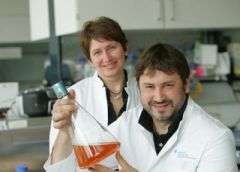
Mild environmental conditions are a prerequisite for life. Strong acids or dissolved metallic salts in high concentrations are detrimental to both humans and to simpler life forms, such as bacteria. Such conditions destroy proteins, ensuring that all biological functions in the cells come to a standstill. So what do we find at the limits of hostile conditions where we still find life? Scientists at the Helmholtz Centre for Infection Research (HZI) in Braunschweig (Germany) have joined up with colleagues from Spain and Great Britain to identify an enzyme that requires acids and dissolved metals in order to function. The team describes its findings regarding the extreme protein of the archaebacterium Ferroplasma acidiphilum in the latest online edition of the renowned US research journal PNAS.
HZI scientist Dr. Olga Golyshina discovered Ferroplasma ten years ago and has been endeavouring to unlock its secrets ever since. "This organism is ideally adapted to extremely hostile environments. It likes to live in highly acidic solutions containing toxic heavy metals. It is unable to exist at all under normal conditions," she says, describing her research object. "We recently noted that Ferroplasma is unique in the world of living organisms, as it contains iron in high concentrations. Now we aim to discover how its proteins function under such extreme conditions."
For this purpose the team has selected a so-called DNA ligase. Enzymes of this type play a central role in important metabolic processes such as the duplication of genetic material in dividing cells and the repair of genetic damage. All DNA ligases investigated so far, including the DNA ligases of the so-called extremophile microorganisms that live in particularly inhospitable habitats which are either acidic, alkaline, hot or cold, , require mild environmental conditions. "The Ferroplasma DNA ligase is unique," states Olga Golyshina: "It actually requires extremely acidic conditions to work."
Iron gives the protein a purple colour
But this is not the only thing that scientists find surprising about this survival expert: "All of the DNA ligases studied so far do not contain iron, but require magnesium or potassium to function. Extraordinarily, the DNA ligase of Ferroplasma contains iron and does not need either magnesium or potassium. The iron is essential: removal results in loss of activity and, interestingly, its wonderful purple coloration."However, the colour is less fascinating than the fact that Ferroplasma does not die as a result of the ordinarily toxic high concentration of iron in its cells which would severely damage genetic material in other cells, triggering mutations.
"The fact that an enzyme contains metal ions that damage DNA for the repair of DNA seems contradictory," says project partner Prof. Peter Golyshin, who works at the HZI and Bangor University in Wales (GB). He suspects that the Ferroplasma genus occupied its ecological niche early in evolution. At that time the earth was very inhospitable; acids and metals in soluble form were everywhere. Peter Golyshin: "Maybe the ancestors of Ferroplasma integrated these substances into their metabolism. And afterwards they never left its environment, even as this became increasingly scarce on earth."
Prof. Ken Timmis, Head of the Environmental Microbiology Group at HZI, is considering the future uses of the findings of the team: "Enzymes are required for many biotechnological applications. The chemical conditions under which these processes occur are often rather hostile. Enzymes from Ferroplasma, such as DNA ligase, clearly are ideally suited for processes that require hostile conditions, so this microbe may represent a rich source of biological catalysts not thus far obtainable from any other source". Timmis also considers applications in the field of medicine a possibility: "The possibility of DNA repair under acidic conditions may ultimately provide a new treatment option for disease conditions characterized by over-acidification of cells that favour the formation of tumours."
Source: Helmholtz Association of German Research Centres


