Researchers identify potential new drug candidates to combat 'bird flu'
As the specter of a worldwide outbreak of avian or "bird flu" lingers, health officials recognize that new drugs are desperately needed since some strains of the virus already have developed resistance to the current roster of anti-flu remedies.
Now, a team of UC San Diego scientists - with the help of resources at the San Diego Supercomputer Center (SDSC), also at UC San Diego - have isolated more than two dozen promising and novel compounds from which new "designer drugs" might be developed to combat this disease. In some cases, the compounds appeared to be equal or stronger inhibitors than currently available anti-flu remedies.
"If those resistant strains begin to propagate, then that's when we're going to be in trouble, because we don't have any anti-virals active against them," said Rommie Amaro, a postdoctoral fellow in chemistry at UC San Diego. "So, we should have something as a backup, and that's exactly why we're working on this."
Avian flu has provoked considerable concern since humans have little or no immune protection against the virus. While flu vaccines are being developed, it could take up to nine months for an effective vaccine to be developed against any new strains, and could still be rendered ineffective if any new strains arise over that time. Should the virus gain the capacity to spread from person to person, the result could be a worldwide outbreak or pandemic.
"In light of the urgency to find drugs to combat this virus, we're hopeful that our results will assist in that effort," said J. Andrew McCammon, holder of the Joseph Mayer Chair of Theoretical Chemistry at UC San Diego and a Howard Hughes Medical Institute Investigator.
Also participating in this study were researchers from the National Biomedical Computation Resource (NBCR), part of the Center for Research on Biological Systems and the California Institute for Telecommunications and Information Technology at UC San Diego, including Lily S. Cheng, co-first author; Don Xu; Wilfred Li; and Peter W. Arzberger.
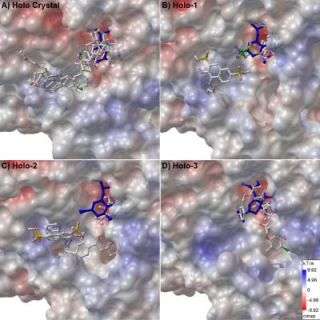
The study, published in the Journal of Medicinal Chemistry, builds on prior work that captured the nanosecond-by-nanosecond movements of a protein called neuraminidase 1 (or N1), needed by the avian flu virus to spread infection to new cells. To help reveal the often-spasmodic motion of proteins, scientists work with molecular dynamics codes that simulate their movements as they obey the fundamental laws of physics. Such is the complexity of the mathematical calculations needed for these simulations that scientists often require the use of supercomputers. In this case, the researchers ran their data through a molecular dynamics program called NAMD - developed at the University of Illinois at Urbana-Champaign - on supercomputers at SDSC and the National Center for Supercomputing Applications in Illinois.
Some surprising details emerged as the scientists watched the protein gyrate and wiggle over time. In particular, one region – dubbed a "hot pocket" – appeared to be quite dynamic and flexible. Amaro said the topology of this region and the amino acids linking the pocket are significantly different from what the scientists previously observed in a static image of the protein's crystal structure.
"Crystal structures are very important," she said. "They give us a real picture of the protein. But it's just one picture."
Over the past decade or so, scientists have come to realize that the sometimes colorful structures gleaned from standard crystallography studies are limited. Instead of a still-life painting, proteins act more like a moving picture, constantly twitching and jiggling, making the goal of finding a specific inhibitor somewhat daunting. It's somewhat like a baseball pitcher attempting to throw strikes to a catcher who's doing handsprings behind home plate.
Molecular dynamics simulations already have proved their value for other drug designs, said McCammon, one of the pioneers in the field. For example, the route to the development of raltegravir, an anti-integrase inhibitor recently approved by the U.S. Food and Drug Administration to combat HIV, was discovered in McCammon's lab.
"The treatment of receptor flexibility with molecular dynamics simulations played a critical role in understanding the mechanism of action for this new class of inhibitors," said McCammon, a professor of Pharmacology at UC San Diego.
In their latest work, the scientists conducted a "virtual screen" of an ensemble of 1,883 compounds selected from the National Cancer Institute Diversity Set, using a computational tool called AutoDock that predicts how small molecules, such as drug candidates, bind to a receptor of a known three-dimensional structure. The goal was to try to determine which compounds fit best into the "hot pocket" region of N1. Generally, compounds that most easily bind to the site are considered to be top hits for validation and further optimization as drug candidates.
Five other compounds known to experimentally bind to avian influenza N1 were also screened, including drugs now available or in clinical trials.
The results were intriguing. About 27 compounds showed significant promise, all having potentially the same or stronger bonding affinity than current anti-flu drugs now available, including Tamiflu and Relenza. Several looked like particularly good candidates, Amaro said, since they bound to both the regular active site and an additional side pocket that opened during the computer simulation.
"The general idea is that we will be able to make a better drug through the strategic targeting of multiple active site pockets," said Amaro.
Added Cheng, former Pacific Rim Experience for Undergraduate student and NBCR researcher: "Importantly, half of these compounds would have been neglected based on the crystal structure simulations alone. Many of these drug leads would only have been found through the use of this computational method."
The research now moves into the lab, where the compounds will undergo testing against the virus. Researchers at The Scripps Research Institute in La Jolla, Calif., led by Dr. Ian Wilson, will lead this phase of the research.
Source: University of California - San Diego


