Nature reserves attract humans, but at a cost to biodiversity
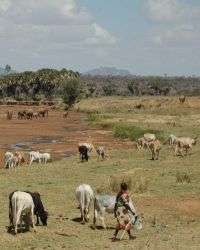
Rather than suppressing local communities in developing nations, nature reserves attract human settlement, according to a new study by researchers at the University of California, Berkeley.
In an analysis of 306 rural protected areas in 45 countries in Africa and Latin America, the researchers found that, on average, the rate of human population growth along the borders of protected areas was nearly twice that of neighboring rural areas.
Justin Brashares, UC Berkeley assistant professor of environmental science, policy and management, and George Wittemyer, UC Berkeley post-doctoral researcher and a National Science Foundation (NSF) International Research Fellow, co-led the study, to be published in the July 4 issue of the journal Science.
"The findings counter the perception that park creation comes with high costs and few benefits to marginalized rural populations who lose out when conservation areas restrict their access to traditional lands and natural resources," said Wittemyer.
"If these protected areas are a detriment to local livelihoods, we should see little or negative population growth at their borders," said Brashares. "Instead, people consistently move closer to them."
While the factors that drive rapid immigration to parks will likely vary among parks and countries, the authors note that nature reserves in developing regions often are targets for international aid and donor investment. This investment, often coming through initiatives that pair goals for economic development and biodiversity conservation, creates infrastructure such as roads, schools, clinics, water and sewer systems, and other services that are often lacking in impoverished rural areas.
In support of their hypothesis, the authors found that population growth near protected areas was positively correlated with the amount of funding countries received from the Global Environment Facility (GEF) for conservation-related projects.
The researchers also found that population growth was higher near protected areas that support greater concentrations of employees, suggesting a connection between human immigration to reserves and the economic or job opportunities the parks provide.
"This study highlights that conservation activities can and do have positive impacts for the local communities where they take place," said Wittemyer. "Our results indicate that the economic and ecological benefits of living near protected areas outweigh the costs typically attributed to such proximity."
The study comes during a period of explosive growth in the creation of nature reserves. Over the past 30 years, studies show the amount of land designated as protected increased by 500 percent.
"Concerns about park creation and social injustice date back to the days of colonialism, when many reserves started as hunting grounds for the elite," said Brashares. "That history influences current attitudes toward the establishment of conservation areas, with suspicions that the unprecedented current rate of park creation signals an era of neocolonialism. A study like ours can't consider or dismiss injustices of the past, but it suggests parks today are perceived by local people as areas of opportunity."
The researchers restricted their study to nature reserves - as listed by the International Union for Conservation of Nature and the World Heritage Sites - in rural areas to avoid confounding their results with the well-documented, massive migration to urban centers that has occurred in developing countries in recent decades.
They reviewed published United Nations census data from 1960 to 2000, focusing on areas within 10 kilometers (6.2 miles) of the reserves, to gauge human population growth. The authors were able to rule out the possibilities that the patterns of population growth they observed were driven by relatively high poverty rates around parks or by "leakage," which describes the movement of people over time from within parks to their edges.
"Along with economic incentives provided through targeted donor funding, many parks are hotspots for ecosystem services and goods, such as open water, good soils for agriculture, bushmeat, fish and timber that increasingly are found in few other places" said Brashares.
To determine whether people were moving closer to nature reserves simply because such lands were ecologically superior for farming, cattle grazing or exploitation of natural resources, the researchers further refined their analysis to focus on comparisons of buffer population growth with rural areas that were not only in the same country but also ecologically similar to the reserves. They still found significantly higher growth rates near the protected areas.
While the study found that protected areas appear to draw immigration by stimulating local economies, the consequences of this immigration threaten the ability of conservation areas to protect biodiversity. Strong links between human settlement near protected areas and illegal harvesting of timber, bushmeat hunting, fire frequency and species extinction are widely recognized.
The researchers also found that rates of deforestation were higher near protected areas where human population growth was greatest. These and other findings suggest current conservation efforts may achieve poverty alleviation at a direct cost to biodiversity protection.
In the paper, the authors write that if humans are drawn to protected areas for the economic opportunities they provide, international funding for conservation may, ironically, exacerbate the same threats to biodiversity it aims to alleviate.
"Clearly, coupling human development goals with biodiversity conservation is not a simple remedy to poverty or biodiversity loss," said Wittemyer. "Such a marriage necessitates careful planning and forward thinking. This might entail implementing relatively simple policies like locating development projects in regions where human pressures will have less impact on biodiversity rather than placing them directly on the edge of the parks."
Brashares noted that, in many cases, people are settling within meters of park borders, and that it is not uncommon for roads and sanitation systems to be built within reserve boundaries.
"For protected areas to be sustainable and effective, a balance must be struck between benefits to local communities and the goals of biodiversity conservation," said Brashares. "Instead of building new roads or schools and clinics near a park border, consider adding that infrastructure in the communities where people already live. Such actions can redirect the incentives that drive human population growth near park edges while still aiding local communities."
Source: University of California - Berkeley


