From foe to friend: Researchers use salmonella as a way to administer vaccines in the body
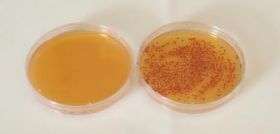
Researchers at the Biodesign Institute at Arizona State University have made a major step forward in their work to develop a biologically engineered organism that can effectively deliver an antigen in the body. The researchers report that they have been able to use live salmonella bacterium as the containment/delivery method for an antigen.
The work is a major step forward in development of a new means of biological containment that would be a key component to a new way to deliver vaccines in animals and humans. If fully developed, the new method could be used to administer vaccines to many of those who do not benefit from traditional vaccines because of their cost, because of drug resistance or because of limited effects on children.
Outlined in the paper, "Regulated programmed lysis of recombinant Salmonella in host tissues to release protective antigens and confer biological containment," published on the online version (July 7) of the Proceedings of the National Academy of Sciences, the researchers describe a new, novel and effective means of biological containment for antigen delivery. The method not only effectively delivers the antigen in the body, but does so in a way that does not infect the body with salmonella and does not leave any vaccine cells in the environment.
The research team includes scientists formally at Washington University, St. Louis, and Megan Health Inc., St. Louis, who are now at ASU's Biodesign Institute and the School of Life Sciences.
"Our goal is to design, engineer and evaluate a live bacterial (using salmonella) antigen delivery system that would display regulated delayed lysis in vivo after invasion into and colonizing internal lymphoid tissues in an immunized individual," said Roy Curtiss, director of the Center for Infectious Diseases and Vaccinology at the Biodesign Institute and a professor in ASU's School of Life Sciences. Curtiss was part of the research team that made the discovery.
"We wanted to do this in a way so that no disease symptoms due to salmonella would arise, a protective immune response would be induced to the pathogen whose protective antigen was delivered by the vaccine construction (in this case against S. pneumoniae due to an immune response to PspA), and there would be no ability for live bacterial vaccine cells to either persist in vivo or to survive if shed into the environment," Curtiss added.
Source: Arizona State University


