Making the classroom a playground for learning
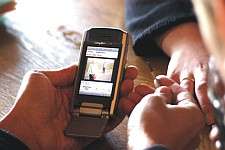
Playing computer games in school may sound like the kids rule the classroom. But European researchers have shown that such games can be used to boost learning.
What’s more, the special computer games developed by the eMapps.com project could help build communities of creative, networking children across Europe, especially in the new Member States.
In the past, the playing of computer games was sometimes thought to be unhelpful, disruptive, and potentially dangerous for a child’s development. Attempts to use them for education were not always successful.
But research has shown that people learn best when they are entertained, when lesson plans stimulate both thinking and emotion, when they can creatively work towards complex goals, and when the consequences of actions can be observed.
By using mobile devices such as personal digital assistants (PDAs) and portable phones, researchers in the EU-funded project developed interactive tools, primarily games, to achieve learning objectives and deliver the curriculum using information and communication technologies (ICT).
“eMapps games are not like well-known everyday computer games,” says Gabriella Lovasz, the project manager of eMapps.com. Lovasz works at Cross Czech, a consultancy firm in Prague. “The games require high levels of teamwork and collaboration, are challenging intellectually as well as technologically, and break new ground in mobile learning.”
However, to provide children with educational game play, the eMapps.com researchers had to overcome the age-old challenge for interactive games – creating an engaging narrative, or linear storyline.
“eMapps games are dynamic and narrative, creating virtual worlds or mixed realities, outdoor and indoor,” says Lovasz. “The actions of different players lead to completely different and credible outcomes.”
And subjects such as history and geography can be brought to life using these techniques. One such example is the City Game. The researchers based it on the narratives about any city written by citizens and used what is called the ‘alternate reality game’ (ARG) concept.
ARG describes an interactive narrative with the real world as the stage, with a storyline that may be affected by the actions of a group of participants.
In the eMapps.com game the children act as citizens and discover more about the city they live in by solving different puzzles connected to the history of the city. The children also have to find the ultimate solution of the story themselves.
“The experience of playing eMapps.com games demonstrated quite clearly that it is possible to design meaningful learning experiences which make full use of the benefits of mobility – in other words that ‘anytime, anywhere’ learning was a reality in the game-playing situations which were analysed and observed during the project,” says Lovasz.
Classrooms without walls
To achieve the full potential of the games for education, the learning must go beyond the physical boundaries of the classroom. For this reason, the project focused on using digital devices such as mobile phones, PDAs and tablet PCs over GPRS and UMTS networks.
Children across Europe can participate in the multilingual, multicultural content created through the games. Forums and online chat, as well as weblogs, podcasts and videocasts are used to add to the interactive learning experience and build a sense of community among the participants.
The platform, available through the eMapps website, allows school children to use skills valuable for successful game play.
“In the future, learning will move increasingly from the classroom and into the learner’s environments, both real and virtual,” says Lovasz.
Teachers, who played a key role in the development of the eMapps.com game, can also reap the benefits of the project’s work. The project’s researchers initiated preliminary training and information sessions to find out how best to combine games and mobile technologies to provide new and enriching experiences for children in the school curriculum and beyond.
“During these sessions the teachers, parents and IT experts could discuss what are the advantages and disadvantages of learning through games, how would it be possible to develop a game taking into consideration the local characteristics and what are the chances of including the games in the curricula,” says Lovasz.
And now it is the teachers who decide on the content of the games. The network access allows them to draw on content from other repositories while creating games. The project involved 17 participating schools across eight new Member States – Czech Republic, Estonia, Hungary, Latvia, Lithuania, Poland, Slovenia, and Slovak Republic.
The activities have the potential to contribute to the growth of a community of teachers who can exchange knowledge and experience by communicating with counterparts in other countries – creating ‘schools without walls’.
"In countries where new policies are shaped in the near future there are several possibilities of influencing the contextual factors that allow the effective integration of mobile technologies and game-based learning in education," says Lovasz.
"Moreover, in most of the new Member States in focus here, education reforms have been initiated or are entering into force, which offers a lot of possibilities, but can also cause uncertainty and resistance by those affected,” she adds. “The recommendations that are formulated by eMapps aim to influence these future decisions taken in the development of national, regional or local policies for ICT.”
Breaking down the barriers of reluctance
Giving children mobile devices to play games in class may not sound like every teacher’s idea of a good idea, and for that reason a key goal of the project is to help them understand their value, along with parents and policy-makers, says Lovasz.
Projects like eMapps.com, which received funding from the EU's Sixth Framework Programme for research, are already contributing to the increasing use of games to enhance learning in both formal and informal settings, she adds.
“A major effort is still required to convince policy-makers that the learning and skills acquired from games and the use of mobile tools are relevant and appropriate for children in the knowledge society. eMapps.com has also provided plenty of evidence that gamed-based learning can be matched to curriculum requirements.
“Breaking down suspicious attitudes towards the value of games among school directors and teachers is a further prerequisite if they are to become part of a mainstream approach to blended learning in schools," says Lovasz.
Source: ICT Results


