'Fuel for thought' on transport sector challenges
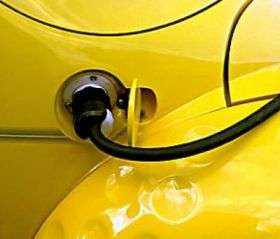
The report: Fuel for thought – The future of transport fuels: challenges and opportunities addresses two serious issues – the need to dramatically reduce the transport sector's greenhouse gas emissions and, how to deal with the economic risks associated with increasingly costly and scarce oil supplies.
The report is the result of a year's deliberations by the Future Fuels Forum (FFF) which was convened by CSIRO to engage leading community, industry and government bodies in discussions about a range of plausible scenarios for establishing a secure and sustainable transport fuel mix to 2050.
Director of CSIRO's Energy Transformed Flagship, Dr John Wright, said Australia's transport fuel mix will substantially change in response to issues such as climate change and oil prices.
"Securing access to affordable and sustainable fuel underpins Australia's economy and way of life and as a nation with relatively high vehicle use, we are vulnerable to the economic, environmental and social impacts of rising oil prices and rising temperatures," he said.
"In response to these challenges, the Forum believes Australia's fuel mix will shift in the near term to include the expanded use of diesel, gaseous fuels such as LPG and hybrid electric vehicles, with even greater diversity beyond 2020 that might include hydrogen, synthetic fuels from coal or gas and advanced biofuels that will not impact food production."
Scenarios developed by the FFF have been subjected to advanced techno-economic modelling and assessment which has produced significant insights into the potential impacts of climbing oil prices and the inclusion of fuel in the government's emissions trading scheme.
"The future price of oil is uncertain," Dr Wright said. "The Forum's scenario modelling shows that if oil production peaks, prices could climb as high as A$8 per litre by 2018 in the most extreme case. This outcome could result in significant social impacts that are likely to adversely affect low income Australians.
"Results such as this could be seen as a catalyst for early action on the development and roll-out of alternative fuel options, low emission vehicle technologies and infrastructure that supports sustainable transport.
"The Forum also modelled the inclusion of retail transport fuel in the emissions trading scheme and found prices are expected to be only moderately impacted – an increase of around 10 cents per litre at a price of A$40 per tonne of carbon dioxide. Even with this relatively small impact, our modelling indicates a steady shift towards low emission fuels and vehicles."
Against the backdrop of awareness about peak oil, alternative fuels and greenhouse gas emissions, the Forum has sought to present a rational and cohesive view of the challenges and opportunities to be considered for assessment of Australia's future fuel options.
"CSIRO and the Forum participants hope Fuel for thought will assist in advancing the debate on Australia's transport fuel needs by providing strategic input to decision makers in industry and government on the options that will need their careful consideration and further research," Dr Wright said.
An in-depth technical discussion of the modelling conducted by CSIRO on behalf of the FFF is available in the report, Modelling of the future of transport fuels in Australia.
Source: CSIRO Australia


