UCSB researcher leads worldwide study on marine fossil diversity
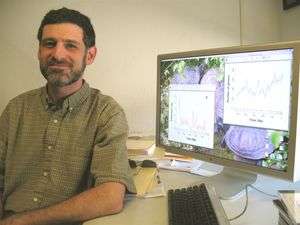
It took a decade of painstaking study, the cooperation of hundreds of researchers, and a database of more than 200,000 fossil records, but John Alroy thinks he's disproved much of the conventional wisdom about the diversity of marine fossils and extinction rates.
Alroy, a researcher with the National Center for Ecological Analysis and Synthesis (NCEAS) at UC Santa Barbara, is the principal author of a report published in the July 3 edition of Science, "Phanerozoic Trends in the Global Diversity of Marine Invertebrates." A team that included 34 other researchers, who began their work in 1998, coauthored the report.
Alroy's report shows a new curve in the diversity of ancient marine invertebrate species such as clams, sand dollars and lobsters, while also revealing that most of the early propagation of invertebrates took place before the Late Cretaceous period. In addition, the research contends that the increase of those invertebrates in the period since is relatively small when compared to the 100 million years that elapsed.
"There's been 36 years of people arguing about this," Alroy said. "And I feel we finally resolved this debate, which is certainly one of the most high profile debates in the study of diversity of the fossil record.
"This is a big community project," he added. "The only reason we're able to do any of this is we have a very, very, very detailed database (the Paleobiology Database) that is built by a community of people over the Web. We record exactly what hole in the ground each fossil comes from."
By counting fossil records from all over the world, Alroy and his fellow researchers were able to conclude that much of what experts have been saying for the last 40 years might not be accurate. Instead of counting just the first and last instances of fossils, as others had done before, Alroy and his team set out to count them all, examining 284,816 fossil occurrences.
"We only count it where we've actually got it," Alroy said. "Say you're doing biomedical research and you want to know about the prevalence of a disease, say some kind of cancer."
The difference between the old and the new research, he said, would be like "the difference between checking medical records willy-nilly, and computing percentages with a standardized sample."
While the research of other scientists showed eventual recoveries in the diversity of fossils after periods of extinction - especially the extinction 250 million years ago between the Permian and Triassic periods (also known as the "mother of all mass extinctions") - Alroy said this report shows that the number of species comes back up quickly - at least on a geological time scale - and then stays relatively flat.
The data are also interesting, Alroy said, because they document that there have been only three truly major mass extinctions in the fossil record.
"For many years, our community has been saying that there have been five major mass extinctions, and it's gotten into the public consciousness that there's been a 'Big Five,' " Alroy said. "This (the last major spike in fossil diversity records) is supposed to be the sixth major extinction. This is really conventional wisdom, but it's not supported by the new data at all."
Instead, the new results suggest it's only the fourth one over the last half-billion years.
Source: University of California - Santa Barbara


