Instrument designed for biological pathogen monitoring can detect tuberculosis surrogate
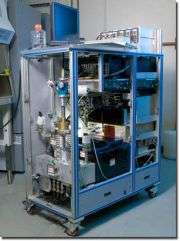
An instrument originally designed for detecting the malicious use of biological pathogens has potential for use in the public health sector to rapidly screen people for tuberculosis.
In experiments over the past year, a research team at Lawrence Livermore National Laboratory has used their system to detect a tuberculosis surrogate, even when it is surrounded by sputum and mucus-like substances.
They also were able to differentiate between two similar bacteria, distinguishing between an avirulent strain of tuberculosis and a similar bacterium, Mycobacterium smegmatis.
Their research, using a system called Single-Particle Aerosol Mass Spectrometry, or SPAMS, is described in today's edition of Analytical Chemistry, a semi-monthly journal published by the American Chemical Society.
"Without reagents, we can rapidly detect avirulent tuberculosis that is coated in sputum-like materials and we can distinguish between two similar mycobacteria," said Kristl Adams, a LLNL postdoctoral biological physicist and the paper's lead author.
"The reason we used two similar mycobacteria in our research is that tuberculosis-like symptoms in a patient could be caused by many bacterial infections, not just tuberculosis. So we would like to differentiate between non-tuberculosis and tuberculosis infections," Adams explained.
There is no current method for screening potential tuberculosis patients within minutes," said LLNL physicist and co-author Matthias Frank, who added that the "gold standard" diagnostic tool of culturing samples can require days to weeks.
Other methods of diagnosing the disease, which each have advantages and disadvantages, are bacteria staining and counting in a sputum smear, DNA amplification using polymerase chain reaction and chest X-rays.
Without a way to rapidly screen large numbers of possible tuberculosis patients, the diagnosis of the disease can sometimes prove difficult and expensive.
In one retrospective four-month study conducted in an urban Los Angeles hospital emergency department, it was found that more than 40 percent of patients who were later found to have tuberculosis were either initially released or not isolated.
The same study also determined that resources were wasted in unneeded precautions taken for patients who, in the end, did not have tuberculosis. For every tuberculosis-positive patient, 624 patients were screened and other steps for those patients included taking 130 chest X-rays and placing 22 patients in isolation.
"It is clear," said Adams, "that a rapid tuberculosis screening technique could facilitate early detection and limit unnecessary isolation, thus providing better patient care and reducing the toll on health care facility resources."
While emphasizing that their work is only a first step toward using SPAMS for tuberculosis diagnostics, Frank and Adams said they believe SPAMS could potentially detect the disease within five minutes with concentrated samples.
Besides Adams and Frank, other researchers on the SPAMS team for this work are physicist Paul Steele, microbiologist Sue Martin, forensic chemist and graduate student Audrey Martin, former LLNL employee and physical chemist Michael Bogan and 2007 Department of Homeland Security (DHS) summer scholar Nicole Sadler.
The SPAMS researchers have spoken with doctors at two northern California university medical centers about the possibility of undertaking experiments in a clinical setting to detect virulent tuberculosis within sputum samples from infected people.
The biggest challenge going forward is determining if infectious tuberculosis in humans can be detected with our pattern-matching algorithm. It is undetermined if the virulent tuberculosis pattern will have enough similarity from patient-to-patient that we can train on a known TB patient and detect TB in a patient with an unknown infection," Adams said.
Virulent tuberculosis was estimated in 2007 to have infected about nine million people worldwide and to be fatal to 1.7 million people, according to the World Health Organization. Tuberculosis typically attacks the lungs but can infect almost any organ of the body, including the joints, bones, bone marrow, urinary tract, central nervous systems, muscles, skin and throat. It is an airborne contagious disease that spreads when a person with tuberculosis of the lungs or throat coughs, sneezes or talks.
Two sampling scenarios envisioned by the SPAMS researchers are: general room air monitoring and aerosolized patient effluent analysis.
The team also is evaluating another possible technique for diagnosing human infections — breath trace gas analysis. Trace gases exhaled in breath can hold clues about the metabolism and disease condition of a person.
Provided by Lawrence Livermore National Laboratory


