Compound that Helps Rice Grow Reduces Nerve, Vascular Damage from Diabetes
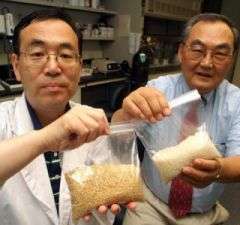
You may want to soak your brown rice. Researchers have found that a compound that helps rice seed grow, springs back into action when brown rice is placed in water overnight before cooking, significantly reducing the nerve and vascular damage that often result from diabetes.
"You have to let it grow, germinate a little bit," says Dr. Robert K. Yu, director of the Institute of Molecular Medicine and Genetics and Institute of Neuroscience at the Medical College of Georgia. "Some of the active ingredients generated as a result of the germination process are beneficial to you."
Germinated brown rice's ability to help diabetics lower their blood sugar has been shown but how it works remained unknown. New research, published online in the Journal of Lipid Research, shows the growth factor acylated steryl glucosides or ASG, helps normalize blood sugar and enzymes that are out-of-whack in diabetes.
"The advantage of knowing this key ingredient and its structure is we can now make a ton of it; you don't have to rely on rice to produce it or eating rice to get this beneficial effect," says Dr. Yu, the paper's corresponding author.
Studies were done in animal models of type 1 diabetes with two different blood sugar levels that reflect patients' varying blood sugars. They were fed diets of white, brown or pre-germinated brown rice. Unlike white rice, less-processed brown rice still has some of the germ or growth structure that, after about 24 hours in water, resumes activity. Scientists watched as the resurrected ASG, a growth factor and lipid, helped normalize metabolism.
"When blood sugar levels increase, the metabolic balance changes," says Dr. Seigo Usuki, neurobiologist in the MCG School of Medicine and the paper's first author. "Part of the way we know this growth factor works is by increasing levels of good enzymes that are decreased in diabetes."
Dr. Usuki is talking about enzymes such as ATPase, which help maintain nerve membranes so they can conduct electricity and communicate. Decrease of ATPase is a hallmark of the nerve damage that accompanies diabetes. Also reduced in diabetes is homocysteine-thiolactonase, or HTase, an enzyme that decreases levels of homocysteine, a known risk factor for vascular disease. The liver produces a low level of homocysteine but that level is elevated in diabetes while the enzyme that controls it decreases. Unchecked, homocysteine makes oxidative stress compounds that injure and kill cells. HTase is one way HDL, the so-called "good cholesterol," helps protect blood vessels from disease. A regular diet of pre-germinated brown rice diet helps get both back to a healthier level.
Fancl Hatsuga Genmai Co., Ltd., in Yokohama, Japan, which funded the studies and supplied the pre-germinated rice, already is working with Dr. Usuki on a supplement that can provide consumers who prefer not to soak – or eat – rice with the benefits of ASG.
The MCG research team reported in December 2007 in Nutrition & Metabolism that pre-germinated brown rice was better at protecting nerves from diabetes than un-soaked brown or white rice. They showed a then-unidentified lipid helped protect the nerve membrane and increase activity of HTase and the good cholesterol. Germination also is known to increase levels of the neurotransmitter GABA, which is believed to have many beneficial health effects such as lowering blood pressure, improving cognition and lowering blood glucose levels. However the MCG scientists have shown the lipid has a more powerful impact on HTase activity.
The germ layer activated by soaking brown rice contains many vitamins and minerals in addition to the bioactive ingredient that would be beneficial to everyone, Dr. Yu says. The roughage of the rice grain also is helpful.
Source: Medical College of Georgia


