July 29, 2008 weblog
Nearly Waterless Washing Machine to Debut in 2009
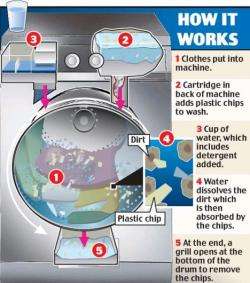
A new washing machine that uses just a cup of water, a pinch of detergent, and about 1,000 small plastic chips to clean clothes may be available for consumers in the UK next year.
Researchers at Leeds University designed the machine, which will be marketed by a spin-off company called Xeros Ltd (which means "dry" in Greek). Company founder Stephen Burkinshaw, a professor of textile chemistry, explains that the machine will reduce both water and energy consumption.
Currently, washing machine use accounts for 13 percent of daily household water consumption in the UK, or about 21 liters (5.5 gallons) of water per day, according to the UK organization Waterwise. Besides saving water, the Xeros machine uses just 2% of the energy of a conventional washing machine. And since clothes come out nearly dry, they don´t require the use of a dryer.
"We have shown that it can remove all sorts of everyday stains, including coffee and lipstick, while using a tiny fraction of the water used by conventional washing machines," Burkinshaw said.
When doing a load of wash, users throw their clothes in like a normal washing machine. Then a cartridge in the back of the machine adds plastic chips - about 45 pounds (20 kg) of them - to the load. Next, a cup of water containing the detergent is added. After the water dissolves the dirt, the chips absorb the water, without the need for a rinse or spin cycle. When finished, a grill at the bottom of the machine opens to collect the chips.
According to Xeros, the chips can last for about 100 loads of laundry, or about six months for an average family. The company has not yet provided details on what the chips are made of, or how easily and safely the chips can be disposed of or recycled.
Working with Leeds University´s commercialization partner IP Group, Xeros has secured an investment of almost 500,000 pounds ($984,400) for the project. The price of the Xeros washing machines for consumers is "not expected to be dramatically different from (conventional) washing machines," according to the company.
More information: www.XerosLtd.com
via:InventorSpot, Reuters


