Phoenix Mars Lander Working With Sticky Soil
July 29, 2008 Phoenix Mars Lander Working With Sticky Soil

Enlarge

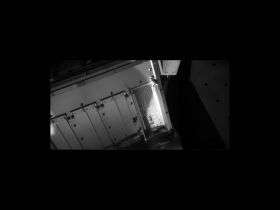
NASA's Phoenix Mars Lander collected a soil sample and attempted to deliver some of it to a laboratory oven on the deck during the mission's 62nd Martian day, or sol, (July 28, 2008). Image credit: NASA/JPL-Caltech/University of Arizona/Max Planck Institute

(PhysOrg.com) -- Scientists and engineers on NASA's Phoenix Mars Mission spent the weekend examining how the icy soil on Mars interacts with the scoop on the lander's robotic arm, while trying different techniques to deliver a sample to one of the instruments.

"It has really been a science experiment just learning how to interact with the icy soil on Mars -- how it reacts with the scoop, its stickiness, whether it's better to have it in the shade or the sunlight," said Phoenix Principal Investigator Peter Smith of the University of Arizona.

The team tried two methods over the weekend to pick up and deliver a sample of icy soil to a laboratory oven of the Thermal and Evolved-Gas Analyzer (TEGA). In both cases, most of the sample stuck inside the lander's inverted scoop. Images returned early Monday showed a small amount of soil reached the screened opening, but other data indicated that not enough had been funneled into the oven for beginning an analysis of the composition.

Samples obtained Friday and late Sunday contained material churned up from a hard layer by the motorized rasp on the scoop. That layer is believed to include water ice mixed with the soil.

Sunday's attempt to deliver a sample to cell number zero of Phoenix's TEGA instrument used more vibration with a motor inside the scoop and held the scoop upside down over the opened doors for longer than was used on Friday. The team plans to keep gaining experience in handling the icy soil while continuing with other Phoenix studies of the soil and the atmosphere.

Smith said, "While we continue with determining the best way to get an icy sample, we intend to proceed with analyzing dry samples that we already know how to deliver. We are going to move forward with a dry soil sample."

Provided by NASA


print this article email this article download pdf blog this article bookmark this article     Stumble it Digg this share on Facebook retweet share on Reddit add to delicious
Rate this story - 4.3 /5 (9 votes)

Rank Filter

Move the slider to adjust rank threshold, so that you can hide some of the comments.


Display comments: newest first

  • DGBEACH - Jul 30, 2008
    • Rank: 3 / 5 (2)
    ...didn't they try this here before they sent it? I mean, they went there looking for water, right?....didn't they actually try the thing with wet soil and ice shavings? this whole mission seems to have been makeshift from the start.
    The two rovers were (are) their finest accomplishments to date, but this thing seems pretty useless!
  • Milou - Jul 30, 2008
    • Rank: 3 / 5 (2)
    I agree with DGBEACH comment (above). Sounds like planning that came from the White House (let's fix it after we get there!).
  • gmurphy - Jul 30, 2008
    • Rank: 2.3 / 5 (3)
    of course they did, they're interacting with a basically unknown substance on an alien world, its inevitable that there would be some glitches
  • Doug_Huffman - Jul 30, 2008
    • Rank: 1 / 5 (1)
    Well, if 'we' aren't yet in the WH then 'we' will have to pay off the demos' (that's a Greek word BTW) homeless gangsta-boyz shock troops first - maybe with NASA jobs.
  • Tammo - Jul 30, 2008
    • Rank: 4.3 / 5 (3)
    gmurphy: There is nothing unknown up there. Its all stuff you can find here on earth. Our entire solar system is made from the same stuff.
  • BaRbArIaN - Jul 30, 2008
    • Rank: 3.5 / 5 (2)
    They could vibrate it intelligently, i.e. estimate the mass of the stuck material, model the known arm's size and mass, figure out the optimal vibrational frequency to resonate and shake it off with the most efficiency.
  • dbren - Jul 30, 2008
    • Rank: 5 / 5 (2)
    If people were doing the experiment, they could just tap the collecting tool to drop the sample into the oven. Of course, we all know that a human presence is just for show, and not essential to space exploration.

July 29, 2008 all stories

Comments: 7

4.3 /5 (9 votes)
  • Stumble this up

  • Digg this

  • share this

  • hide
  • Related Stories

  • Next Mars Soil Scoop Slated for Last of Lander's Wet Lab Cells
    created Sep 10, 2008 | popularity not rated yet | comments 0
  • Analysis Begins on Deepest Martian Soil Sample
    created Sep 02, 2008 | popularity not rated yet | comments 0
  • Phoenix Mission Conducting Extended Activities on Mars
    created Sep 01, 2008 | popularity not rated yet | comments 0
  • Phoenix Mars Lander Digs Deeper as Third Month Nears End
    created Aug 26, 2008 | popularity not rated yet | comments 0
  • Phoenix Mars Lander Confirms Martian Water
    created Jul 31, 2008 | popularity not rated yet | comments 0


  • hide
  • Relevant PhysicsForums posts

  • The shape of our solar system's orbits.
    created 21 hours ago
  • Above or Below the Line of Nodes
    created Nov 07, 2009
  • Supernova vs. Nova?
    created Nov 07, 2009
  • Supernova's Gamma Rays and Comets
    created Nov 06, 2009
  • More from Physics Forums - General Astronomy

Other News

Deep creep means milder, more frequent earthquakes along Southern California's San Jacinto fault

Deep creep means milder, more frequent earthquakes along Southern California's San Jacinto fault

Space & Earth / Earth Sciences

created 6 hours ago | popularity 4.7 / 5 (3) | comments 0

With an average of four mini-earthquakes per day, Southern California's San Jacinto fault constantly adjusts to make it a less likely candidate for a major earthquake than its quiet neighbor to the east, the ...


Success in 'space elevator' competition (AP)

Success in 'space elevator' competition (Update 3)

Space & Earth / Space Exploration

created Nov 05, 2009 | popularity 4.3 / 5 (33) | comments 50

(AP) -- A robot powered by a ground-based laser beam climbed a long cable dangling from a helicopter on Wednesday to qualify for prize money in a $2 million competition to test the potential reality of the ...


In a Galaxy Far, Far Away...

In a Galaxy Far, Far Away...

Space & Earth / Astronomy

created Nov 06, 2009 | popularity 4.8 / 5 (5) | comments 14

(PhysOrg.com) -- Astronomers have published the discovery of the farthest known object in the cosmos: a star that exploded when the universe was only 630 million years old -- only 4.6% of its current age. ...


'Dropouts' pinpoint earliest galaxies

'Dropouts' pinpoint earliest galaxies

Space & Earth / Astronomy

created Nov 06, 2009 | popularity 4.2 / 5 (10) | comments 12

Astronomers, conducting the broadest survey to date of galaxies from about 800 million years after the Big Bang, have found 22 early galaxies and confirmed the age of one by its characteristic hydrogen signature ...


Space hotel taking bookings for 2012 opening

Space hotel taking bookings for 2012 opening

Space & Earth / Space Exploration

created Nov 05, 2009 | popularity 4.4 / 5 (20) | comments 11

(PhysOrg.com) -- The first orbiting space hotel is on track to open for its first customers in 2012, but hurry, as bookings are filling fast.