Scientists find quick method to make magnets
(PhysOrg.com) -- Ultra-strong, high-temperature, high-performance permanent magnet compounds, such as Samarium Cobalt, are the mainstay materials for several industries that rely on high-performance motor and power generation applications, including the Department of Defense (DOD) and the automotive industry.
Until now, producing Samarium Cobalt has been a difficult and expensive multi-step process. Northeastern University researchers have broken new ground with an innovative invention of a rapid, high-volume and cost-effective one-step method for producing pure Samarium Cobalt rare earth permanent magnet materials.
Invented by lead scientist C.N. Chinnasamy, Ph.D., (right) at Northeastern’s Center for Microwave Magnetic Materials and Integrated Circuits, the direct chemical synthesis process is able to produce Samarium Cobalt rapidly and in large amounts, at a small fraction of the cost of the current industry method. Also, the process is environmentally friendly, with 100% recyclable chemicals, and readily scalable to large volume synthesis to meet the needs for the myriad of advanced permanent magnet applications. The study describing the invention is published in the latest issue of Applied Physics Letters (July 28, 2008).
“A single step chemical process has been pursued for decades with little success,” said Vincent Harris, William Lincoln Smith Chair Professor and Director of the Center for Microwave Magnetic Materials and Integrated Circuits at Northeastern University and Principal Investigator of the program. “This research breakthrough represents a potentially disruptive step forward in the cost-effective processing of these important materials.”
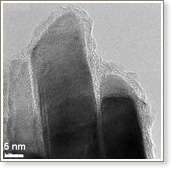
Samarium Cobalt magnets are superior to other classes of permanent magnetic materials for advanced high-temperature applications and the Northeastern invention goes beyond the currently known fabrication process of these nanostructured magnets. Unlike the traditional multi-step metallurgical techniques that provide limited control of the size and shape of the final magnetic particles, the Northeastern scientists’ one-step method produces air-stable “nanoblades” (elongated nanoparticles shaped like blades) that allow for a more efficient assembly that may ultimately result in smaller and lighter magnets without sacrificing performance.
“Such unusually shaped particles should prove valuable in the processing of anisotropic magnets that are highly sought in many DOD and commercial applications and are anticipated to lead to lighter and more energy-efficient end products,” said C.N. Chinnasamy.
“Northeastern’s new one-step process has the potential to reduce complexity and associated costs of processing Samarium Cobalt magnets, which are used in many advanced DOD weapon systems,” said Richard T. Fingers, Ph.D., Chief, Energy Power Thermal Division of the Air Force Research Laboratory.
Underscoring the significance of the Northeastern invention relative to the high-performance rare earth magnet industry, Jinfang Liu, Ph.D., Vice President of Technology and Engineering at Electron Energy Corporation, a leading developer of permanent magnetic materials, added, “The development of stable Samarium Cobalt nanoparticles using this one-step chemical synthesis method may motivate more scientists and engineers to work on the development of next generation magnets.”
This revolutionary invention is anticipated to not only revitalize the permanent magnet industry, it has the potential to bring major changes to several federal and commercial industries, including its potential to impact the size, weight, and performance of aircraft, ships, and land-based vehicles, as well as contribute to more efficient computer technologies and emerging biomedical applications.
“This work represents the most promising advance in rare earth permanent magnet processing in many years,” said Laura Henderson Lewis, Professor of Chemical Engineering and Chair of the Department of Chemical Engineering at Northeastern University and a collaborator on this project. “I expect it to revitalize international interest in the development of this important class of engineering materials.”
Strongly aligned with the goals set forth in Northeastern University’s Academic Plan, this invention has the potential to serve global and societal needs by crossing national boundaries and having a significant impact on the engineering discipline through academia and industry.
Provided by Northeastern University


