Lowering cholesterol early in life could save lives
(PhysOrg.com) -- With heart disease maintaining top billing as the leading cause of death in the United States, a team of University of California, San Diego School of Medicine physician-researchers is proposing that aggressive intervention to lower cholesterol levels as early as childhood is the best approach available today to reducing the incidence of coronary heart disease.
In a review article published in the August 5, 2008 issue of the American Heart Association journal Circulation, pioneering lipid researcher Daniel Steinberg, M.D., Ph.D., professor emeritus of medicine at UC San Diego, and colleagues Christopher Glass, M.D., Ph.D. and Joseph Witztum, M.D., both UC San Diego professors of medicine, call current approaches to lowering cholesterol to prevent heart disease "too little, too late."
They state that with a large body of evidence proving that low cholesterol levels equate with low rates of heart disease, "...our long-term goal should be to alter our lifestyle accordingly, beginning in infancy or early childhood" and that "…instituting a low-saturated fat, low-cholesterol diet in infancy (7 months) is perfectly safe, without adverse effects…"
According to Steinberg, progress has been made in the treatment of coronary heart disease in adults with cholesterol lowering drugs like statins. However, while studies show a 30% decrease in death and disability from heart disease in patients treated with statins, 70% of patients have cardiac events while on statin therapy. Promising new therapies are under development, but with an alarming rate of coronary heart disease in the U.S. today, action to curtail the epidemic is needed today.
In fact, they propose that lowering low-density lipoproteins (the so-called "bad cholesterol") to less than 50 mg./dl. even in children and young adults is a safe and potentially life-saving standard, through lifestyle (diet and exercise) changes if possible. Drug treatment may also be necessary in those at very high risk.
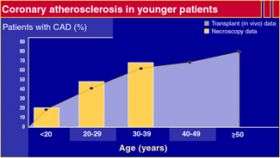
"Our review of the literature convinces us that more aggressive and earlier intervention will probably prevent considerably more than 30% of coronary heart disease," said Steinberg. "Studies show that fatty streak lesions in the arteries that are a precursor to atherosclerosis and heart disease begin in childhood, and advanced lesions are not uncommon by age 30. Why not nip things in the bud?" Such early signs of heart disease should be taken as seriously as early signs of cancer or diabetes, he said.
Physicians have been slow to measure cholesterol, much less prescribe cholesterol lowering regimens in children and young adults who are otherwise healthy. However, the UC San Diego team notes that studies of Japanese men in the 1950s showed that consuming a low-fat diet from infancy resulted in lifelong low cholesterol levels, and their death rate from heart disease was only 10% of the rate of cardiac-related death in the U.S. Even with risk factors such as cigarette smoking and diabetes, heart disease deaths remained significantly lower in Japanese men with lifetime levels of low cholesterol. This protective effect was lost in Japanese who migrated to the United States and adopted a Western diet leading to higher blood cholesterol levels.
Interventions today typically begin in adults diagnosed with high cholesterol levels or other risk factors or symptoms of coronary artery disease. However, initiating cholesterol-lowering interventions in 50-year-old adults, even if successful, is unlikely to reverse established arterial disease and will therefore have limited impact on the occurrence of adverse events related to coronary heart disease.
Citing the success of lowering cholesterol levels in children diagnosed with familial hypercholesterolemia, the UC San Diego team suggests that programs to lower cholesterol in the population at large from childhood on, with the ideal LDL level set at 50 mg./dl. or less (in those at highest risk), will have a long-term beneficial effect and lower the nationwide rates of coronary artery disease. They do not advocate using drug therapy to reach these levels, especially in children with no other risk factors, but to achieve these low levels through "TLC," or "therapeutic lifestyle changes," such as diet and exercise.
The National Institutes of Health (NIH) has declared "war" against the parallel epidemics of obesity and diabetes. The researchers conclude that "The weapons for those wars—education and behavior modification—are the same as those needed for a 'war' on coronary heart disease."
They propose that "A concerted national effort might dramatically reduce morbidity and mortality due to three major chronic diseases…It would take generations to achieve and it would require an all-out commitment of money and manpower to reeducate and modify the behavior of a nation. Is that impossible? No. We have already shown that even a frankly addictive behavior like cigarette smoking can be overcome (eventually)."
Source: University of California - San Diego


