Study shows playing video games can change behaviour and biology
(PhysOrg.com) -- Video games are among the most popular entertainment media in the world. Now, groundbreaking research involving McMaster University researchers shows that a specially designed video game can promote positive behaviour in young cancer patients that enhances the effectiveness of medical treatment.
The research published in the medical journal Pediatrics provides scientific evidence for a growing field of product development that taps into the positive potential of video games and other popular technology to improve human health.
"We have very effective treatments for cancer in adolescents, but they only work if the patient takes them," said Steve Cole, co-author of the research and vice-president of research at the non-profit organization HopeLab, which sponsored the study. "This study shows that a strategically designed video game can be a powerful new tool to enhance the impact of medical treatment by motivating healthy behaviour in the patient."
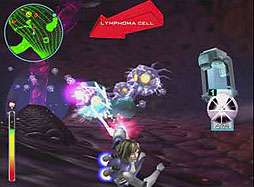
The study evaluated the impact of playing a video game called Re-Mission which was developed by HopeLab specifically for teens and young adults with cancer, on key behavioural and psychological factors associated with successful cancer treatment. In Re-Mission, players pilot a nanobot named Roxxi as she travels through the bodies of fictional cancer patients, blasting away cancer cells and battling the side-effects of cancer and cancer treatments.
McMaster University professor Dr. Ronald Barr headed up the research in Hamilton, one of the six Canadian sites in the study of 375 teens and young adults in the U.S., Australia and Canada.
Participants in the study who used the video game maintained higher levels of chemotherapy in their blood and took their antibiotics more consistently than those in the control group, demonstrating the game's impact at a biological level. Participants also showed faster acquisition of cancer-related knowledge.
Provided by McMaster University


