Researchers demonstrate activity of mebendazole in metastatic melanoma
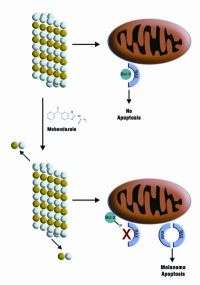
Researchers at the NYU Cancer Institute and the Ronald O. Perelman Department of Dermatology have identified mebendazole, a drug used globally to treat parasitic infections, as a novel investigational agent for the treatment of chemotherapy-resistant malignant melanoma.
Because most patients with metastatic melanoma fail to respond to available therapies, the discovery of a viable investigational treatment with an established safety profile could address a serious unmet need in oncology. Effectively sidestepping the prohibitive costs and long lead times typically required to discover new cancer medicines, the NYU team screened a library of already approved drugs for activity against the most deadly form of skin cancer.
Their report, which was selected for advance online publication by Molecular Cancer Research, is published in the August issue of the journal. Since submitting the article for publication, the authors have conducted additional pre-clinical studies of mebendazole in an in vivo model of chemotherapy-resistant melanoma and are now preparing a phase I clinical trial, expected to begin next year at NYU Cancer Institute.
"While rational drug design remains a perfectly valid way to develop cancer therapies, we also need approaches that are less costly and more productive of new effective treatments," said lead author Seth J. Orlow, M.D. Ph.D., Chair of the Ronald O. Perelman Department of Dermatology at New York University School of Medicine. "You could say this is more of a guerrilla approach. Instead of screening millions of untested compounds for an agent that inhibits or stimulates a particular molecular target, we chose to screen a large library of already approved drugs for novel activity against melanoma cells, and then advance the most promising candidate rapidly to clinical practice."
First, the NYU researchers screened a library of 2,000 well-known drugs [Spectrum Collection (Microsource Discovery Systems)] and identified members of the benzimidazole family for their ability to inhibit melanoma growth and induce programmed cell death (apoptosis) of malignant melanoma cells without affecting normal melanocytes (pigment-producing cells). Of the identified benzimidazoles, the team selected mebendazole for further study because it was known to be a well-tolerated, orally available drug with anti-cancer properties.
In a surprising discovery, the team found that mebendazole takes advantage of a special difference between a melanoma cell and normal melanocytes. Melanomas produce high levels of a protein called Bcl-2, which is known to protect certain cancer cells from apoptosis. The team saw that when a melanoma cancer cell was exposed to mebendazole, it resulted in inactivation of Bcl-2, allowing apoptosis to occur.
Mebendazole, sold as a generic drug in the United States, has been used since the 1970s to treat roundworm, hookworm, pinworm, whipworm, and other worm-based parasitic infections. Previous research has shown it to have some antitumor activity in lung and adrenocortical cancer.
"Our ability to identify novel treatments for melanoma and advance them rapidly into the clinic very much depends on NYU's multidisciplinary approach to melanoma care and research," Dr. Orlow said. "To be effective, translational medicine cannot be unidirectional. Discovery moves continuously back and forth between the clinic and the bench. We are now focused on determining the range of doses to be tested in the clinic, whether specific types of melanomas will respond better than others, and whether combining mebendazole with other agents will be of further benefit"
Source: New York University School of Medicine


