New reasons to avoid grapefruit and other juices when taking certain drugs
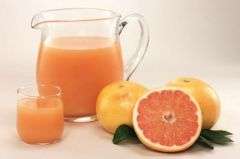
Scientists and consumers have known for years that grapefruit juice can increase the absorption of certain drugs — with the potential for turning normal doses into toxic overdoses. Now, the researcher who first identified this interaction is reporting new evidence that grapefruit and other common fruit juices, including orange and apple, can do the opposite effect by substantially decreasing the absorption of other drugs, potentially wiping out their beneficial effects.
The study provides a new reason to avoid drinking grapefruit juice and these other juices when taking certain drugs, including some that are prescribed for fighting life-threatening conditions such as heart disease, cancer, organ-transplant rejection, and infection, the researcher says. These findings — representing the first controlled human studies of this type of drug-lowering interaction — were described today at the 236th National Meeting of the American Chemical Society.
"Recently, we discovered that grapefruit and these other fruit juices substantially decrease the oral absorption of certain drugs undergoing intestinal uptake transport," says study leader David G. Bailey, Ph.D., a professor of clinical pharmacology with the University of Western Ontario in London, Ontario. "The concern is loss of benefit of medications essential for the treatment of serious medical conditions."
Bailey and colleagues announced almost 20 years ago the unexpected finding that grapefruit juice can dramatically boost the body's levels of the high-blood-pressure drug felodipine, causing potentially dangerous effects from excessive drug concentrations in the blood. Since then, other researchers have identified nearly 50 medications that carry the risk of grapefruit-induced drug-overdose interactions. As a result of the so-called "Grapefruit Juice Effect," some prescription drugs now carry warning labels against taking grapefruit juice or fresh grapefruit during drug consumption.
In the most recent research, Bailey's group had healthy volunteers take fexofenadine, an antihistamine used to fight allergies. The volunteers consumed the drug with either a single glass of grapefruit juice, water containing only naringin (substance in grapefruit juice that gives the juice its bitter taste), or water. When fexofenadine was taken with grapefruit juice, only half of the drug was absorbed compared to taking the drug with water alone, Bailey says. Loosing half of the amount of drugs taken into the body can be critical for the performance certain drugs, he points out.
They also showed that the active ingredient of grapefruit juice, naringin, appears to block a key drug uptake transporter, called OATP1A2, involved in shuttling drugs from the small intestine to the bloodstream. Blocking this transporter reduces drug absorption and neutralizes their potential benefits, the researchers say. By contrast, drugs whose levels are boosted in the presence of grapefruit juice appear to block an important drug metabolizing enzyme, called CYP3A4, that normally breaks down drugs.
"This is just the tip of the iceberg," Bailey says. "I'm sure we'll find more and more drugs that are affected this way."
To date, grapefruit, orange and apple juices have been shown to lower the absorption of etoposide, an anticancer agent; certain beta blockers (atenolol, celiprolol, talinolol) used to treat high blood pressure and prevent heart attacks; cyclosporine, a drug taken to prevent rejection of transplanted organs; and certain antibiotics (ciprofloxacin, levofloxacin, itraconazole). But additional drugs are likely to be added to the list as physicians become more aware of this drug-lowering interaction, Bailey says.
Orange and apple juices also appear to contain naringin-like substances that inhibit OATP1A2, Bailey says. The chemical in oranges appears to be hesperidin, but the chemical in apples has not yet been identified, the researchers notes.
Bailey advises patients to consult with their doctor or pharmacist before taking any medications with grapefruit juice or other fruits and juices. Unless it is known to be a problem, he recommends taking most medications only with water. This research was funded by grants from the Canadian Institutes of Health Research and the United States Public Health Service.
Source: American Chemical Society


