Whether brown or red, algae can produce plenty of green fuel
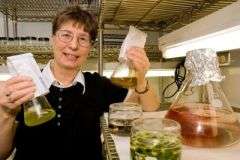
Having studied the physiology of algae for more than 30 years, Rose Ann Cattolico is convinced the plant life found in oceans and ponds can be a major source of environmentally friendly fuels for everything from cars and lawn mowers to jet airplanes.
She's not the only one. Recently Allied Minds, an investment company that works with universities to commercialize early-stage technology, invested in the University of Washington biology professor's work, forming a startup company called AXI.
"People don't realize how many types of algae there are – from single cells to large kelp – and each one develops differently," Cattolico said. "What we're trying to do is choose the best of the best, the ones that produce the right lipids for a particular type of fuel."
AXI won't be in the business of making fuel. Instead, it will work with biofuel producers to develop strains of algae that produce just the right lipids, or oils, for the fuel that the producer wants to make. The methods will not employ genetic modification, Cattolico said.
"It's not like creating a widget. It's a dynamic process that will change all the time," she said.
Unlike many agriculturally important crops such as corn that produce starch as a byproduct of photosynthesis, some algae make lipids. One type of algae might produce oil appropriate for a motor vehicle. Another might be useful for home heating oil. Yet another might produce lipids just right for powering an airliner across the Pacific Ocean. Some strains could produce oil useful for other products, such as the omega 3 fatty acids that make fish oil dietary supplements so popular.
Algae grow rapidly and do not require the use of productive farmland. Algae also can use various nutritional sources, including wastewater, Cattolico said.
A variety of factors made this an opportune time to form AXI, said Erick Rabins, the company's interim manager and vice president of Allied Minds, based in Quincy, Mass. Escalating costs for oil (from about $27 a barrel to more than $100 in five years), rising demand for alternative fuels, the effects of climate change, and growing concern about using foods such as corn and soybeans as fuel stock are making fuel from algae a much more attractive option.
But that won't necessarily translate into rapid development of algae-based fuels, Rabins said. Entire infrastructures, from specialized growing facilities to processing plants, will have to be created, and that will come only after potential producers see the value and make the investment. He speculated that it could take 10 to 25 years before algae-based biofuel is readily available to the public, though specialty uses could appear sooner.
"The most optimistic assessment that I've heard is that it could be six to eight years before there's something that's useable, but the tools and techniques to make it possible are being created right now," he said.
Details of the agreement between Allied Minds and UW TechTransfer to commercialize Cattolico's synthesis methods were not disclosed. The company was drawn to her work, Rabins said, because she has spent so many years making detailed analyses of many different strains of algae, in essence creating a reference database.
Cattolico began studying algae almost by accident. As a master's degree student she worked with terrestrial plant pollen. But it turned out she was allergic to pollen and her physician advised her to change fields, so for her doctoral work she began studying chlorophyll-containing structures within the cells of algae.
That was in 1973, right at the end of another major societal spasm over fuel shortages and high gas prices. As gasoline became more plentiful again, demands for finding alternative fuel sources grew dimmer and "all of the money for research dried up," Cattolico said.
In the current fuel debate, Cattolico readily points to the merits of algae-based biofuel. But she believes it is only a part of the answer to high fuel prices and replacing current fuels with climate-friendlier alternatives. She would like to see a broad commitment by government and industry to quickly develop the alternate energy sources needed to reduce environmental problems, increase national security and hold down costs.
"What we need is a Manhattan Project for fuel. If we can get a Manhattan Project for fuel, it won't take 25 years," Cattolico said.
Source: University of Washington


