Dashing computer interface to control your car
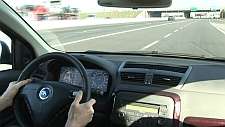
(PhysOrg.com) -- European researchers have developed a special dashboard computer to act as a single conduit for all devices emerging in modern cars – GPS, mobile, PDAs, intelligent car technologies. It should mean a better, more relaxed and even safer driving experience.
European research and the automotive industry have joined forces and developed a dashboard interface that can link and control the increasing information and vehicle controls systems currently emerging in the automotive industry.
Right now, dozens of research projects around Europe are working on new technologies to improve automotive safety and to develop intelligent vehicles. But all of these systems must then be added to the dozens of controls and user devices that are already found in a car.
Current in-vehicle systems like open door and seat belt warnings will soon be joined by lane assistance, hazard detection and a host of other information and systems for safe and efficient driving.
Information overload
“There is a real risk the driver will become overwhelmed as the number of in-car systems multiply,” warns Angelos Amditis, dissemination manager of the EU-funded AIDE integrated project. “There are so many potential demands on driver attention from these new systems that they could prove distracting.”
AIDE was set up to tackle this potential problem by developing an Adaptive, Integrated Driver-vehicle interface, or AIDE. The AIDE system provides a clearinghouse for all of the systems operating in a car and to interact with the driver.
This central intelligence can prioritise and emphasise the most important and urgent information based on the driver’s state and current driving conditions, and it can put all other non-essential alerts on hold.
Not nag-ware
AIDE designed the technology to prioritise demands on the driver’s attention depending on driving conditions. If the car is approaching a tricky junction, for example, it can hold all mobile calls and text messages, or suspend non-safety critical information.
The AIDE system can support many different functions, and help to ensure that drivers get the best possible use out of those functions, and that the system is safe and easy to use.
It works by sharing input and output controls among the various subsystems, such as collision avoidance or the mobile phone unit. It then coordinates information centrally, deciding the best course of action for both a given driving situation and the driver’s current state.
If the driver is distracted, for example, the system issues warnings with greater intensity. AIDE also developed the interface so that it could adapt to different types of driver. It is possible to personalise the warning, the media, timing and its intensity according to the driver’s profile, both explicit and implicit preferences, explains Amditis.
AIDE was popular among drivers in field tests, with approximately 50% of the test subjects reporting that they appreciated support from the system. That is a surprising result, really, given that many drivers find in-car systems – like seat belt and door warnings – maddening, and it is very difficult to develop a comfortable interface.
But AIDE succeeded in developing helpful software rather than what could easily be annoying nag-ware.
The positive field response is a tribute to the studies and testing undertaken by the AIDE project. “We consulted drivers and experts, and a lot of literature about driver response to safety systems, using a user-centred design approach,” notes Amditis.
HMI cookbook
AIDE also looked at quantitative models and simulation, which may ultimately provide a cost-effective system for testing. The perfect quantitative model remains elusive for now, but AIDE did develop a ‘cookbook’ for Human-Machine Interface (HMI) testing in the automotive industry.
“The project also raised awareness in Europe about the importance of interface issues for road safety, and AIDE has put in-car HMI on the agenda in Europe,” explains Amditis. “Many of our partners will continue AIDE’s work, adapting elements of it to their own cars and trucks, while many of the equipment manufacturers are looking on AIDE-like systems to be implemented in their vehicles.”
“There might be a move towards some standards over time, but in the short term manufacturers will deploy proprietary implementations,” he adds.
Amditis says that the partners hope to continue the work in future projects. “Right now we are putting the finishing touches to our reporting and dissemination work in AIDE, but we will be pursuing new research initiatives after that.”
The AIDE project received funding from the EU’s Sixth Framework Programme for research in ‘information society’ technologies.
Link: AIDE project - www.aide-eu.org/
Provided by ICT Results


