Scientists Develop New Method to Investigate Origin of Life
September 2, 2008
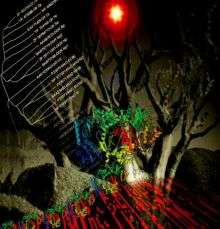
The baobab tree represents one of the most ancient species of life on the planet. In our paper, we investigate ancient and highly divergent proteins, called retro-elements, whose evolutionary histories hold keys to uncovering the origins of life. Our research demonstrates that phylogenetic profiles generated using the Gestalt Domain Detection Algorithm-Basic Local Alignment Tool provide an independent method for estimating the evolutionary histories of retroelements. Credit: Randen Patterson and Damian van Rossum, Penn State
(PhysOrg.com) -- Scientists at Penn State have developed a new computational method that they say will help them to understand how life began on Earth. The team's method has the potential to trace the evolutionary histories of proteins all the way back to either cells or viruses, thus settling the debate once and for all over which of these life forms came first.
"We have just begun to tap the potential power of this method," said Randen Patterson, a Penn State assistant professor of biology and one of the project's leaders. "We believe, if it is possible at all, that it is within our grasp to determine whether viruses evolved from cells or vice-versa."
The new computational method will be described in a paper to be published in a future issue of the journal Proceedings of the National Academy of Sciences. The journal also will post the paper on the early on-line section of its Web site sometime during the week ending 6 September 2008.
The team is focusing on an ancient group of proteins, called retroelements, which comprise approximately 50 percent of the human genome by weight and are a crucial component in a number of diseases, including AIDS. "Retroelements are an ancient and highly diverse class of proteins; therefore, they provide a rigorous benchmark for us to test our approach. We are happy with the results we derived, even though our method is in an early stage," said Patterson. The team plans to make the algorithms that they used in their method available to others as open-source software that is freely available on the Web.
Scientists map out the evolutionary histories of organisms by comparing their genetic and/or protein sequences. Those organisms that are closely related and share a recent common ancestor have greater degrees of similarity among their sequences. In their paper, the researchers describe how they used 11 groups of the retroelement proteins -- ranging from bacteria to human HIV -- to trace the evolutionary histories of retroelements. Their method uses a computer algorithm to generate evolutionary profiles -- also called phylogenetic profiles -- that are compared all-against-all.
For example, given four sequences, the new method compares profile A to profiles B, C, and D; it compares profile B to profiles C and D; and so on, for a total of six comparisons. The method then selects the regions of the profiles that match and creates a tree-like diagram, called a phylogenetic tree, based on the retroelements' similarities to one another. The tree provides evolutionary distance estimates and, hence, phylogenetic relationships among retroelements. Patterson said that the results from this study help to clarify many existing theories on retroelement evolution.
The conventional method for estimating evolutionary relationships, called multiple sequence alignment, also produces evolutionary trees, but can be insensitive to relationships among the most distantly related proteins, in large part because it makes only one simultaneous comparison across all of the genetic/protein sequences. To obtain more detailed information about possible relationships among the sequences, a human expert who can manually search for such relationships is needed. But Patterson said that relying on humans to do the work is not ideal.
"Although the human mind is the most powerful tool for pattern recognition, human-based measurements often are hard to reproduce," he said. "For example, if you do something and I do something, we're going to do it differently. It's better to have a standardized method for gauging relationships among ancient proteins, and that's exactly what we've created." According to Damian van Rossum, Penn State research associate/assistant professor of biology and another leader on the project, the new method can be used in conjunction with the conventional method to get a clearer picture of the evolutionary histories of proteins. "The more independent measures you have, the better view of the world you can get," he said.
In addition to searching for the origins of life, the team also is using its method to simultaneously gather data on the shapes of proteins, their functions in the body, and their evolutionary histories. In another paper, which was published in 2008 in the online journal Physics Archives, members of the team previously had demonstrated that their new method can simultaneously measure all three of these characteristics. "Previously, people have shown that profiling methods can resolve functional and structural differences and similarities between proteins, but to date no one has shown that you can measure evolutionary distances," said van Rossum. "Not only can our method measure evolutionary distances, but it also can measure functional and structural characteristics at the same time."
Patterson said that there are about 30,000 profiles in an online scientific repository that they can use to generate their phylogenetic profiles. He expects that the team's method will become even more powerful as additional sequences are added to this protein bank. In fact, the method already has become more refined in the short time since the team submitted its manuscript to the journal. "We already are producing evolutionary trees with much more detail than what we show in the paper," he said. "In fact, we are surprised at our progress so far in our goal of tracing these histories all the way back to the beginning of life."
Provided by Penn State
-
Improved method for protein sequence comparisons is faster, more accurate, sensitive
Dec 25, 2011 |
3.5 / 5 (4) |
0
-
Evolution reveals missing link between DNA and protein shape
Dec 07, 2011 |
5 / 5 (17) |
12
-
Three periods of innovation in gene regulation occurred during the evolution of vertebrate animals: study
Aug 18, 2011 |
4.8 / 5 (5) |
0
-
Scientists map attack tactics of plant pathogens
Jul 28, 2011 |
not rated yet |
0
-
Study points to new means of overcoming antiviral resistance in influenza
Jul 12, 2011 |
not rated yet |
0
-
Engineers build first sub-10-nm carbon nanotube transistor
Feb 01, 2012 |
4.9 / 5 (31) |
30
-
Something old, something new: Evolution and the structural divergence of duplicate genes
Jan 31, 2012 |
4.6 / 5 (7) |
1
-
The hidden nanoworld of ice crystals: Revealing the dynamic behavior of quasi-liquid layers
Jan 30, 2012 |
5 / 5 (3) |
1
-
Stock market network reveals investor clustering
Jan 27, 2012 |
3.9 / 5 (23) |
8
-
Of microchemistry and molecules: Electronic microfluidic device synthesizes biocompatible probes
Jan 26, 2012 |
5 / 5 (1) |
0
More news stories
The power of estrogen -- male snakes attract other males
A new study has shown that boosting the estrogen levels of male garter snakes causes them to secrete the same pheromones that females use to attract suitors, and turned the males into just about the sexiest ...
4 hours ago |
not rated yet |
0
|
Grass to gas: Researchers' genome map speeds biofuel development
Researchers at the University of Georgia have taken a major step in the ongoing effort to find sources of cleaner, renewable energy by mapping the genomes of two originator cells of Miscanthus x giganteus, a large perenn ...
1 hour ago |
5 / 5 (2) |
0
|
Experts reveal how plants don't get sunburn
(PhysOrg.com) -- Experts at the University of Glasgow have discovered how plants survive the harmful rays of the sun.
4 hours ago |
5 / 5 (2) |
0
|
Protein libraries in a snap
(PhysOrg.com) -- A Rice University undergraduate will depart with not only a degree but also a possible patent for his invention of an efficient way to create protein libraries, an important component of biomolecular ...
8 hours ago |
5 / 5 (2) |
0
|
Miami battling invasion of giant African snails
No one knows how they got there. But an invasion of African giant snails has southern Florida in a panic over potential crop damage, disease and general yuckiness surrounding the slimy gastropods.
8 hours ago |
not rated yet |
2
Putting the squeeze on planets outside our solar system
(PhysOrg.com) -- Using high-powered lasers, scientists at Lawrence Livermore National Laboratory and collaborators discovered that molten magnesium silicate undergoes a phase change in the liquid state, abruptly ...
Employers feel no love for unscrupulous practice of 'service sweethearting'
A new study led by two Florida State University marketing professors finds that some frontline service employees who are rewarded for hikes in customer loyalty and satisfaction also may engage in "service ...
US issues guidelines to avoid heparin contamination
Four years after US drug-maker Baxter International's blood thinner heparin was contaminated in China, causing dozens of deaths, US regulators on Friday issued draft guidelines for safe production.
Expat French get Internet vote for first time
French citizens will for the first time this year be able to vote in a parliamentary election over the Internet, an experiment that could be extended to other elections if successful.
"Twisted Metal" gamers get shot at real gunplay
Fans of "Twisted Metal" will get to welcome a long-awaited sequel of the car-battle videogame with a real-world bang by blasting an ice cream truck to bits with a machine gun.
New error-correcting codes guarantee the fastest possible rate of data transmission
Error-correcting codes are one of the triumphs of the digital age. Theyre a way of encoding information so that it can be transmitted across a communication channel such as an optical fiber o ...
Sep 02, 2008
Rank: 4.6 / 5 (10)
Sep 02, 2008
Rank: 4.4 / 5 (7)
Sep 02, 2008
Rank: 2 / 5 (8)
If in fact someone views God as the watchmaker - create the universe, wind it up, and let it run until it stops - how does this interfere with science?
The notion that God created the universe and then let it run was propounded during Newtonian years where this correlated with the scientific views of the day. Namely, the people of that age believed that the universe could be reduced a set of mechanistic interactions that could be solved with all of the initial information and that - at least in theory - the state of the system could then be found for any later starting point.
Such a belief is hardly incompatible with science. Indeed, if one concedes that evolution exists and is valid, then root cause analysis shifts entirely to speculative grounds, which one of your intelligence should be able to quickly consign those arguments to the intellectual garbage bin of failed ideas.
Of course, after 8000 years of human history that logic hasn't succeeded yet; perhaps you should reexamine your fundamental precepts so that your ideas don't find themselves rejected out of hand.
Sep 02, 2008
Rank: 4.6 / 5 (9)
Sep 02, 2008
Rank: 2.3 / 5 (8)
Sep 03, 2008
Rank: 4.2 / 5 (6)
Some of those religious wack-a-loons have a new argument. Some would argue that God created evolution. However, this conjecture is just as unfalsifiable as the God Theory upon which it is based, and, being completely outside the realm of logic, it is therefore weakened by the same fundamental flaw.
Sep 03, 2008
Rank: 1 / 5 (6)
Sep 03, 2008
Rank: 1 / 5 (8)
Sep 03, 2008
Rank: 1 / 5 (9)
Sep 04, 2008
Rank: 4.3 / 5 (7)
Yep, it's all there - animal sacrifice, talking snakes, slavery, murder, etc.
Oh, and don't forget this gem:
Malachi 2:3 Behold, I will corrupt your seed, and spread dung upon your faces.
Yep, this is where I look to for answers. A poorly written work of fiction that contradicts itself hundreds of times.
Sep 07, 2008
Rank: 4 / 5 (4)
Sep 07, 2008
Rank: 2.3 / 5 (3)
However the existence of a God in another dimension or outside this universe does not interfere or contradict with any science that I am aware of, if it does I would like to see the articles in question that have proof beyond doubt of that fact.
In my view it is good to have disagreements, as that is what drives people to find out more, to see who is right and who is wrong, but Santa Claus and bible quoting or bashing makes it difficult to take ones comments seriously.
Sep 08, 2008
Rank: not rated yet
Sep 08, 2008
Rank: 4 / 5 (4)
Anyone who tries to say the bible is absolute truth is actually denying the tenets of their religion and disgracing it's rich history.
Now for my antireligious statement:
If the bible is the word of god then god is a real dick. The first story he told us has the moral of "Don't question what I say or I'll damn you and all your children forever."
Real nice guy if you ask me.
Sep 08, 2008
Rank: 2 / 5 (4)
As far as this article goes there is one major problem - simulation programms designed to reveal similarities in patterns are fine but are never any better than the truth of the assumptions their algorithms are based upon.
In this case the base assumption is that Darwinian evolution is true. Base upon that assumption the program will give results related to the assumptions - which will be as false as Darwinism is false or true as Darwinism is true.
As for nano999 inane "evolution will still be denied by the religious wack-a-loons" I strongly suggest he get an science education somewhere near that of the highly educated people who, based not on religion but on evidence, claim that Darwinism is wrong.
Of course the fact that the genome reveals more and more specified complexity in it's hundreds of inter-cooperating nano machines at work in the cell factory, while not swaying in the least hard line Darwinists who demonstrate absolutely no respect for evidence based on their own metaphysical (religious) aassumptions, is also quite revealing as to their true motives.
Sep 08, 2008
Rank: 2 / 5 (4)
The problem with internet commentators like the inane drones who ignorantly and persistently represent the bible as an old book of fictions, is that they inevitabley got their information from atheist ignoramuses who got their information from fictional works like the Divinci Code (it's a made up story people) or the works of the 'higher critics' that are so far out of date and so far demonstrated to be false it's ludicrous.
Furthermore we may cite the following:
There exists no document from the ancient world witnessed by so excellent a set of textual and historical testimonies, and offering so superb an array of historical data on which an intelligent decision may be made. An honest person cannot dismiss a source of this kind. Skepticism regarding the historical credentials of Christianity is based upon an irrational (i.e., antisupernatural) bias. -- Dr. Clark H. Pinnock, professor of systematic theology at Regent College
We may also quote the verdict of the late Sir Frederic Kenyon, a scholar whose authority to make pronouncements on ancient MSS was second to none: 'The interval then between the data of original. composition and the earliest extant evidence become so small to be in fact negligible, and the last foundation for any doubt that the Scripture have come down tous substantially as they were written has now been removed. Both the authenticity and the general integrity of the books of the New Testament may be regarded as finally established.'
The History of Thucydides (c. 460-400 BC) is known to us from eight MSS, the earliest belonging to c. AD 900, and a few papyrus scraps, belonging to about the beginning of the Christian era The same is true of the History of Herodotus (c. 488-428 BC). Yet no classical scholar would listen to an argument that the authenticity of Herodotus or Thucydides is in doubt because the earliest MSS of their works which are of any use to us are over 1,300 years later than the originals.
The New T. MSS (of which we have way over 5000 reliable copies) date from 50-100 years within the period of the events described.
You anti-Christ types are in big trouble with not a single grain of reality to support your views.
It is also worth noting that modern science was founded by 'religious' scholars (often priests or pastors) who believed they would find evidence of God in nature and that nature was made to be discovered. These people founded the original scientific method. That method has been perverted into methodological naturalism, not by logic or rules of evidence, but by materialist, atheist types who wanted to get rid of all notions of god in the world.
Richard Dawkins and his ilky buddies are radical militant atheists on a rampage to convert the world to scientism - not to be confused with real science. Dawkins' books are more and more lame both in logic and foundations. Bantha fodder only. If you swallow their false views of what religion or the bible is about you need your head examined as much as they do.
I would suggest you listen to the debate between biblical scholar William Lane Craig with hard line atheist scholar Hector Avalos - available for download. http://www.bringy...bate.mp3
Craig rarely loses a debate with these jerks because they have nothing to say with any kind of foundational logic or hard historical evidence.
I leave you with this from astro physicist Sir Frederick Hoyle and you can see for yourselves who the real 'wack-a-loons' are : "Because the old believers said that God came out of the sky, thereby connecting the Earth with events outside it, the new believers were obliged to say the opposite and to do so, as always, with intense conviction. Although the new believers had not a particle of evidence to support their statements on the matter, they asserted that the rabbit producing sludge (called soup to make it sound more palatable) was terrestrially located and that all chemical and biochemical transmogrifications of the sludge were terrestrially inspired. Because there was not a particle of evidence to support this view, new believers had to swallow it as an article of faith, otherwise they could not pass their examinations or secure a job or avoid the ridicule of their colleagues. So it came about from 1860 onward that new believers became in a sense mentally ill, or, more precisely, either you became mentally ill or you quitted the subject of biology, as I had done in my early teens. The trouble for young biologists was that, with everyone around them ill, it became impossible for them to think they were well unless they were ill, which again is a situation you can read all about in the columns of Nature[magazine]." (Hoyle, F., "Mathematics of Evolution," [1987], Acorn Enterprises: Memphis TN, 1999, pp.3-4).
Sep 18, 2008
Rank: 5 / 5 (3)
Sep 02, 2009
Rank: not rated yet
Sure people from India, Arabia and ancient Greece. They were religious, but they didn't believe in the god God. They had other gods, several of them. Do you believe in their gods too?