Fatal protein interactions may explain neurological diseases
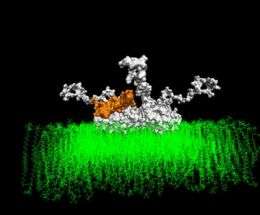
In a collaborative study at the University of California, San Diego, investigators from neurosciences, chemistry and medicine, as well as the San Diego Supercomputer Center (SDSC) have investigated how proteins involved in neurodegenerative diseases such as Alzheimer's and Parkinson's disease interact to form unique complexes. Their findings explain why Alzheimer's patients might develop Parkinson's, and vice versa. The new and unique molecular structures they discovered can now be used to model and develop new drugs for these devastating neurological diseases. Their findings will be published in the September 3 issue of Public Library of Science (PLoS) ONE on September 4, 2008.
The team, led by Eliezer Masliah, M.D., professor of neurosciences and pathology in the UC San Diego School of Medicine, found that "fatal" or abnormal interactions among the a-synuclein protein (a-syn, involved in Parkinson's disease) and Abeta amyloid (Aß, which leads to the plaques associated with Alzheimer's disease) interact and form unique "hybrid" complexes. These hybrid abnormal protein interactions result in combined neurodegenerative diseases.
"Clinically, we knew that having one neurological disease, such as Alzheimer's, put patients at risk for another neurological disease in combination with it, for example, Parkinson's disease or frontotemporal dementia. But as doctors and scientists, we didn't understand why this occurred until now," Masliah said. Through computer modeling, they discovered that when the Aß and a-syn interacted they formed a new hybrid protein with a small hole called a "nanopore" that alters neuronal activity. Masliah described the model of the hybrid complex as being "like looking at a boat with holes in it. Because we can now see the holes, we can learn how to stop the leak."
Misfolding and aggregation of neuronal proteins has been proposed to play a critical role in the development of neurodegenerative disorders, including the leading disorders in the aging population – Alzheimer's disease and Parkinson's disease – which result in dementia and movement disorders. More than five million Americans live with such neurological conditions, and it is estimated that this country alone will see a 50 percent increase in Alzheimer's and Parkinson's disease alone by the year 2025.
In Alzheimer's, Aß accumulates in the intracellular and extracellular spaces of the brain, leading to the formation of plaques. In Parkinson's, intracellular accumulation of an abundant synaptic protein, a-syn, results in the formation of characteristic foreign substances called "Lewy bodies." The mechanisms through which Aß and a-syn interactions might lead to additional neurodegeneration have been the subject of intense scientific investigation, according to Masliah.
Working with researchers at the SDSC, Masliah and colleagues, including first author Igor Tsygelni from the Department of Chemistry and Biochemistry, developed a dynamic model using computer simulations. These included the so-called "molecular dynamics process," which allows insight into molecular motion on an atomic scale. Used to determine the properties of complex systems that contain a vast number of particles through use of numerical methods, molecular dynamics allowed the team to model how the abnormal neuronal proteins docked with other proteins or with cell membranes, and to measure the energies of interaction.
"This sort of modeling, to determine the structure of these complexes, was never before possible," said Masliah, adding that it was only possible at UC San Diego with its strong culture of scientific collaboration and the computing power of the San Diego Supercomputer Center. "With this novel technology, we have come to a new understanding of these combined neurological diseases, and have a model for developing new drugs to treat them."
These studies were supported by electron microscopy, along with cell and tissue studies of both mice and human brains, to characterize the nature of the interaction between the two proteins.
Source: University of California - San Diego


