NASA's Ares I Rocket Passes Review, Takes Giant Leap Toward Reality
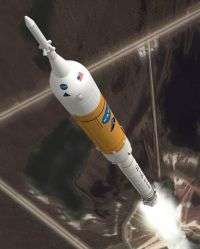
NASA has taken a major step toward building the nation's next generation launch vehicle with Wednesday's successful completion of the Ares I rocket preliminary design review.
Starting in 2015, the Ares I rocket will launch the Orion crew exploration vehicle, its crew of four to six astronauts, and small cargo payloads to the International Space Station. The rocket also will be used for missions to explore the moon and beyond in the coming decades.
The preliminary design review is the first such milestone in more than 35 years for a U.S. rocket that will carry astronauts into space. The review was conducted at NASA's Marshall Space Flight Center in Huntsville, Ala. It examined the current design for the Ares I launch vehicle to assess that the planned technical approach will meet NASA's requirements for the fully integrated vehicle. That ensures all components of the vehicle and supporting systems are designed to work together.
"This is a critical step for development of the Ares I rocket," said Rick Gilbrech, associate administrator of the Exploration Systems Mission Directorate in Washington. "Completing the preliminary design review of the integrated vehicle demonstrates our engineering design and development are on sound footing, and the Ares I design work is taking us another step closer to building America's next mode of space transportation."
The preliminary design review included over 1,100 reviewers from seven NASA field centers and multiple industry partners. The review is the final step of this design process. Teams representing each major part of the Ares I rocket -- the upper stage engine, first stage and upper stage -- all have conducted similar reviews during the past year.
The preliminary design review is one of a series of reviews that occurs before actual flight hardware can be built. As the review process progresses, more detailed parts of the vehicle design are assessed to ensure the overall system can meet all NASA requirements for safe and reliable flight. This process also identifies technical and management challenges and addresses ways to reduce potential risks as the project goes forward.
"Risk assessment is a very important part of the process," said Steve Cook, manager of the Ares I rocket at Marshall. "It allows us to identify issues that might impact the Ares I rocket. For example, we identified thrust oscillation -- vibration in the first stage -- as a risk. In response to this issue, we formed an engineering team. The team conducted detailed analyses and reviewed previous test data, and then recommended options to correct the problem."
"We intend to hold a limited follow-up review next summer to fully incorporate the thrust oscillation recommendations into the stacked vehicle design," Cook added. "Identifying risks that can impact the project and resolving them is a necessary and vital part of the development process."
With the completion of this review, each element of the Ares I rocket will move to the detailed design phase. A critical design review will mark the completion of the detailed design phase and allows for a more thorough review of each system element to ensure the vehicle design can achieve requirements of the Ares program.
This week, the J-2X engine will be the first Ares I element to kick off the critical design review process. The engine will power the Ares I upper stage to orbit after separation from the first stage.
"We're excited about getting into full system engine tests with the new J-2X engine," Cook said. "This will be one of the safest, most affordable and highest performing rocket engines ever built, and testing is critical as we begin preparation for future flights."
Marshall manages the Ares projects and is responsible for design and development of the Ares I rocket and Ares V heavy cargo launch vehicle. NASA's Johnson Space Center in Houston manages the Constellation Program, which includes the Ares I rocket, the Ares V vehicle, the Orion crew capsule and the Altair lunar lander. NASA's Kennedy Space Center in Florida is responsible for ground and launch operations. The program also includes multiple project element teams at NASA centers and contract organizations around the U.S.
Provided by NASA


