Blanket ban on bushmeat could be disastrous for forest dwellers in Central Africa, says new report
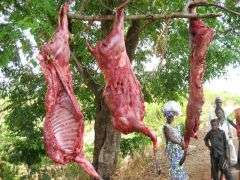
A new report from the Center for International Forestry Research (CIFOR), the Secretariat of the Convention on Biological Diversity (CDB) and partners warns that an upsurge in hunting bushmeat—including mammals, birds, reptiles and amphibians — in tropical forests is unsustainable and that it poses serious threats to food security for poor inhabitants of forests in Africa, who rely largely on bushmeat for protein.
The authors of the report call on policymakers in the region to develop policies protecting endangered species, while allowing sustainable hunting of "common" game, since there is no clear substitute available if common wild meat sources were to be depleted.
According to the report, large mammal species are particularly vulnerable. Many – such as elephants, gorillas and other primate species - have already become locally extinct, while fast reproducing generalist species that thrive in agricultural environments—such as duikers or rodents—may prove more resilient. The report makes an urgent appeal for a coordinated policy response to the crisis at the local, national and international levels, but warns that blanket bans on hunting and trade that don't discriminate between specific local contexts and species are bound to fail.
Researchers estimate that the current harvest of bushmeat in Central Africa amounts to more than 1 million tonnes annually—the equivalent of almost four million head of cattle. Bushmeat provides up to 80 percent of the protein and fat needed in rural diets in Central Africa, according to the report.
"If current levels of hunting persist in Central Africa, bush meat protein supplies will fall dramatically, and a significant number of forest mammals will become extinct in less than 50 years," said Robert Nasi of CIFOR, an author of the report.
The report, "Conservation and Use of Wildlife-Based Resources: The Bushmeat Crisis," was published by CBD and CIFOR, one of 15 centers supported by the Consultative Group on International Agricultural Research (CGIAR). It also includes major contributions from the Overseas Development Institute (ODI) and the Wildlife Conservation Society (WCS).
The report sums up the latest state of knowledge on this controversial issue and makes a strong case for developing a regulated and legalized bushmeat industry to ensure that the poorest forest-dwellers can continue to access this vital source of protein and livelihoods, but in a more sustainable way.
Local, national and regional trade in bushmeat has become a significant part of the informal sector's "hidden economy." Overall, international trade in wild animal products has an estimated value of US$3.9 billion. For West and Central Africa alone, the estimates range from $42 to $205 million a year. Yet, these statistics are still largely ignored in official trade and national policies regulating forest policy.
The report notes that it is important to make a clear distinction between commercial entrepreneurs, who engage in what they know to be an illicit activity, and poor rural people, for whom bushmeat represents both animal protein and a cash-earning commodity.
"If local people are guaranteed the benefits of sustainable land use and hunting practices, they will be willing to invest in sound management and negotiate selective hunting regimes," said Frances Seymour, Director General of CIFOR. "Sustainable management of bushmeat resources requires bringing the sector out into the open, removing the stigma of illegality, and including wild meat consumption in national statistics and planning."
"Reframing the bushmeat problem from one of international animal welfare to one of sustainable livelihoods—and part of the global food crisis—might be a good place to start," she added.
Wildlife is also adversely affected by the industrial extractive sector - logging, mining and oil drilling, for example – as these activities directly facilitate hunting through road construction and/or the provision of transportation for hunters. Salaried employees and their extended families that live in company camps or near the timber concessions are a major source of local demand for – and supply of – bushmeat.
European consumers are also partly responsible. Apart from the direct demand for bushmeat products from expat communities, European demand for African timber exports helps to drive this local timber extraction – both legal and illegal.
The report recommends that the local and international timber industry work with NGOs, local communities, and governments to develop forest policies and management plans that incorporate wildlife concerns, rather than focusing just on timber and other forms of natural resource extraction. Such plans should include conservation education, an agreed system of law enforcement, development of alternative protein supplies and an intensive monitoring program. If designed and applied appropriately, this will not only serve to enhance wildlife conservation, but will ultimately benefit the private sector and local communities as well.
According to the authors, the so-called bushmeat crisis is the focus of many conservation organizations, whose advocacy for a "crackdown" on the trade has fostered confusion and misunderstanding about the links between hunting, wildlife trade, livelihoods, and ecosystems.
Most people in tropical forests hunt, the report notes, and meat sales within the local village can be significant—including up to 90 percent of the catch sold in the Democratic Republic of Congo. Such figures counter the conventional wisdom of many conservation groups that suggests banning all commercial sales of bushmeat will deliver a win-win solution for both conservation and the poor.
The report advocates a more secure rights regime as the key to any solution. "Only if the local hunter is bestowed with some right to decide what, where and how he may hunt—as well as the knowledge to understand the consequences of his decisions—will he embrace his responsibility to hunt sustainably," Nasi said.
The report emphasizes that it is of critical importance to craft a specific, tailored approach for different cases and species, while also recommending that policymakers look to other renewable resource sectors, such as fishing and logging, for clues on how to develop a sustainable management strategy for bushmeat.
Source: Center for International Forestry Research


