Using novel tool, researchers dig through cell 'trash' and find treasure
A person's trash can reveal valuable information, as detectives, historians and identity thieves well know. Likewise, a cell's "trash" may yield certain treasures, University of Delaware researchers have found.
Using a new technique they developed, scientists at UD's Delaware Biotechnology Institute analyzed the cellular waste of one of the world's most-studied plants and discovered formerly hidden relationships between genes and the small molecules that can turn them off.
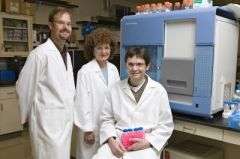
The approach, devised by postdoctoral researcher Marcelo German, with Pamela Green, the Crawford H. Greenewalt Endowed Chair in Plant Molecular Biology, and Blake Meyers, associate professor of plant and soil sciences, and their research teams, is reported in the prestigious scientific journal Nature Biotechnology. It also is highlighted, along with two related techniques that were developed almost simultaneously by other U.S. research teams, in a commentary in the journal's "News and Views" by molecular biologists Ian Henderson and Steven Jacobsen from the University of California at Los Angeles.
The study, which was funded by the Department of Energy and the National Science Foundation, was undertaken in Arabidopsis thaliana, a member of the mustard family. The first flowering plant to have had all of its genetic material ("genome") sequenced, Arabidopsis is regarded as the botanical equivalent of the fruit fly due to the relatively small size of its genome and the ease with which the plant can be cultured and grown in the lab.
The researchers' focus was the cellular targets of tiny molecules of ribonucleic acid (RNA) known as "microRNAs," which play a critical role in how a plant cell develops and responds to stress. MicroRNAs bind to messenger RNAs, which are longer molecules that carry instructions to the cells to make proteins.
"The microRNAs target messenger RNAs--they are out to destroy them--in plant cells," Meyers said.
In fact, the microRNAs direct enzymes to cut the messenger RNAs in two. The resulting decay products--or "cell trash," as German refers to them--are the focus of the UD technique.
Rather than searching for the cleaved RNAs one by one in a tedious process that previously had been the standard, the UD technique collects all of this "cell trash" to analyze at once, saving researchers time and labor, while generating a rich data set for analysis.
"We tried to find all of the microRNA-target RNA pairs at once," German said. "MicroRNAs have a broad impact on gene regulation, but what those regulated genes are was the first focus."
The approach captures the ends of the decaying messenger RNA and the location at which the molecule has been cut. Because the cleaved molecules are recognizable by the high level of the specific cut site in the libraries generated by the UD technique, they can be distinguished from molecules decayed by other cellular processes. Meyers' lab, led by Manoj Pillay, a master's student from the Department of Computer and Information Sciences, developed bioinformatics techniques for sorting through the different signals.
Illumina Inc., in Hayward, Calif., analyzed some 28 million sequences for the study, using a high-throughput technique known as sequencing by synthesis (SBS). The application of this technique to the UD-made libraries produced a distinct "signature" for each cleaved messenger RNA molecule, which can be assigned to its respective target gene.
In an interesting twist, the researchers discovered messenger RNA targets for which no microRNAs were known to match or cause decay. This led them back to their database of small RNAs, from which they identified four new microRNAs in Arabidopsis, boosting the total to 183.
"This research validated both known and new messenger RNA targets of microRNAs," Meyers noted. "The approach will enable us to analyze RNA degradation products at a very large scale, identifying millions of molecules without bias and with a substantial reduction in labor and efforts."
The "holistic" technique will enable scientists to examine several regulatory pathways at once for a given stimulus versus just one, discovering novel networks of interactions, according to German.
"You could profile a mutant cell against a normal one and determine exactly what is happening and what enzymes are affected in decay processes," German said.
"The focus is changing," he noted. "Work that used to take months, you can now do in a week."
Currently, German is documenting an even faster method.
Originally from Argentina, German received his Ph.D. from the Hebrew University of Jerusalem, Israel. He was attracted to UD by the cell biology research being led by Green and Meyers, who have made internationally recognized strides in plant genetics, including studies of rice, the world's top grain.
"I like to develop new things--to explore and discover. That is the most rewarding thing of all about being a scientist," German said.
"The success rate in experiments like this is only 5 to 10 percent, but when you succeed, it's good," he added, smiling.
Source: University of Delaware


