When leaves fall, more is occurring than a change of weather
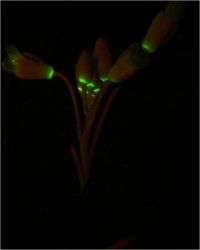
A falling leaf often catches a poet's eye, but scientists also wonder about the phenomenon that causes leaves to fall, or abscission in plants. Abscission is the physiological process plants use to separate entire organs, such as leaves, petals, flowers and fruit, that allow plants to discard non-functional or infected organs. University of Missouri researchers have uncovered the genetic pathway that controls abscission in the plant species Arabidopsis thaliana. The ability to control abscission in plants is of special interest to those in the commercial fruit tree and cut flower industries, which rely heavily on abscission-promoting or inhibiting agents to regulate fruit quality and pre-harvest fruit drop.
"Understanding the physiological mechanism by which plants control abscission is important for understanding both plant development and plant defense mechanisms," said John Walker, director of the MU Interdisciplinary Plant Group at the Christopher S. Bond Life Sciences Center. "Insight into the process of abscission in Arabidopsis thaliana provides a foundation for understanding this fundamental physiological process in other plant species."
Plants abscise an organ for a number of reasons, according Walker. Aged leaves, for example, may be shed to facilitate the recycling of nutrients, ripening fruits dropped to promote seed dispersal and infected or diseased floral organs discarded to prevent the spread of disease. However, why Arabidopsis thaliana is a small flowering plant that is native to Europe, Asia and northwestern Africa, sheds its floral parts after maturation is unclear. The floral part on the plant does not take significant space and abscission does not appear to serve an obvious function. Yet, the genes for abscission have been there for a really long time, Walker said.
Previous studies analyzing abscission in plants have implicated several different genes and gene products. Walker and his colleagues are the first to identify a pathway of genes involved in the process of abscission in Arabidopsis by using a combination of molecular genetics and imagine techniques.
"The process of abscission is a phenomenon that we have yet to fully understand," said Walker, who is also a professor of biological sciences in MU's College of Arts and Science. "Several different genes are involved in the process. Instead of looking at individual genes or proteins, we looked at an entire network at once to see how the difference genes work together in abscission."
The study "Regulation of Floral Organ Abscission in Arabidopsis thaliana," will be published in Proceedings of the National Academy of Sciences. The National Science Foundation funded this study.
Source: University of Missouri-Columbia


