Researchers develop new model for cystic fibrosis
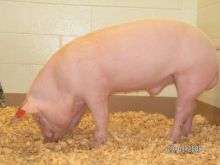
In a first, researchers at the University of Iowa and the University of Missouri (MU) have developed a pig model for cystic fibrosis (CF) that appears to closely mimic the disease in human infants. The striking similarities between disease manifestations in the CF piglets and human newborns with CF suggest that this new model will help improve understanding of the disease and may also speed discovery of new treatments. The study is published in the Sept. 26 issue of Science.
CF is a common hereditary disease that affects multiple organ systems, including the intestines, pancreas, and lung. Mice with CF-causing mutations have helped researchers learn more about this disease, however, differences in physiology and biology mean that mice with CF mutations do not develop many of the typical symptoms that affect humans with CF.
"Lack of a better model has hampered our ability to answer long-standing questions in CF," explained Christopher Rogers, Ph.D., a former postdoctoral fellow in internal medicine at the UI Roy J. and Lucille A. Carver College of Medicine, and one of the study's lead authors. "The CF pig provides a unique opportunity to study one of the most common genetic diseases, and we hope to translate this new knowledge into better therapies and preventions."
In addition to Rogers, co-lead authors of the study were David Stoltz, M.D., Ph.D., UI assistant professor of internal medicine, and David Meyerholz, D.V.M., Ph.D., UI assistant professor of pathology.
The senior study author was Michael Welsh, M.D., UI professor of internal medicine and molecular physiology and biophysics, who holds the Roy J. Carver Chair of Internal Medicine and Physiology and Biophysics. Welsh also is a Howard Hughes Medical Institute investigator.
CF occurs when a person inherits two mutated copies of the CFTR gene leading to loss of ion channel function that adversely affects many organs. To create the CF pigs, the researchers used gene targeting to disrupt one copy of the normal gene in pig cells. They then cloned these altered cells to produce pigs with only one good copy of the gene. Like human CF-carriers, these animals did not show disease symptoms. The pigs were then bred naturally, and about one in four of the piglets were born with two disrupted copies of the gene.
The researchers established that piglets lacking CFTR have the abnormal ion channel activity that is a hallmark of CF disease. They also showed that the CF piglets develop the same disease characteristics that are commonly seen in newborn humans with CF, including a bowel obstruction known as meconium ileus, which often is the first sign of CF in humans. The pigs also have an abnormal pancreas, liver, and gall bladder, similar to CF patients.
"Thus far, the clinical, physiological and age-related appearance of disease in the pigs, as well as the organs involved, mimic CF seen in people," Stoltz said.
A primary cause of death and disability in patients with CF is lung disease. However, many questions remain about how infection and inflammation leads to lung damage. In the study, the lungs of the newborn CF pigs appeared similar to the lungs of their normal littermates and had no sign of infection or inflammation, possibly shedding some initial insight on the process. As the CF pigs mature and are exposed to airborne bacteria and viruses, the researchers hope to learn more about how and why lung disease develops in patients with CF.
"Researchers can now begin to study the disease progression as it is happening, something not possible in humans," Meyerholz said.
Source: University of Iowa


